Glendale Community College
Music Department European Tour Summer 2026
Real-Time Journal
Richard Bruner
Composer and Principal Viola
Group photo from our final performance in the Minoritenkirche in Vienna, Austria. Photo taken by tour company representatives
The Symphony of the Verdugos and the Glendale College Concert Singers went on tour to Prague and Vienna in the Summer of 2026. I kept daily journal entries for the trip as we went, which were posted at the time on my personal Facebook page. I am now posting them on my website for sharing beyond the audience of my Facebook friends. This was a combination performance tour / cultural tour of the cities and region, performing concerts in churches in Prague and Vienna and otherwise seeing the sights! On the way home, I wrote a reflection essay about my overall experience, which is included in the Day 7 entry at the end.
I have lightly edited some of these entries for typos and grammatical improvements, but otherwise they stand as written at the time. Any additional commentary is included in [square brackets].
Here is the audio for my piece from the Vienna concert on Day 6. See below for more details:
GCC Music Prague / Vienna Day 1: Prague Tour and Concert
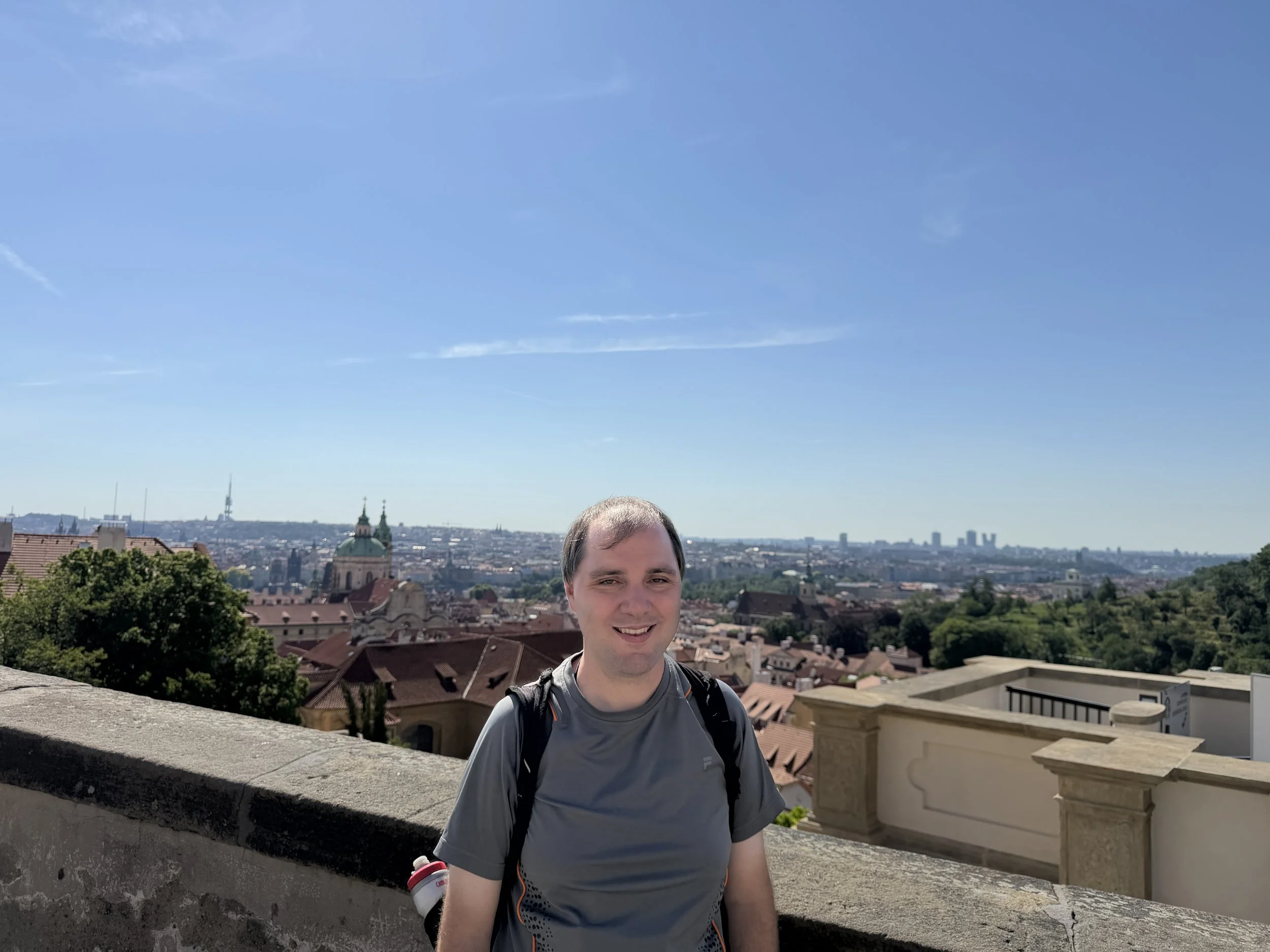
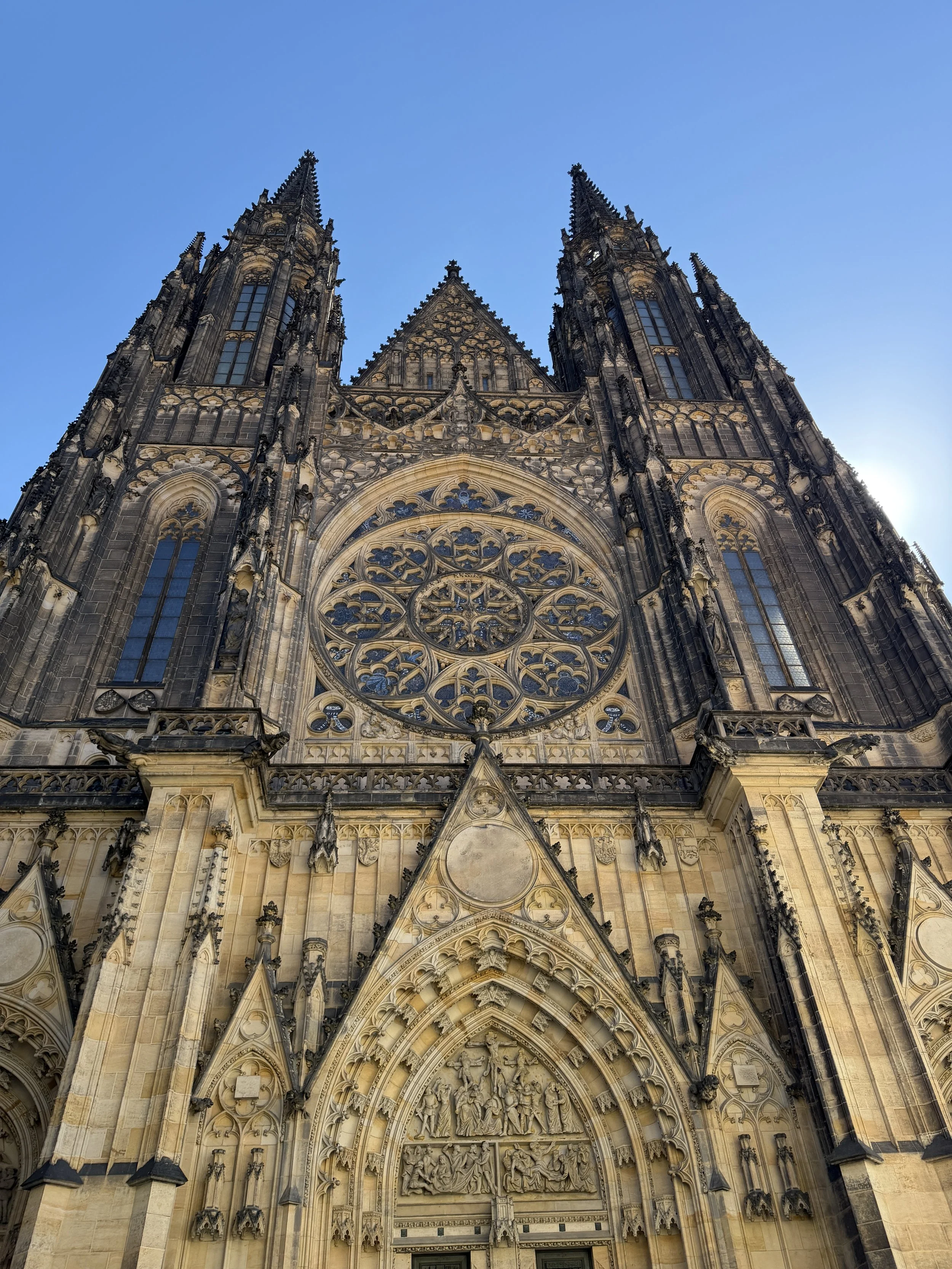
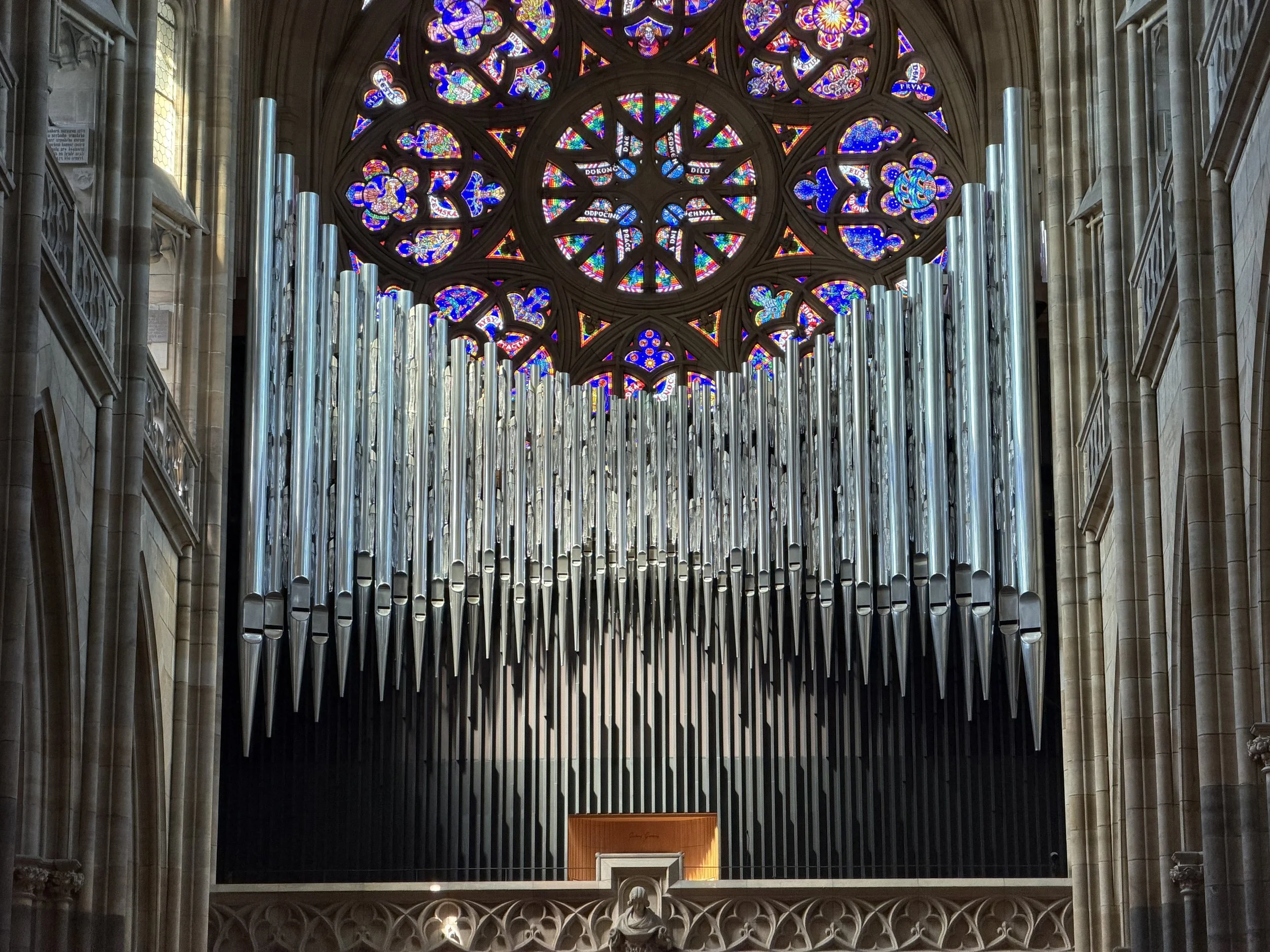
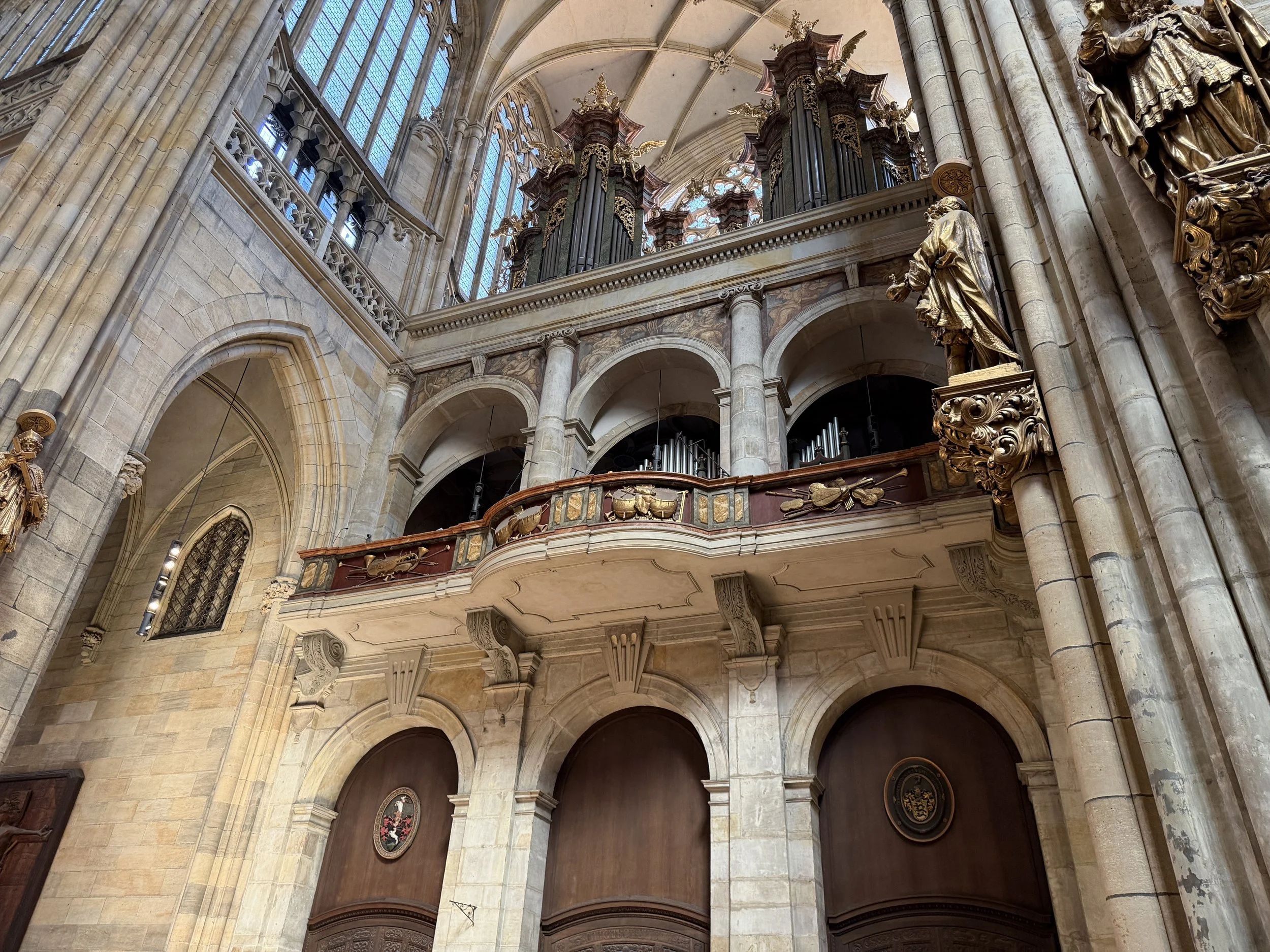
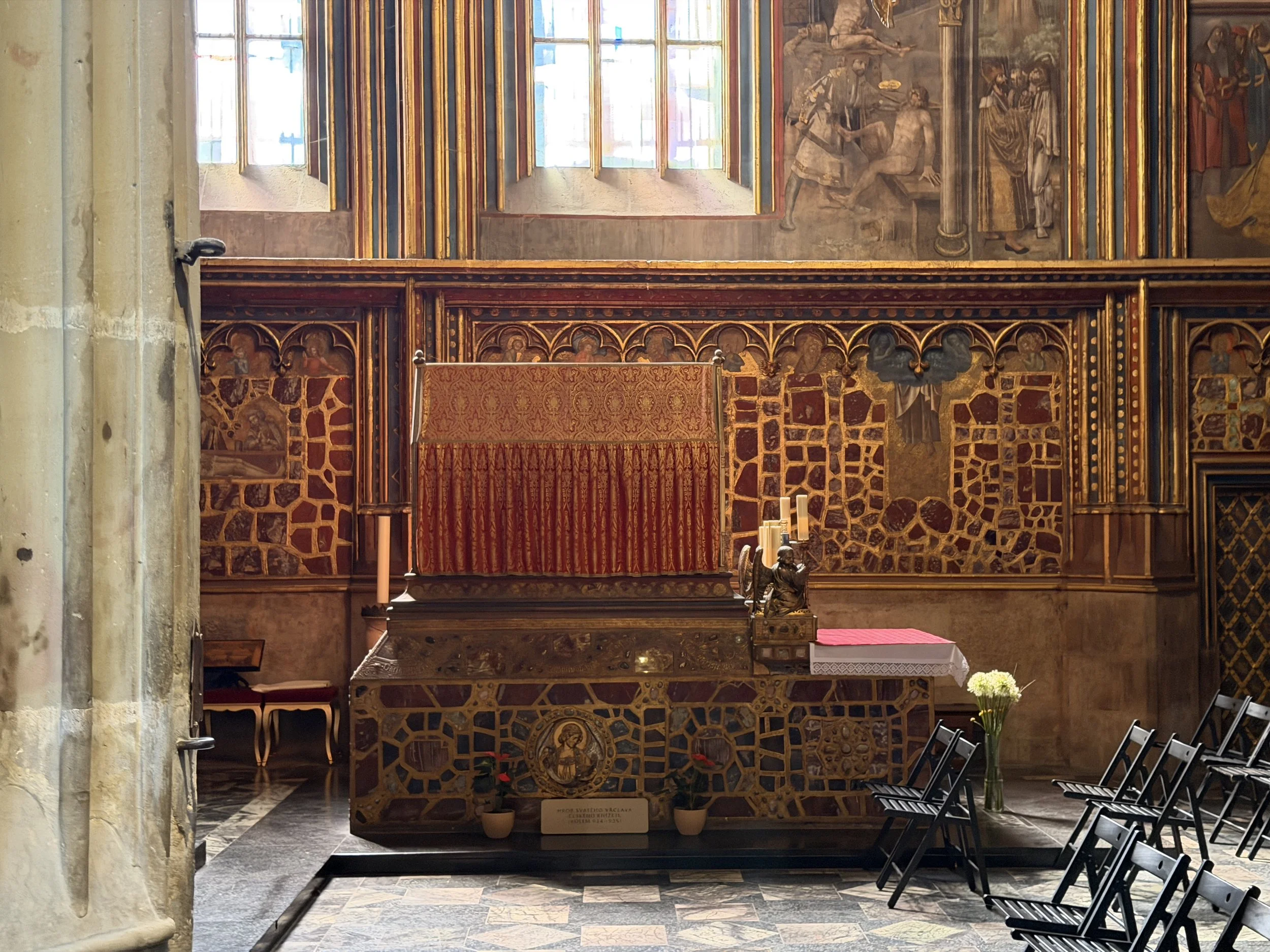
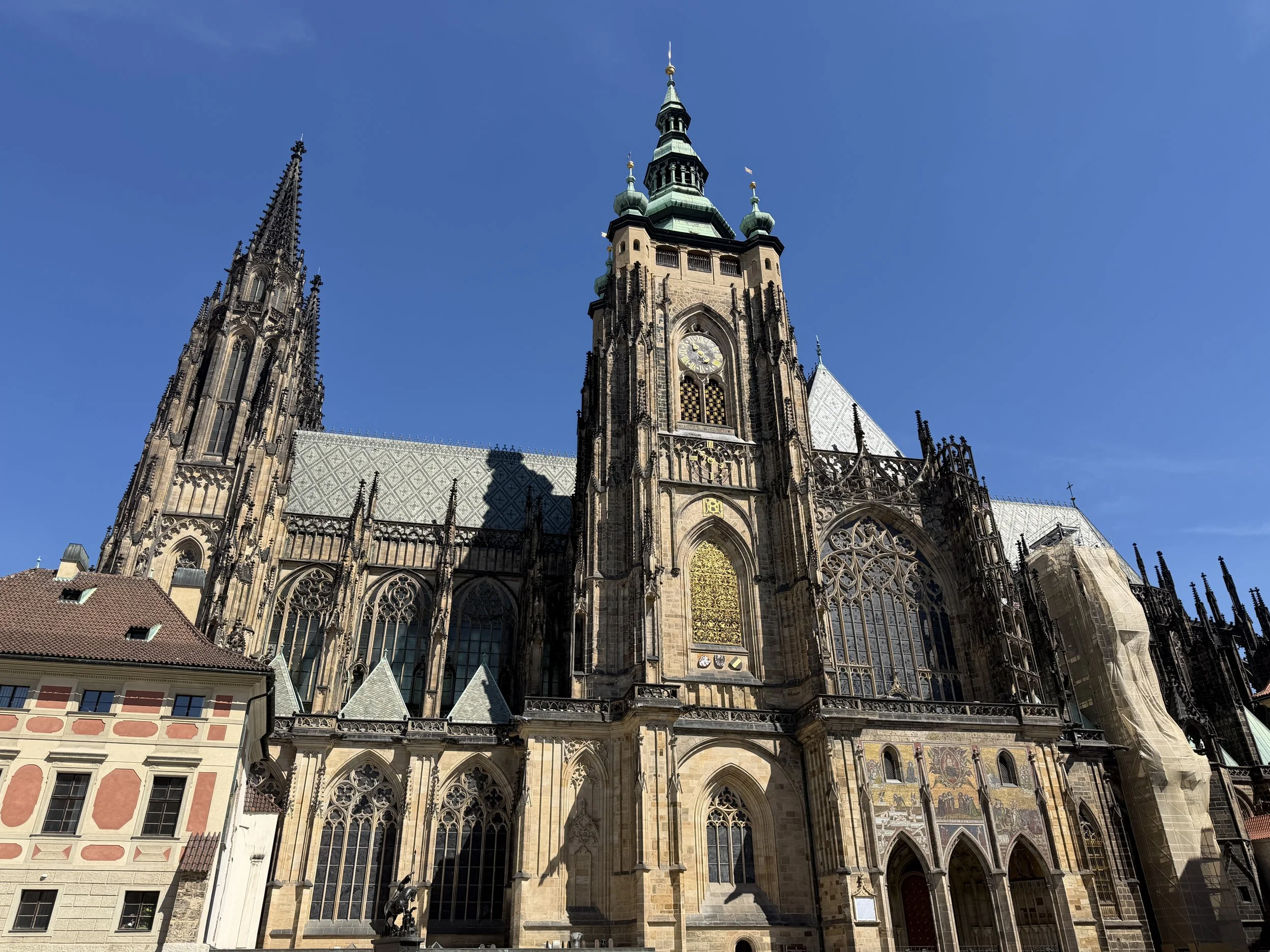
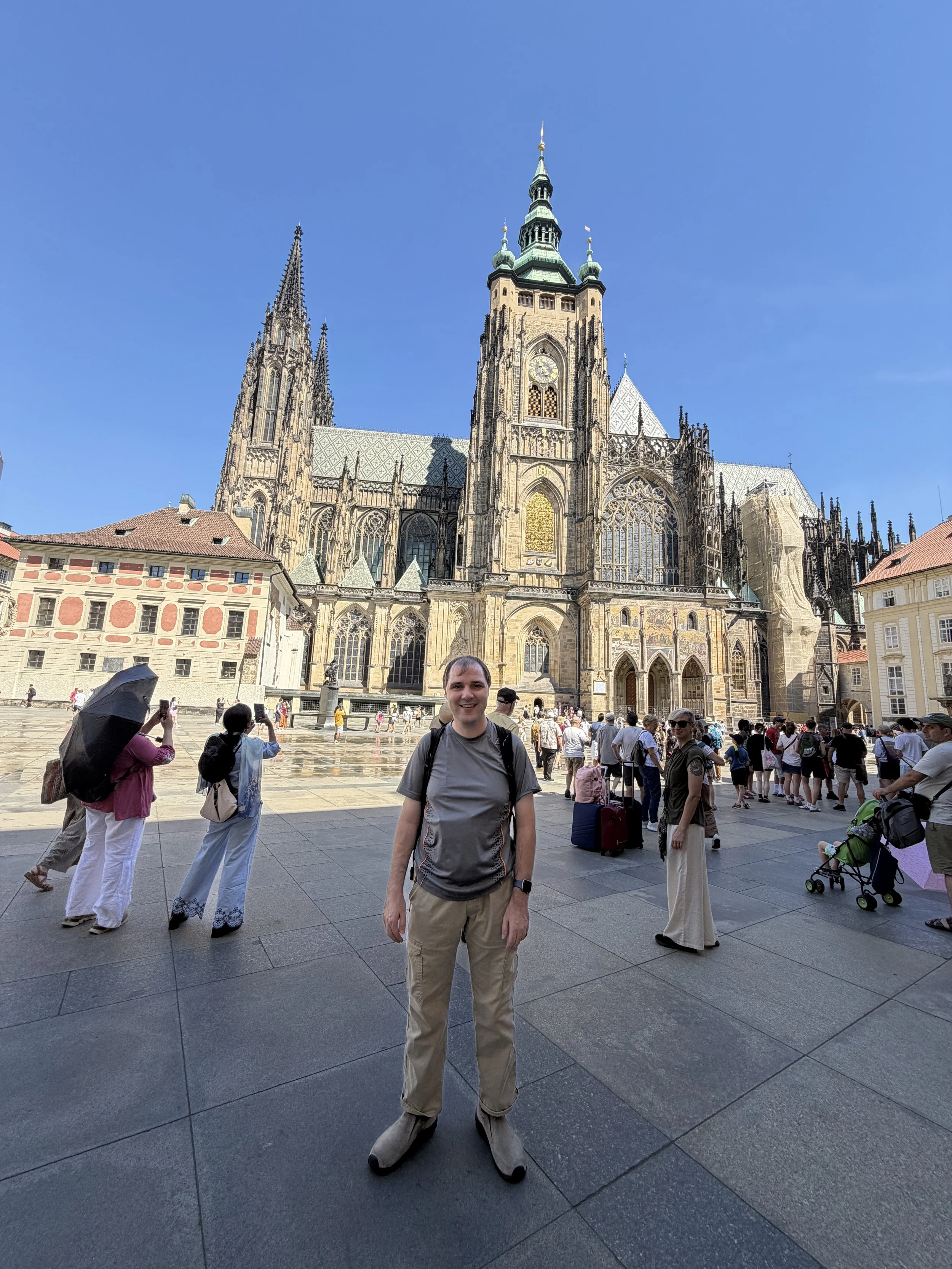
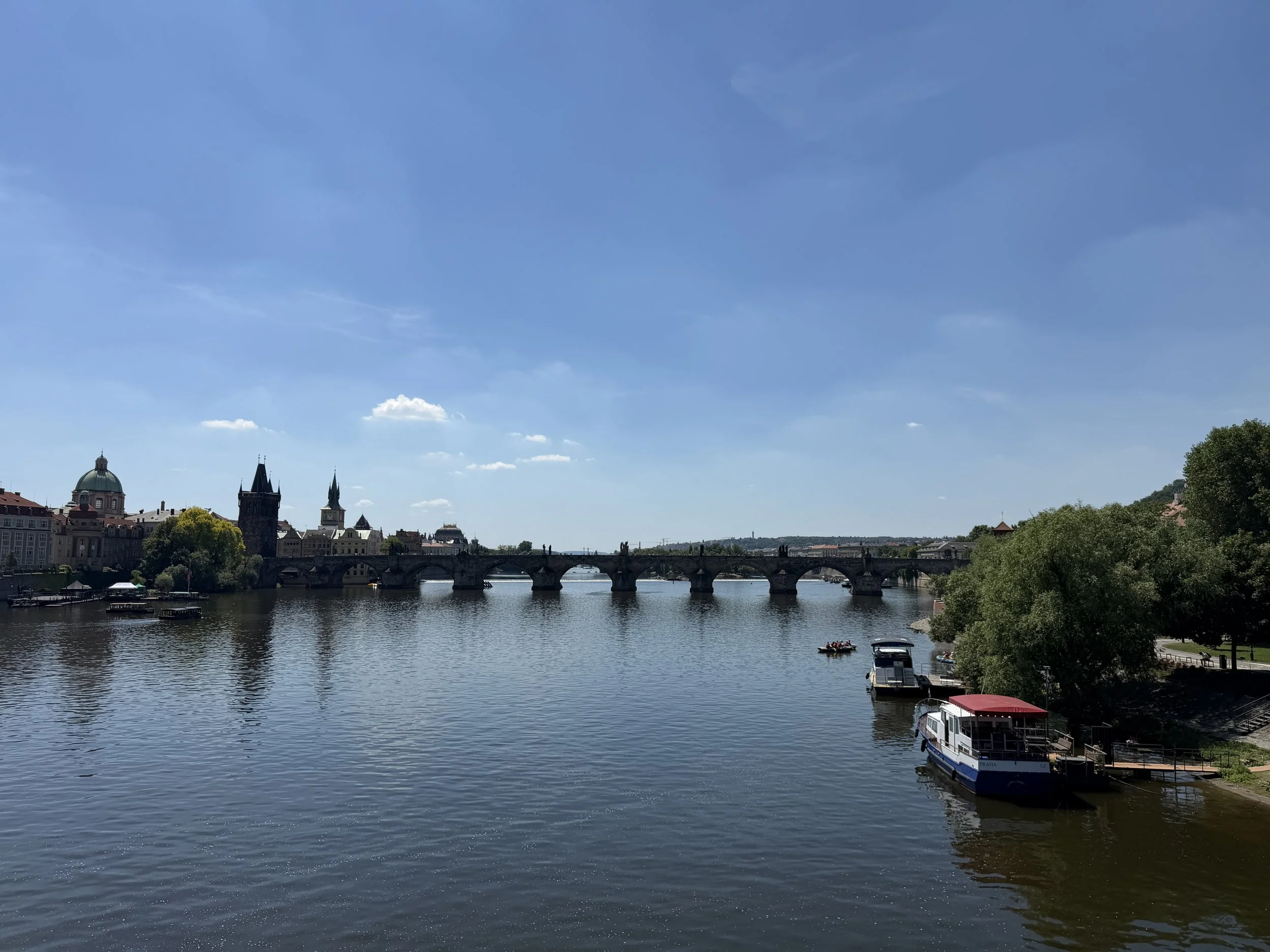
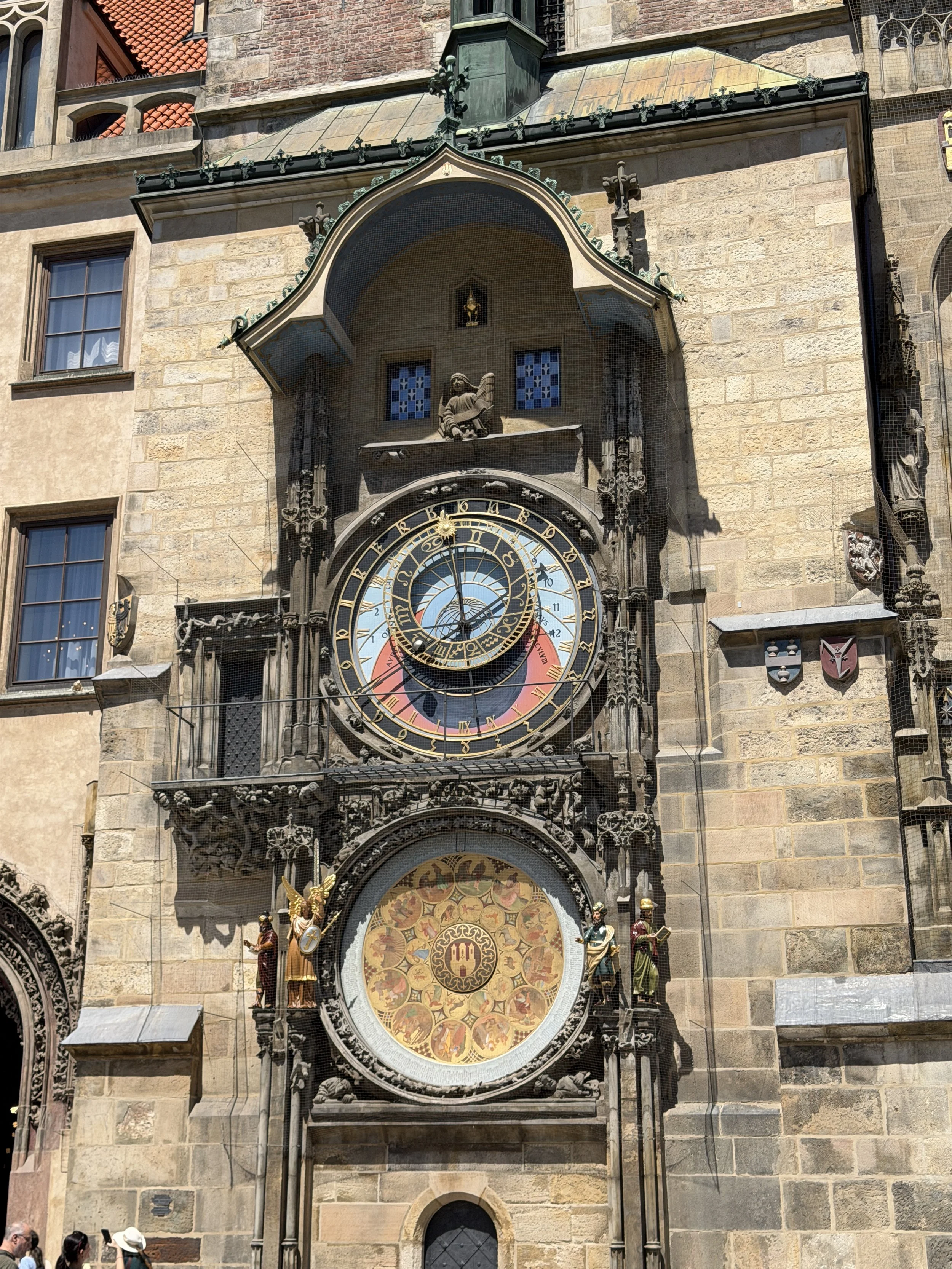
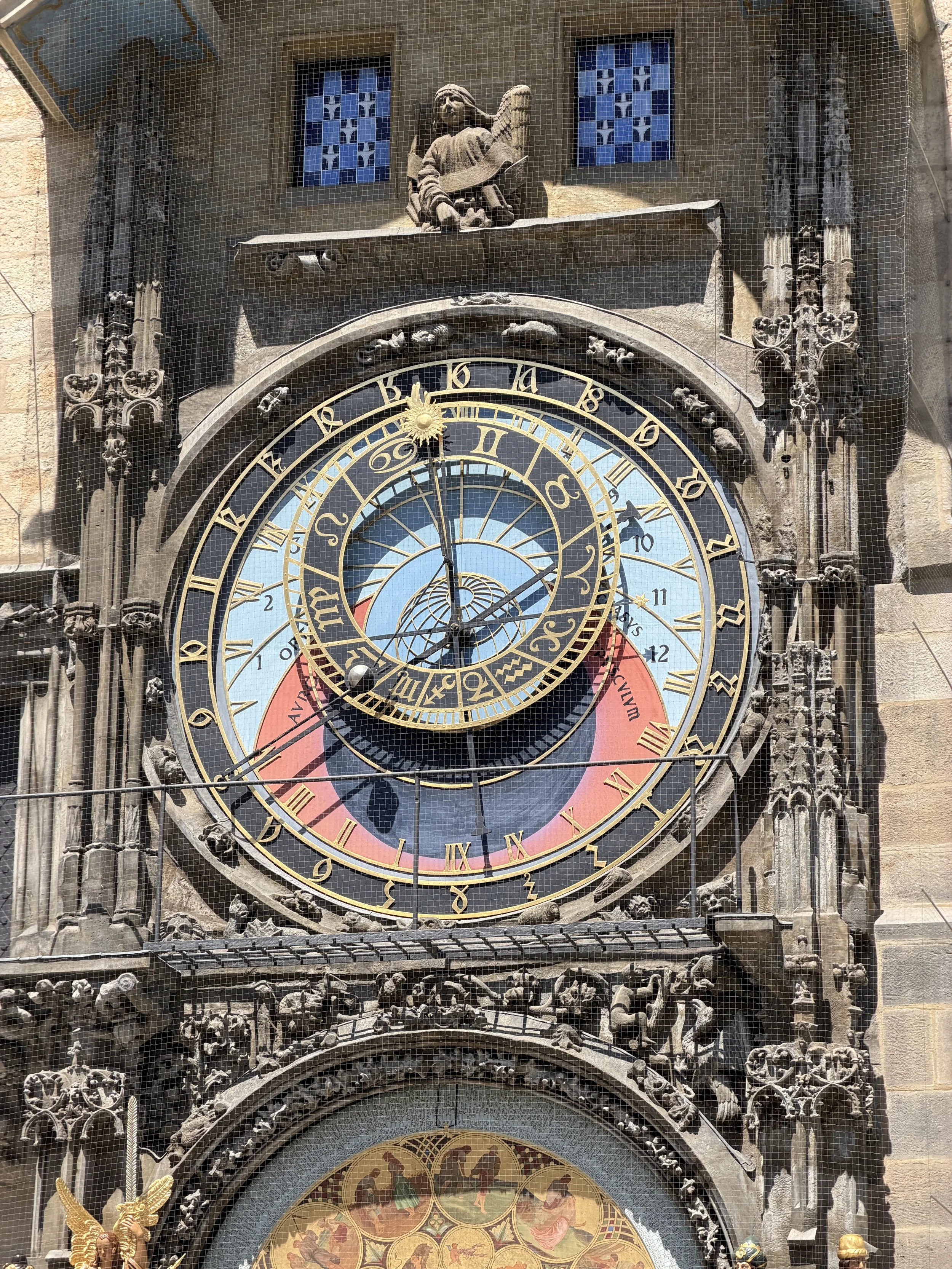
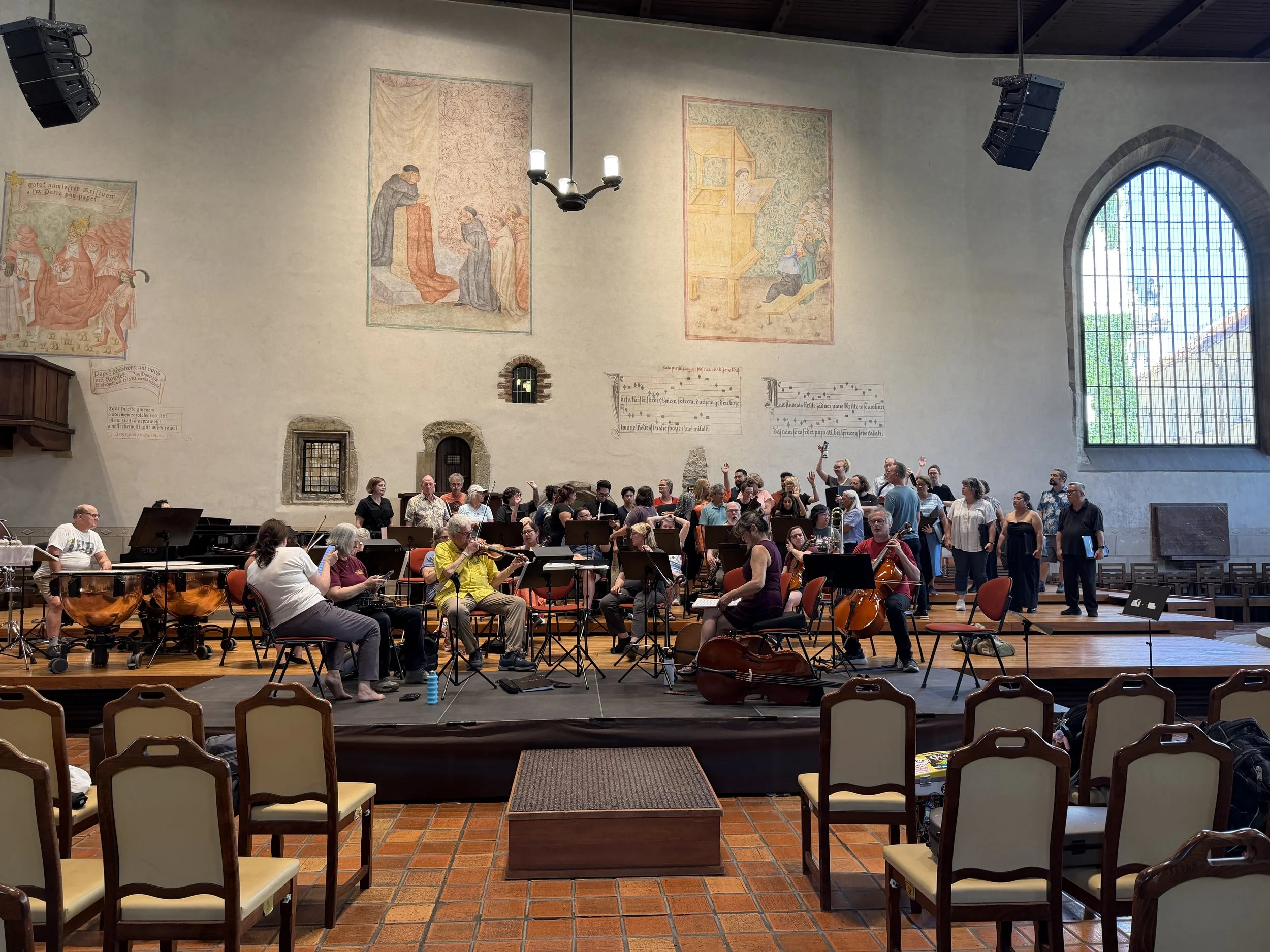
After traveling for basically two days (time zones are weird), we made it to Prague last night, and today was our first full day in Europe. We toured Old Town Prague, Prague Castle / St. Vitus Cathedral, Old Town Square and the Astronomical Clock, the Vltava (Moldau) River and Charles Bridge, and then performed at Betlemska Kaple for our first concert of the tour.
My piece Musical Mediations - Meditations on the Great ‘A’ of Life / Crosspicker’s Delight received its (and my) European premiere! I did record it, and once I have recordings from all the concerts I can decide which one to share. We’ll be performing it again in Vienna on Monday, and we performed it at Glendale College in LA a couple of weeks ago.
It was quite a walking day for us (I recorded over 18,000 steps on my phone, most of which were on cobblestone). It was also pretty hot today. The heat isn’t as bad here as it is some places in Europe but it was still about 88 degrees today. It’s supposed to be hotter in Vienna.
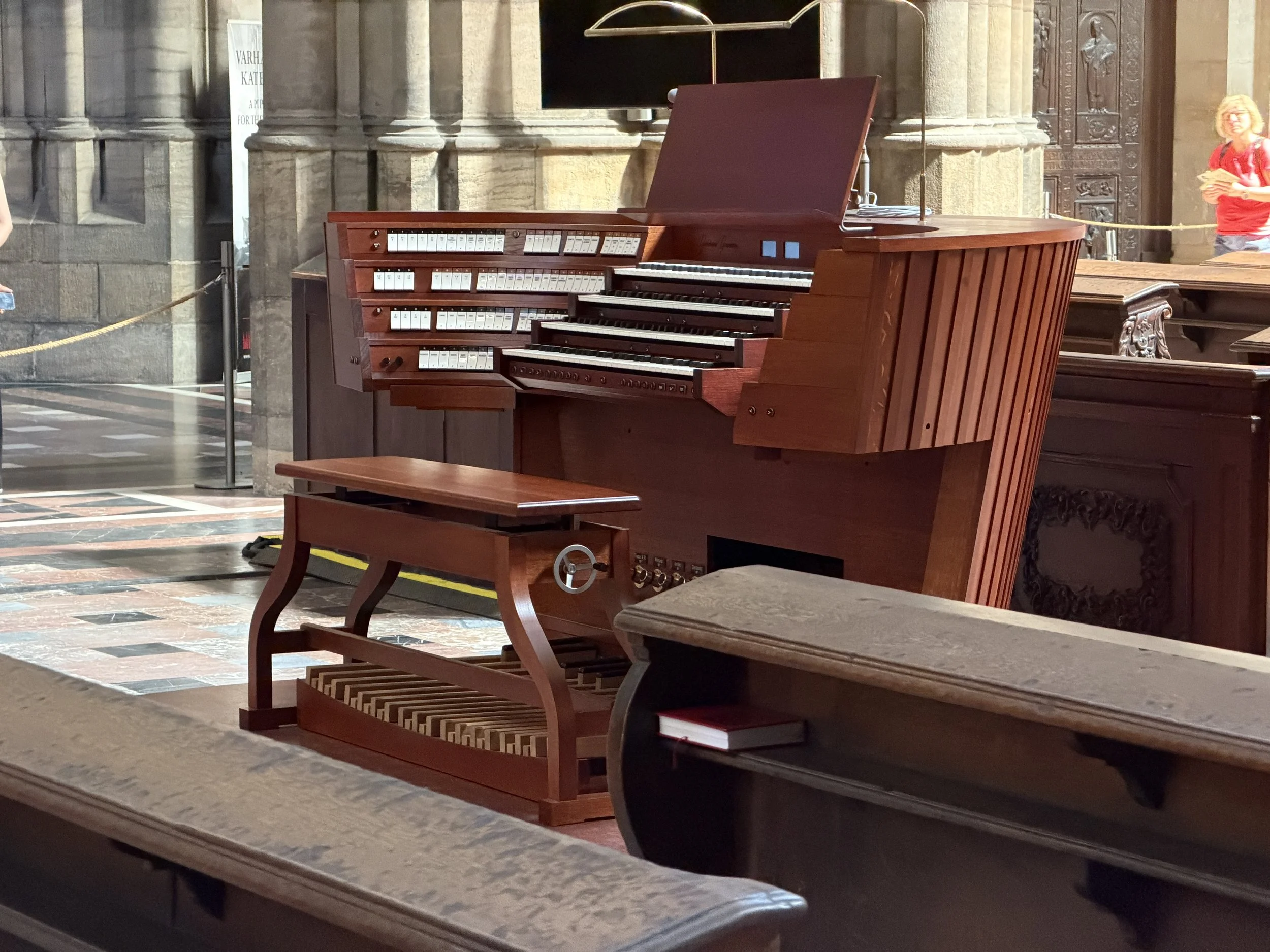
Photos from St. Vitus Cathedral (exterior and interior), Vltava River crossing with Charles Bridge in the background, the Astronomical Clock and our soundcheck for our concert today.
Looking forward to the rest of this trip - heading to Vienna tomorrow where we will spend the rest of the trip!
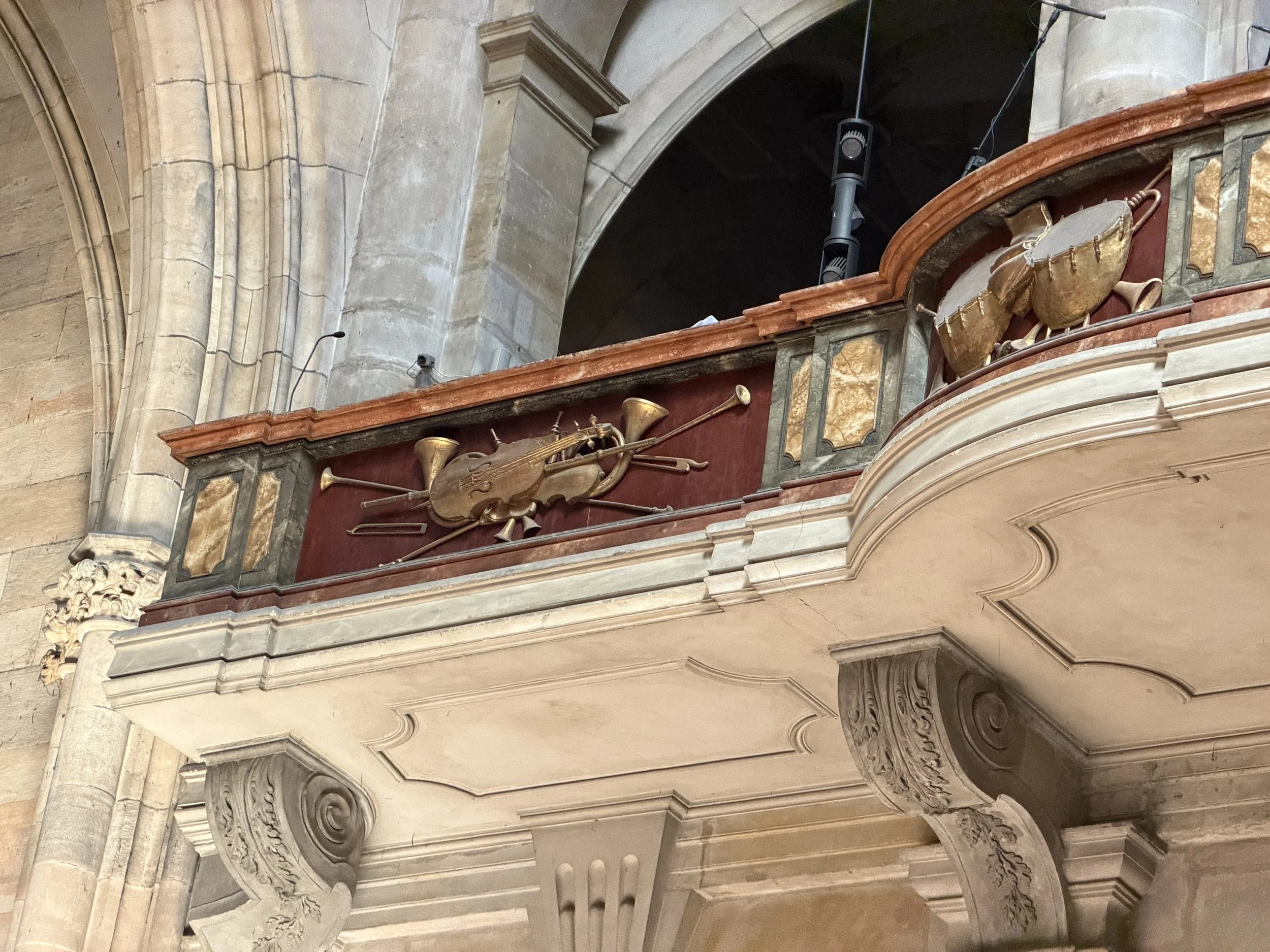
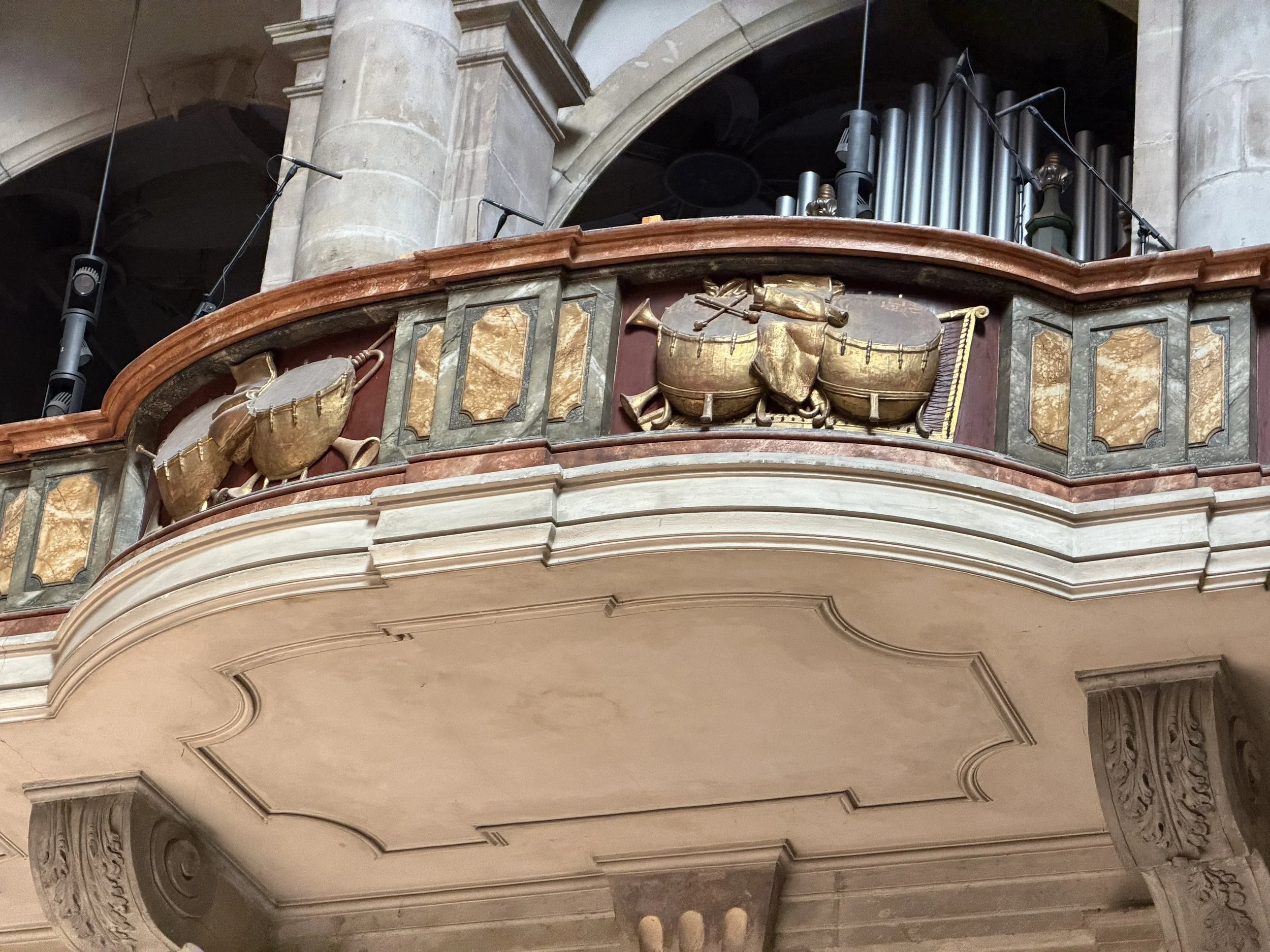
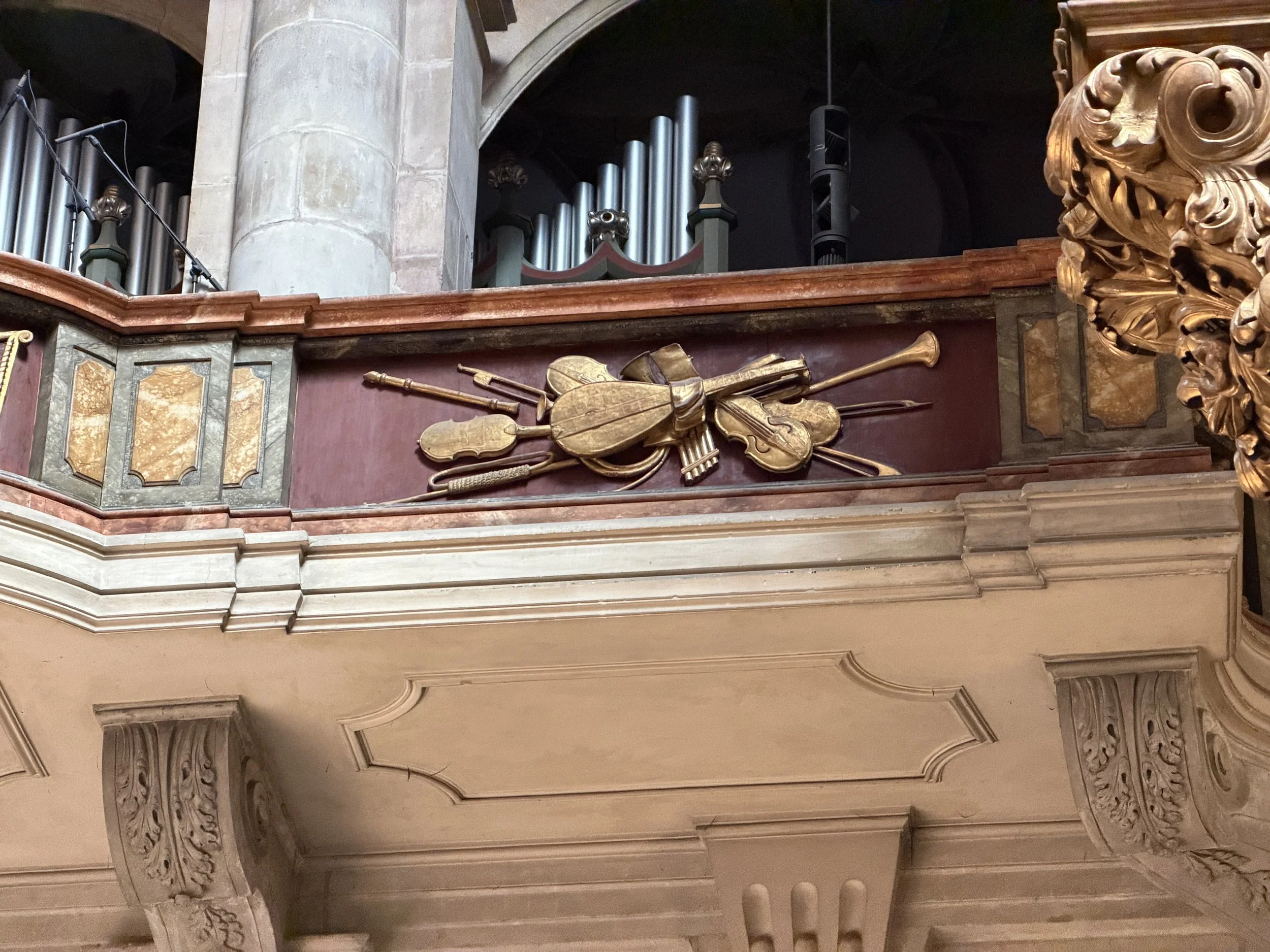
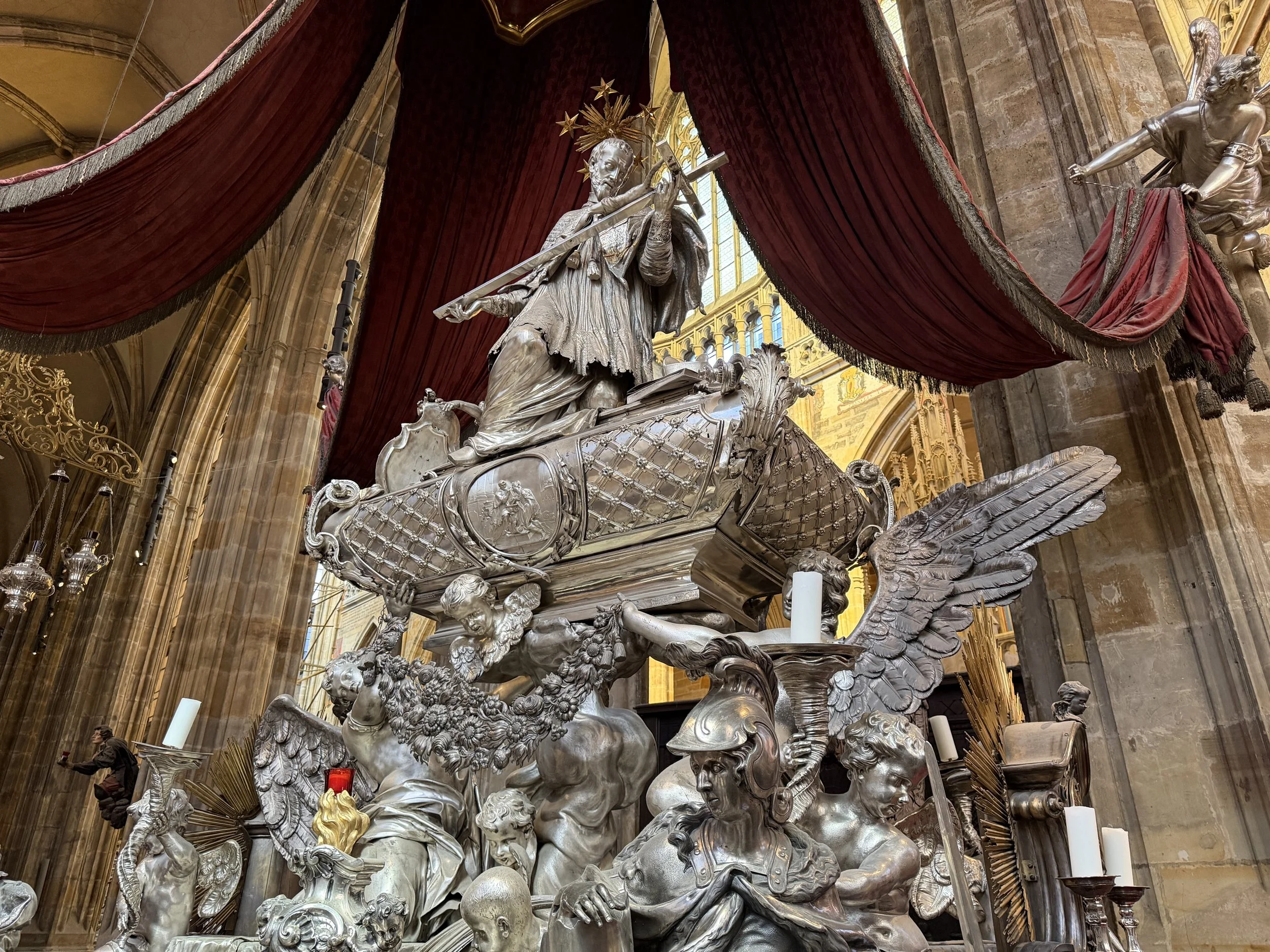
GCC Music Prague / Vienna Day 2: Travel Day to Vienna and Cesky Krumlov
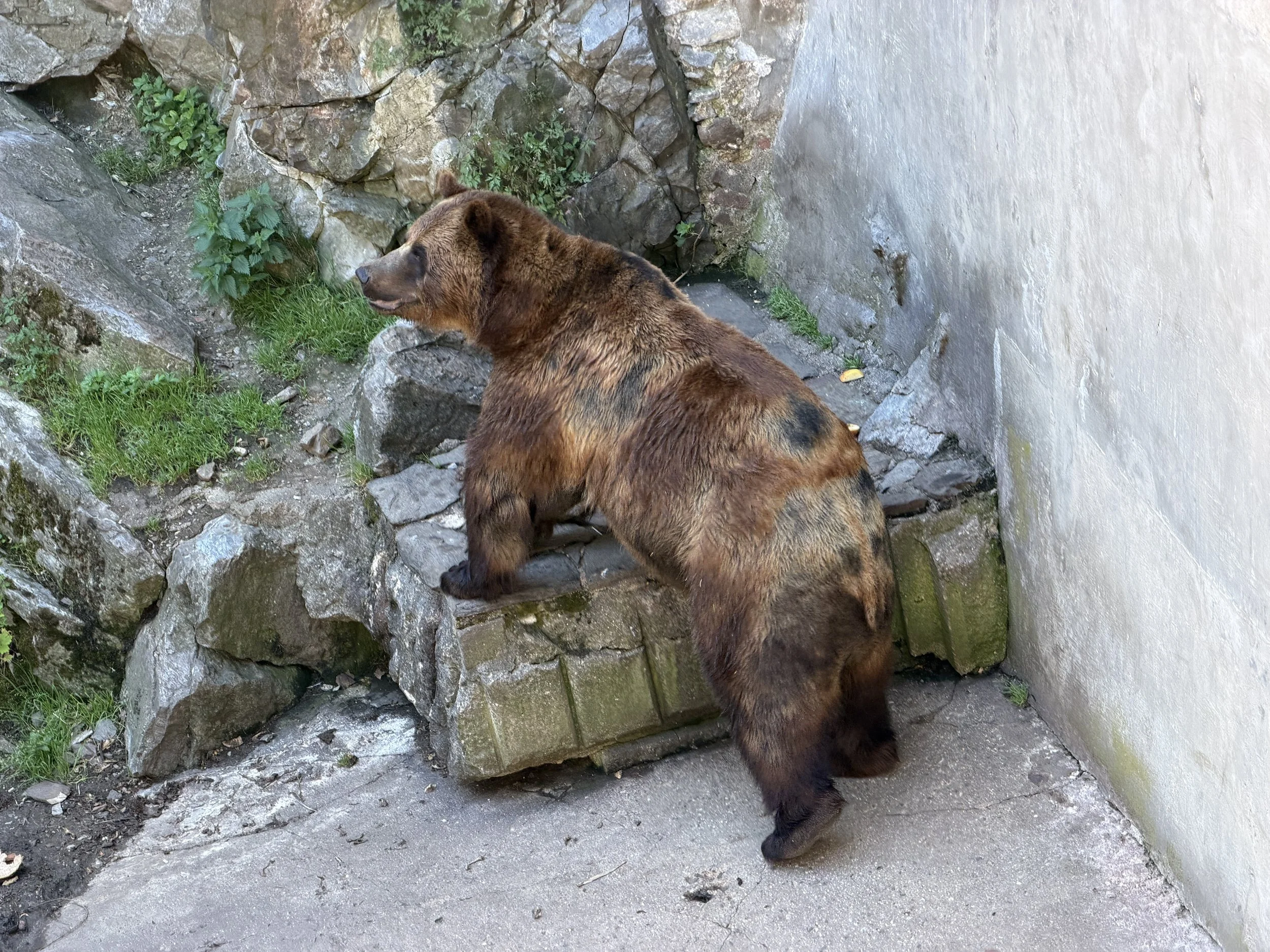
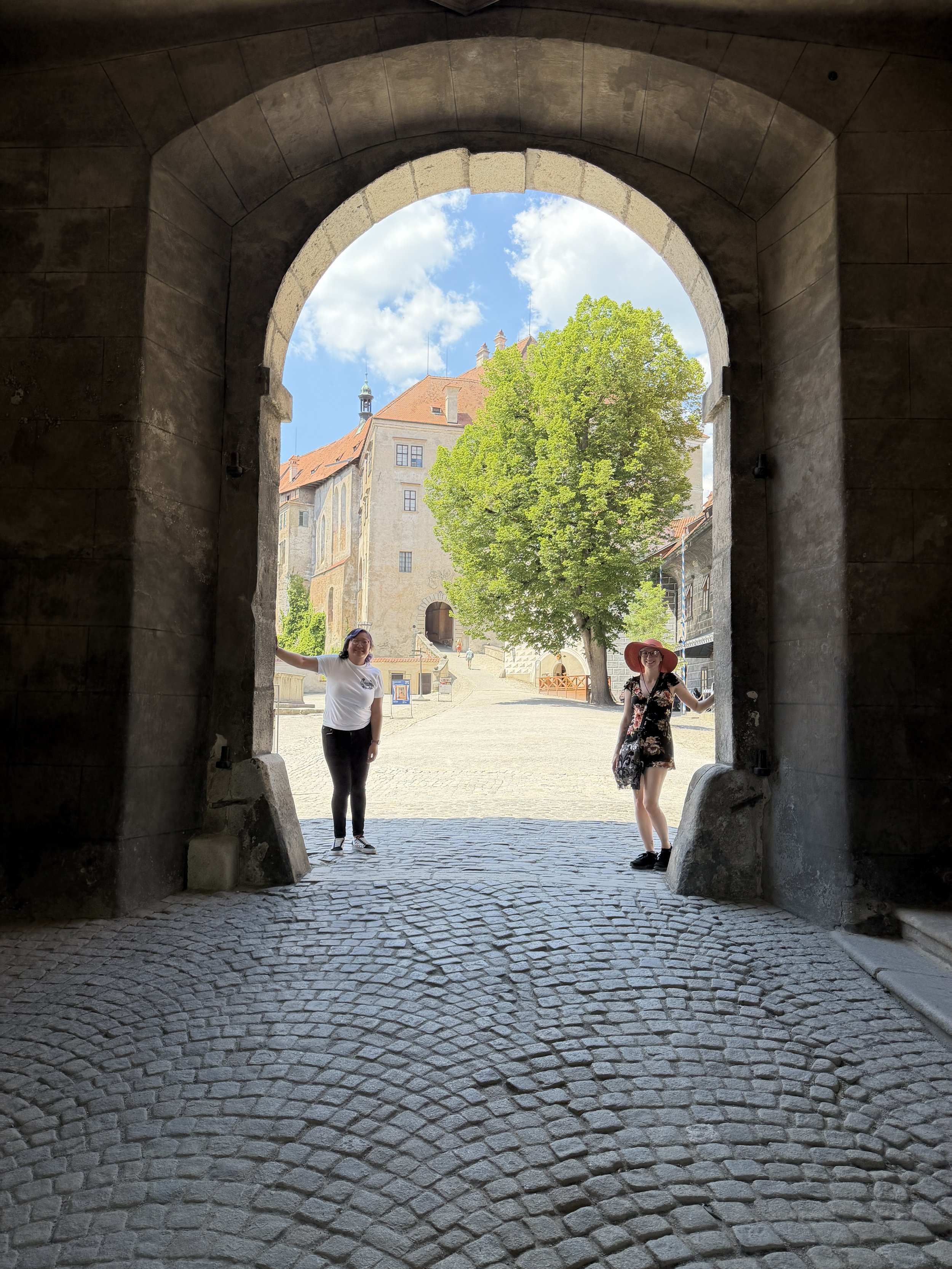
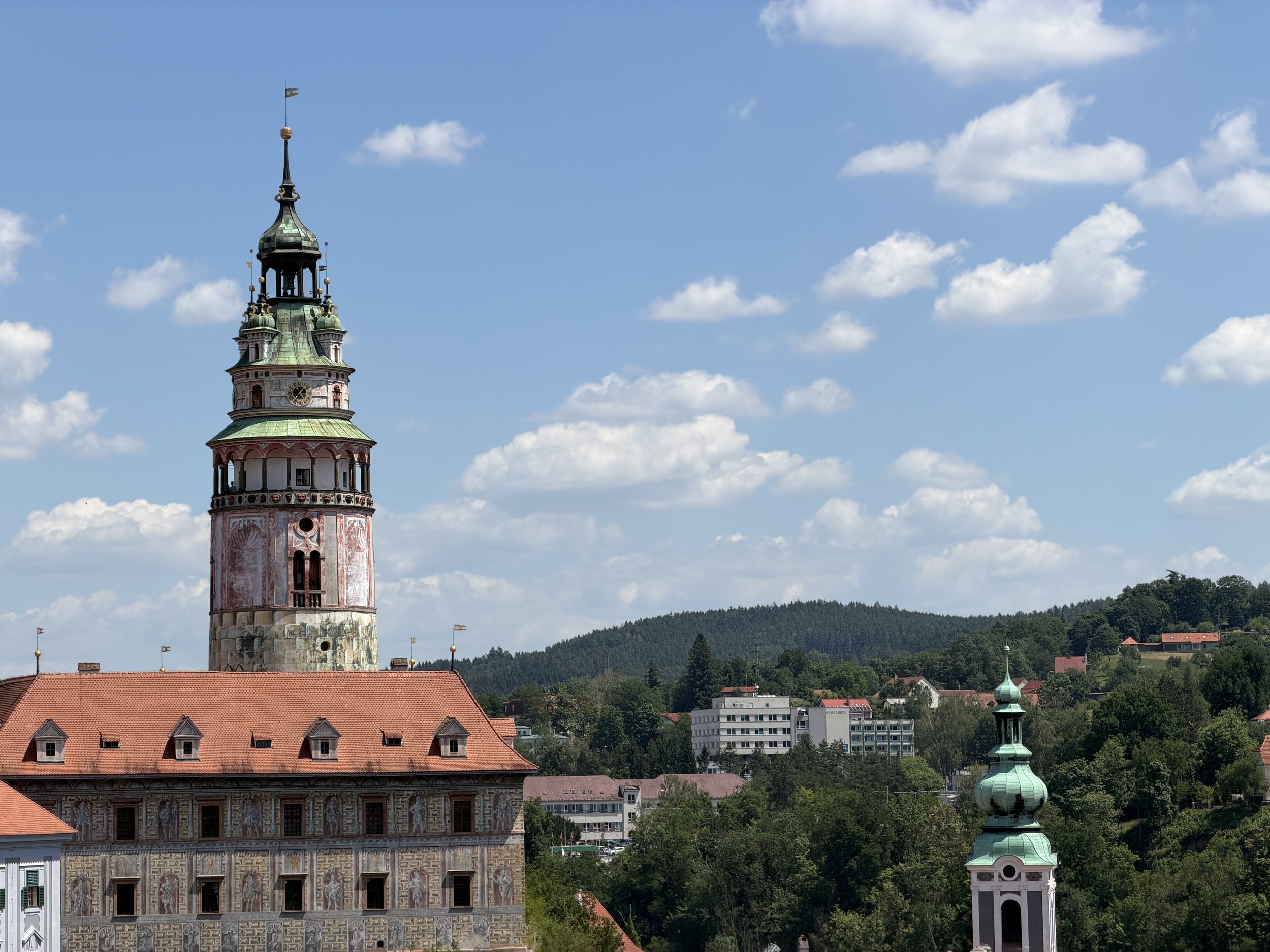
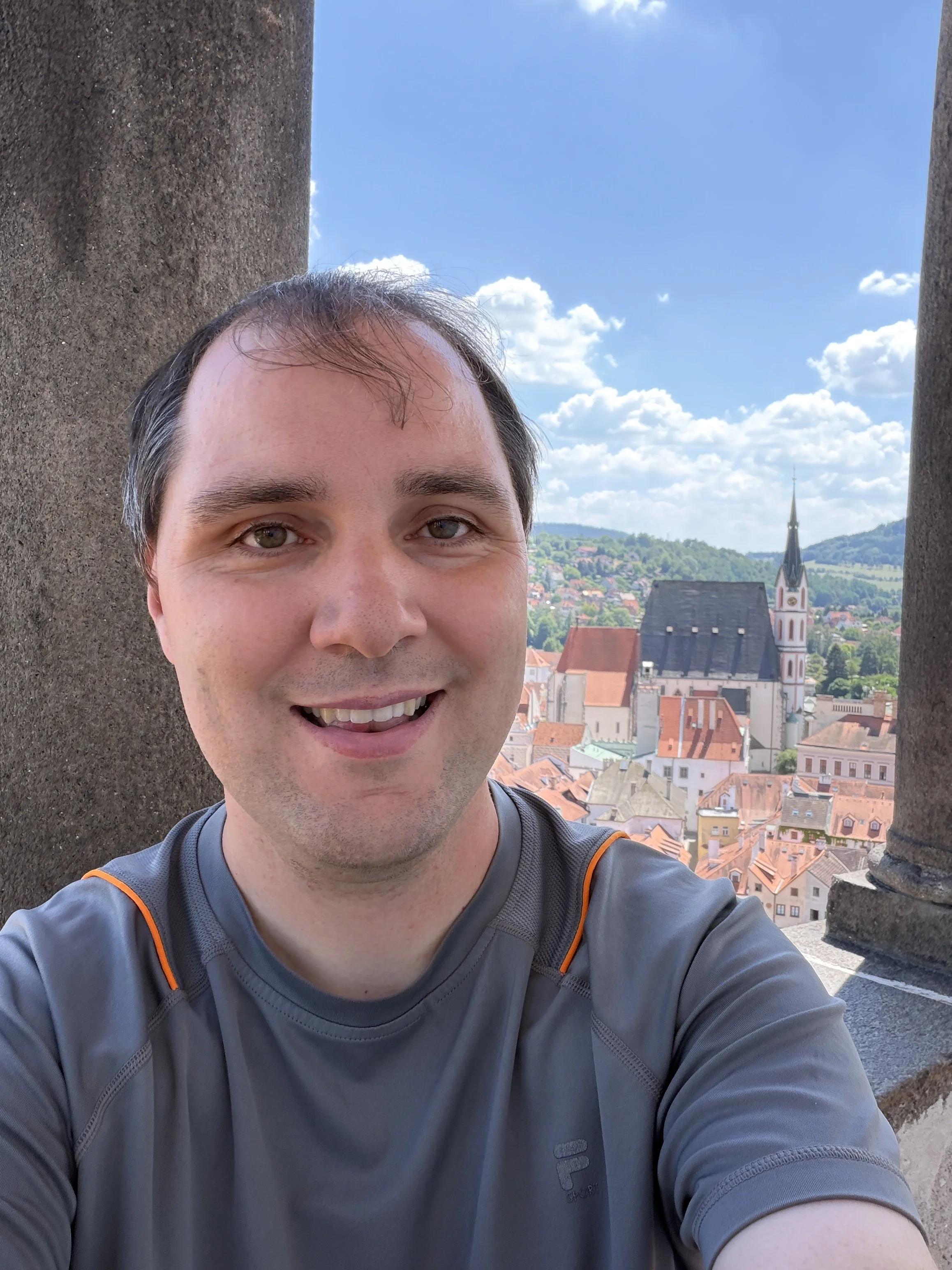
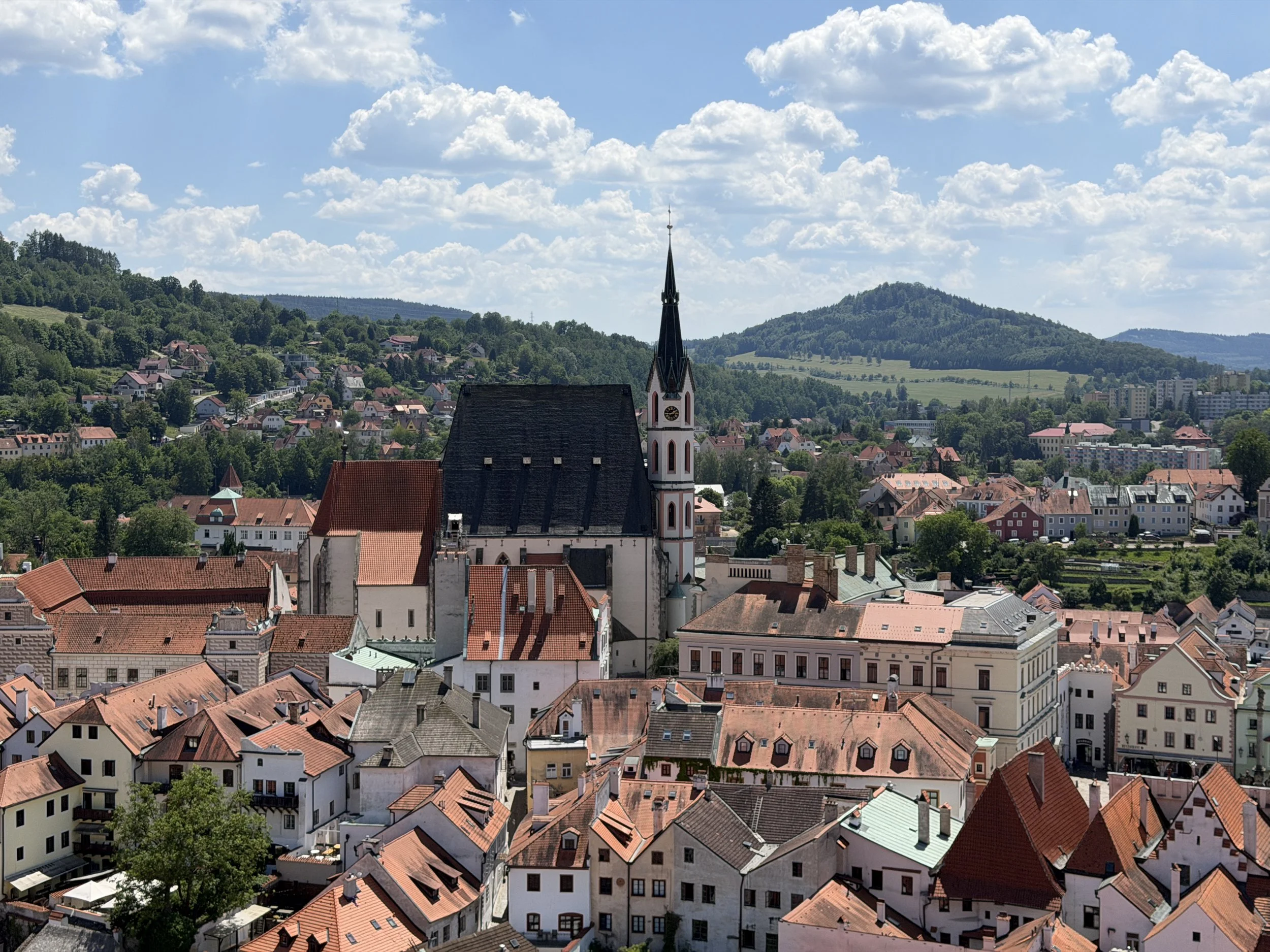
Today was a travel day, leaving Prague and heading to Vienna. We’ll be here for several days. We enjoyed the air-conditioned buses after walking in the heat yesterday! We drove first to a small town called Cesky Krumlov, which our guide referred to as a “fairy-tale town” with a castle (see the photos for why!). We had lunch there at one of the many restaurants in the town. The Vltava River was once again the main river in the area, forming a natural barrier around part of the town. After lunch we walked around the town and over to the castle, where we walked first across the outer wall and then discovered the tower was on the other side of the complex, so we went back and climbed the tower for some spectacular views of the town.
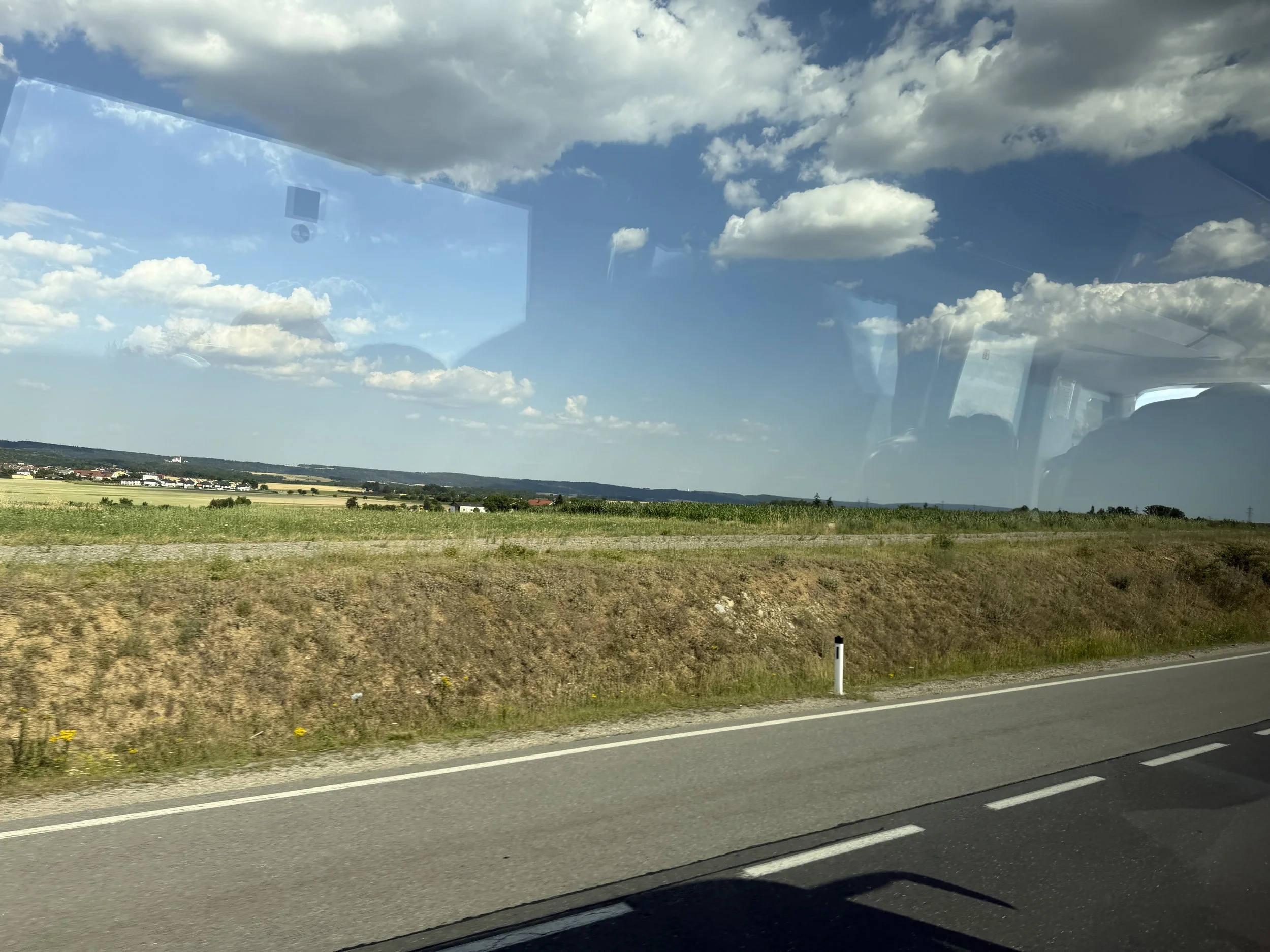
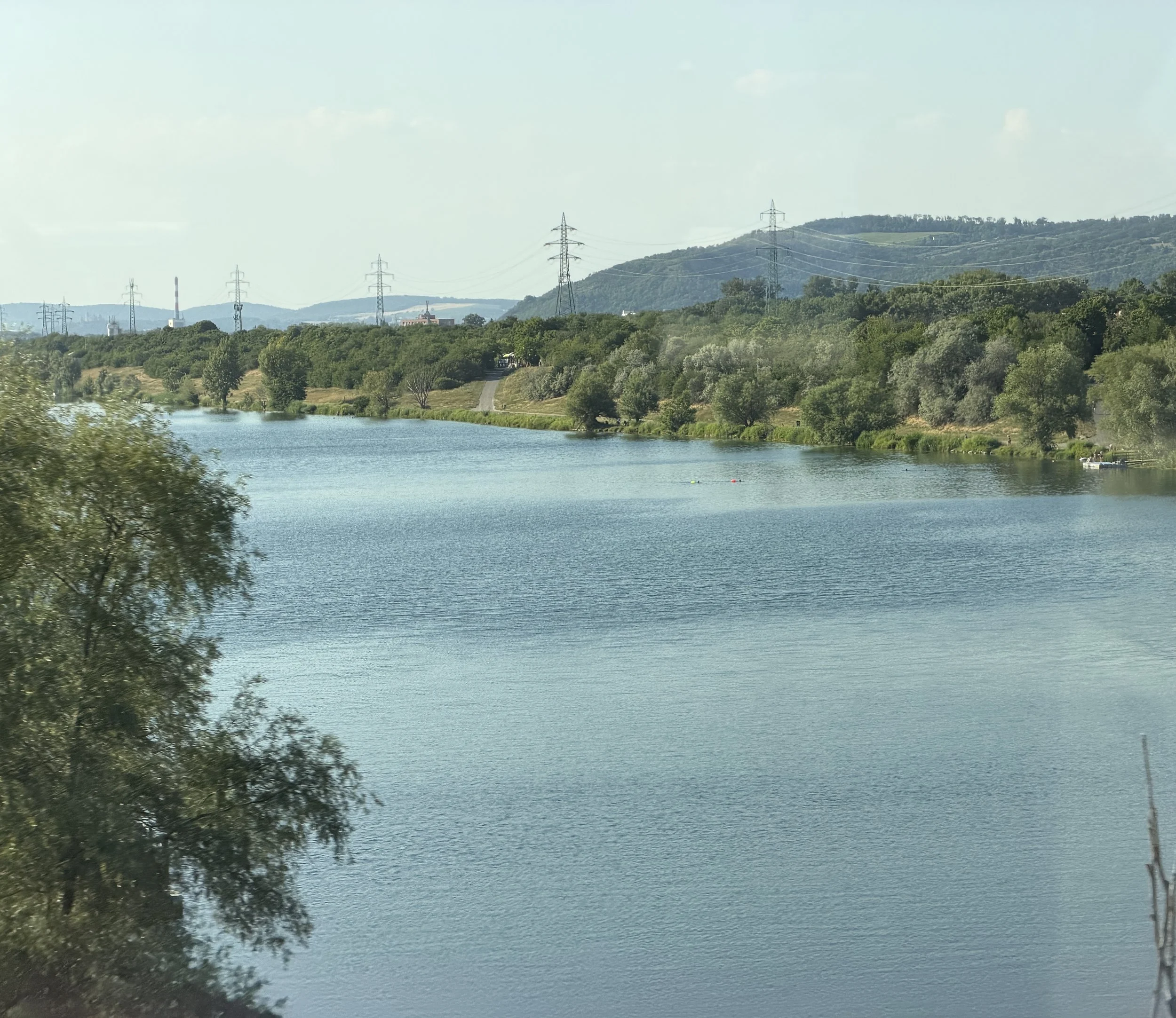
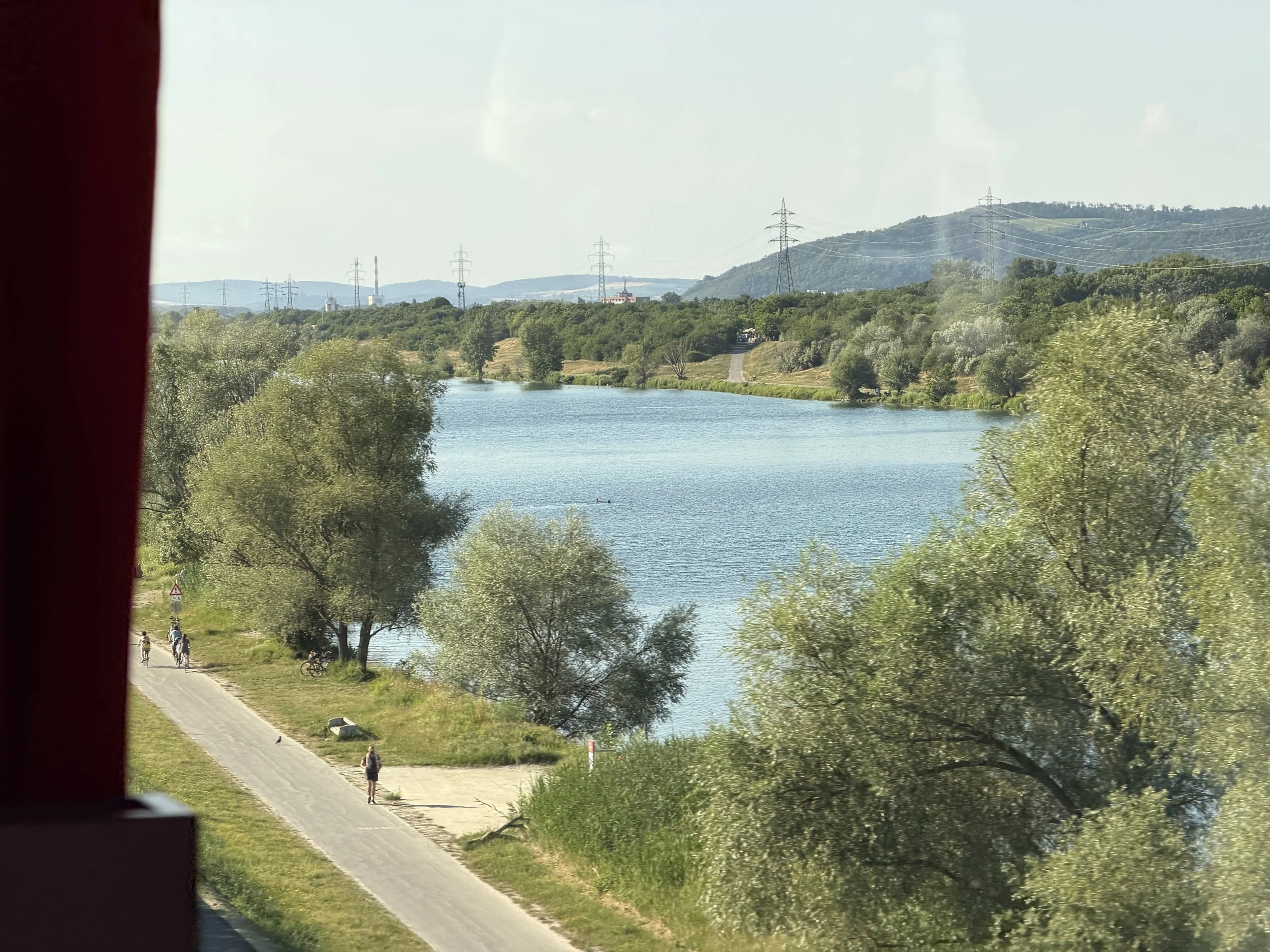
Then we got back on the bus where it was once again nice to have air-conditioning, and drove the rest of the way into Vienna. I got a few shots of the countryside through the bus window, and then we had a view of the Danube River as we arrived in Vienna. Unfortunately it was on the other side of the bus from me, so my pictures are somewhat constrained. Hopefully I’ll be able to get better pictures tomorrow.
We had dinner at an Austrian restaurant (after finding the Italian, Vietnamese, Nepalese and Asian Fusion restaurants on the map). It was a bit warm inside where we sat - we had a big group and there wasn’t enough room outside for us. But the food was very good. Their description was something like “dumplings mixed with cheese and salad” and it turned out to basically be macaroni and cheese with a different shape.
Then we came back and had a nice time chatting with various people from our tour group in the lobby as different people came back.
Tomorrow we will do the official tour of Vienna and go see the famous cemetery where several famous composers are buried. Then it is a free day after that until our group dinner.
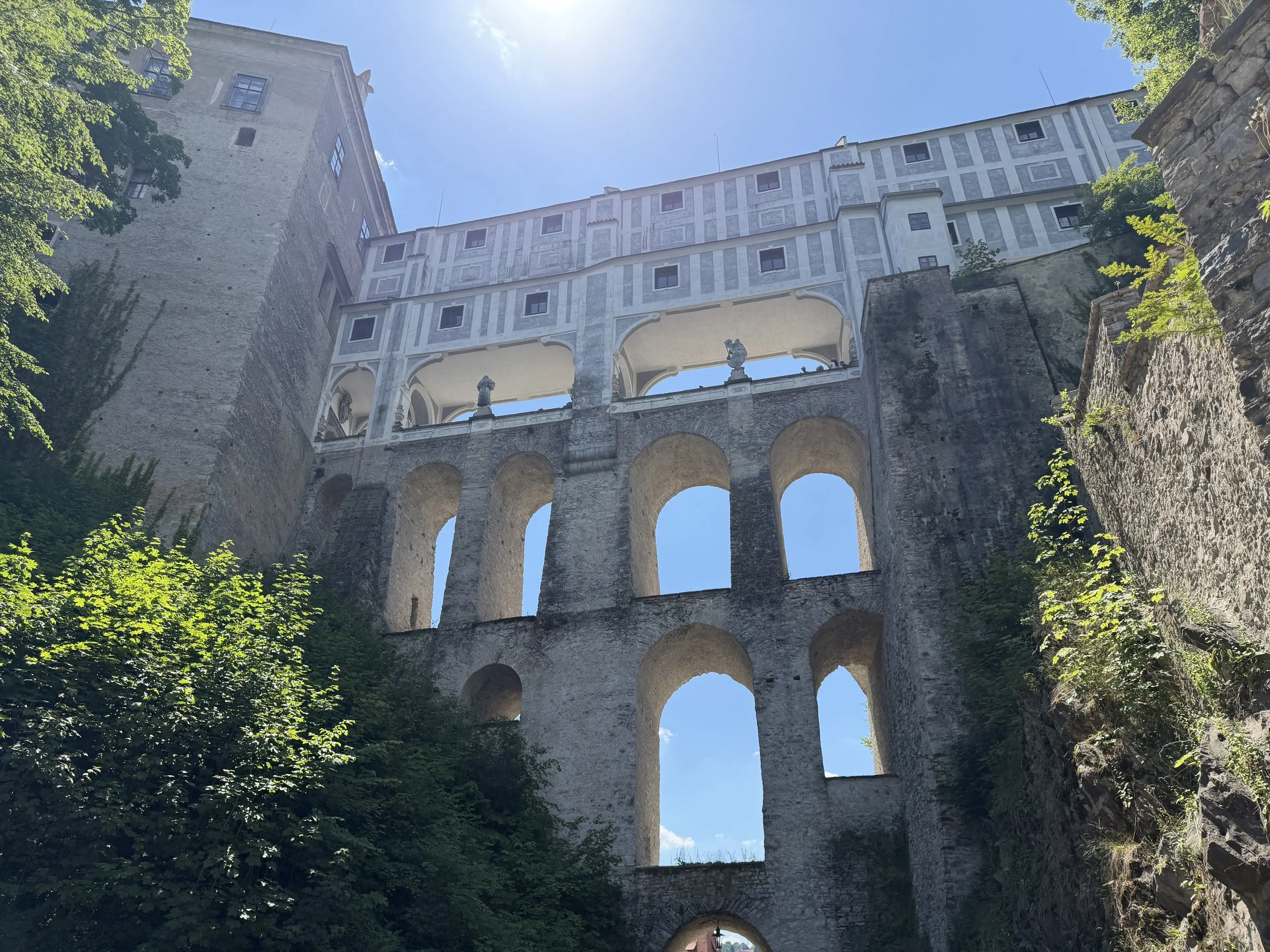
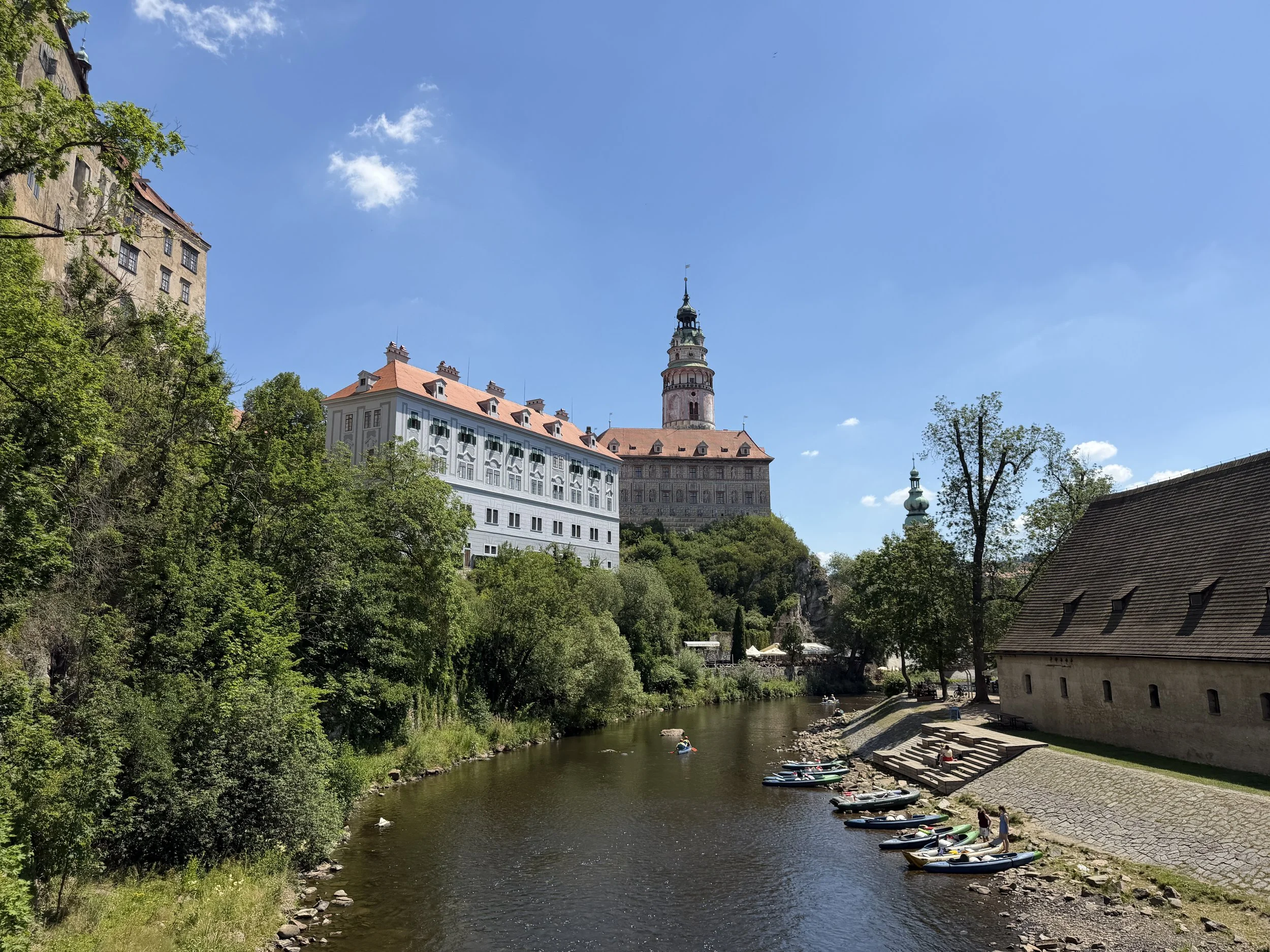
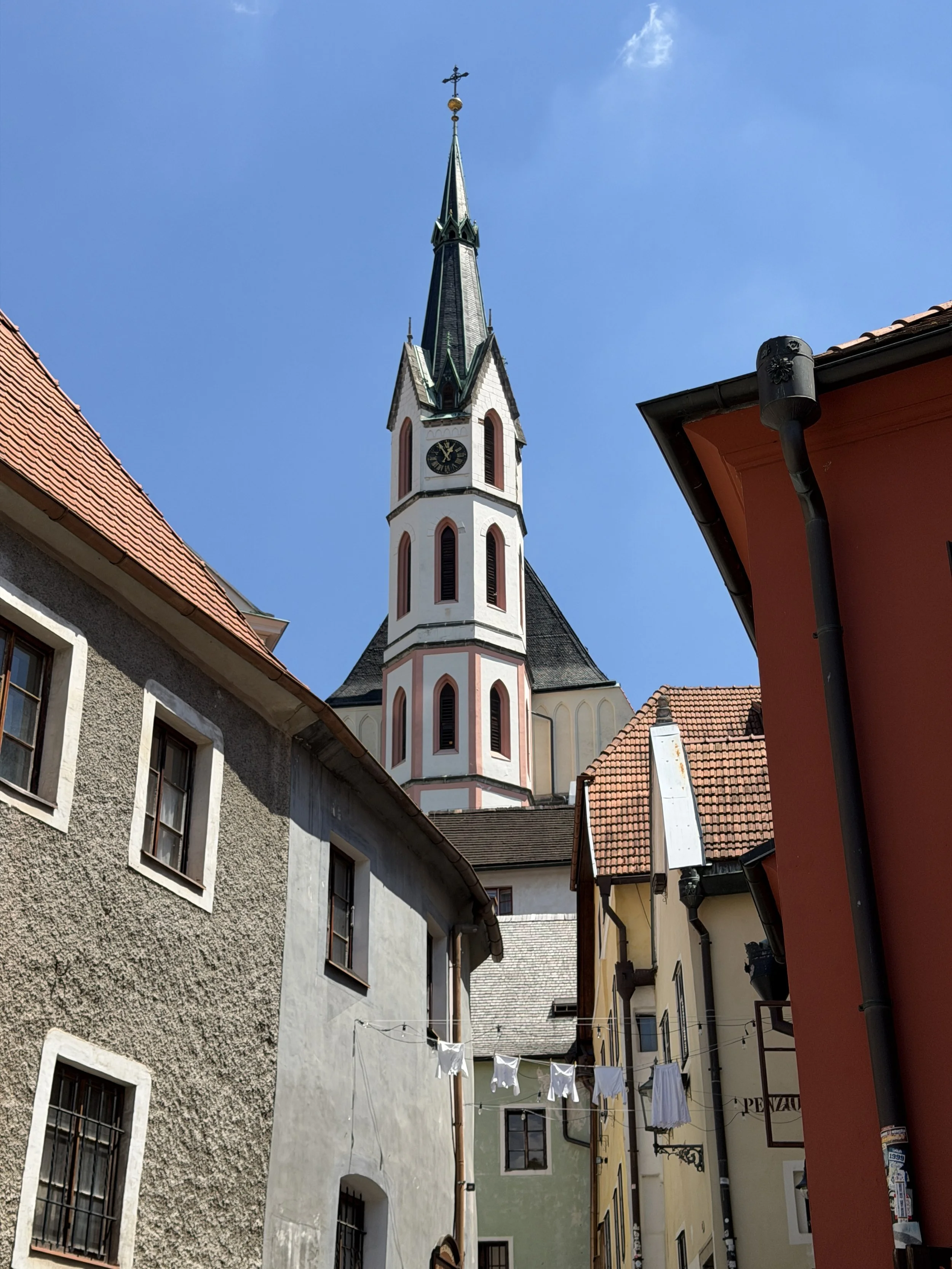
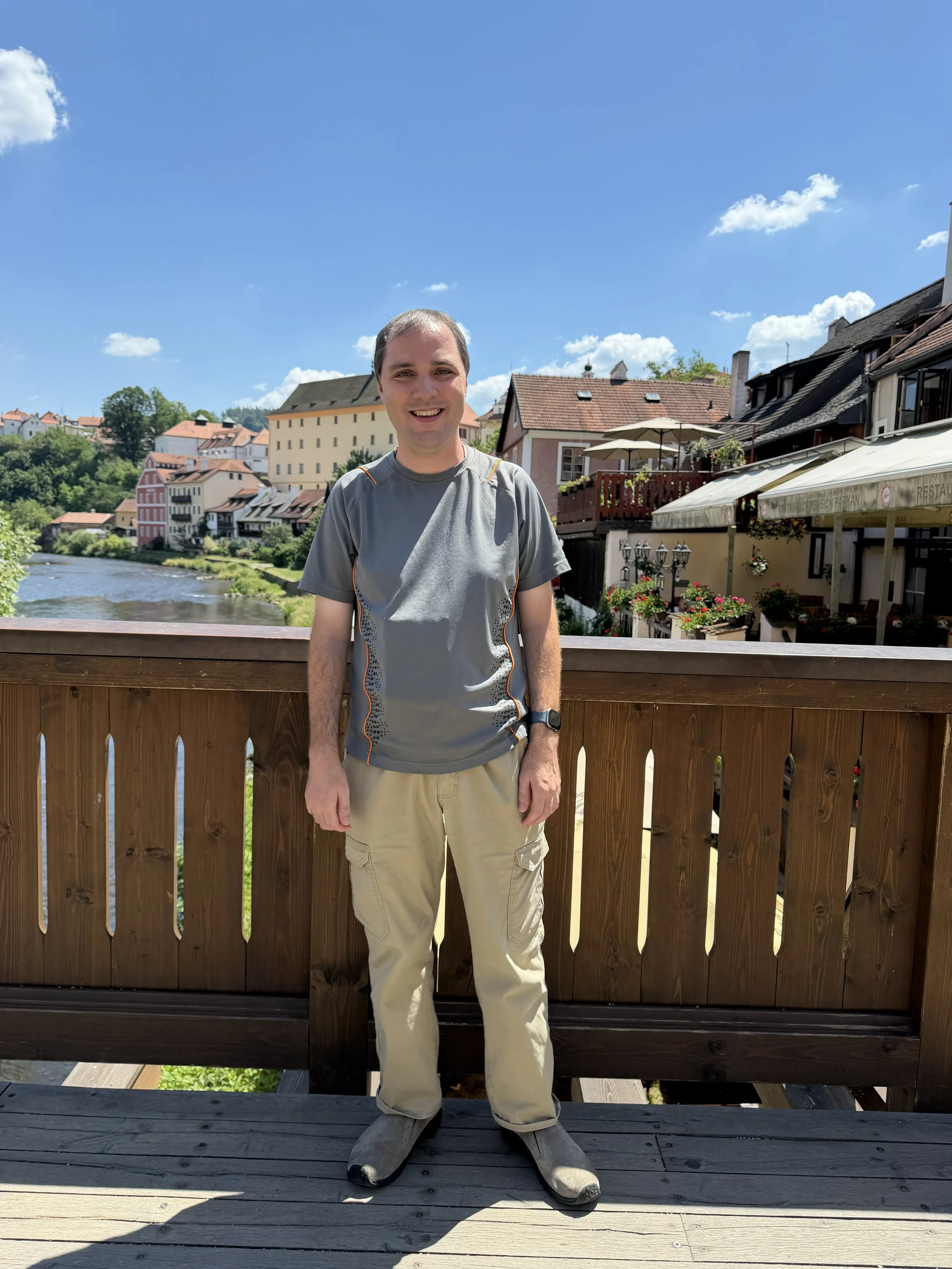
GCC Music Prague / Vienna Day 3: Vienna Tour
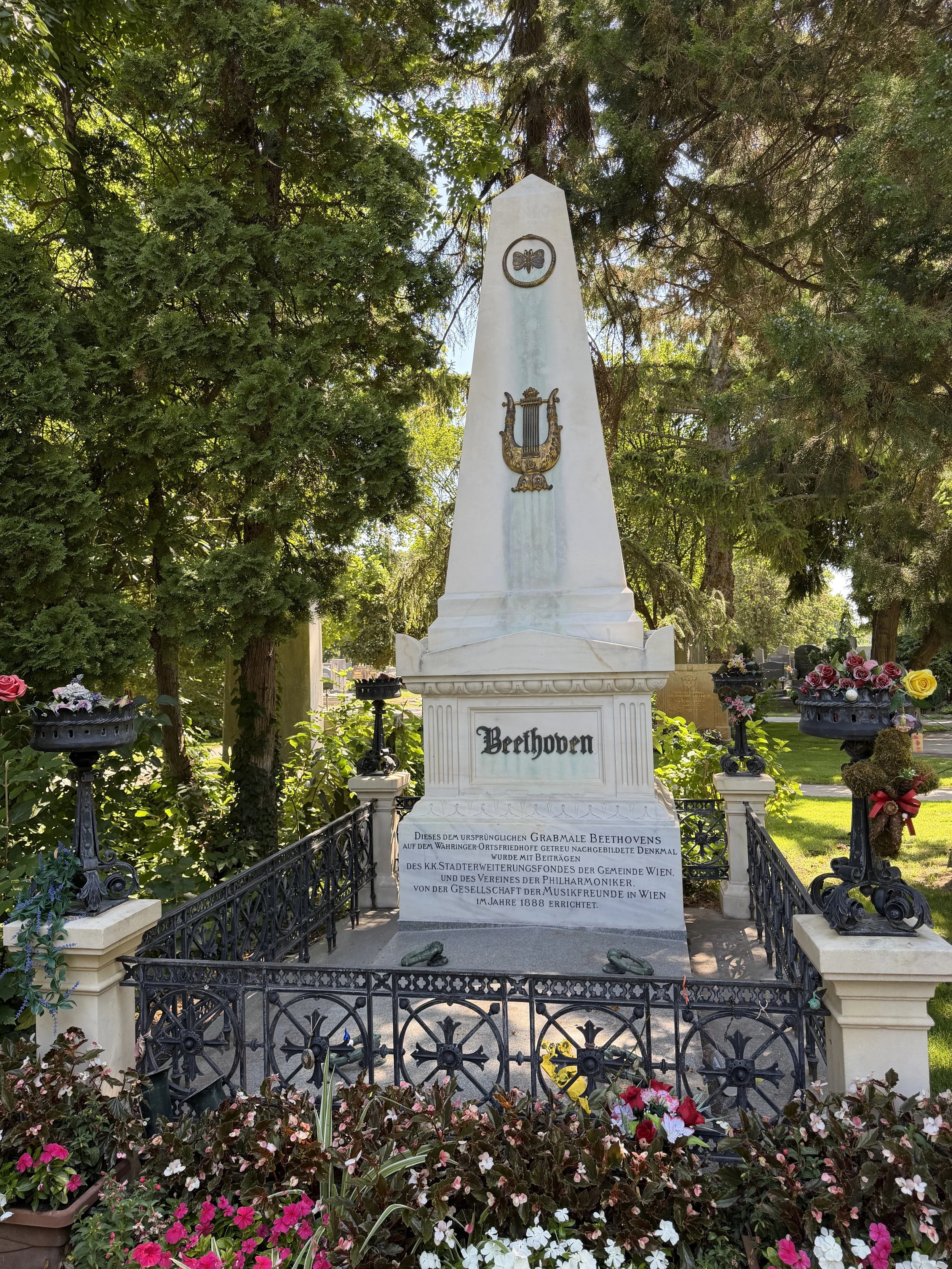
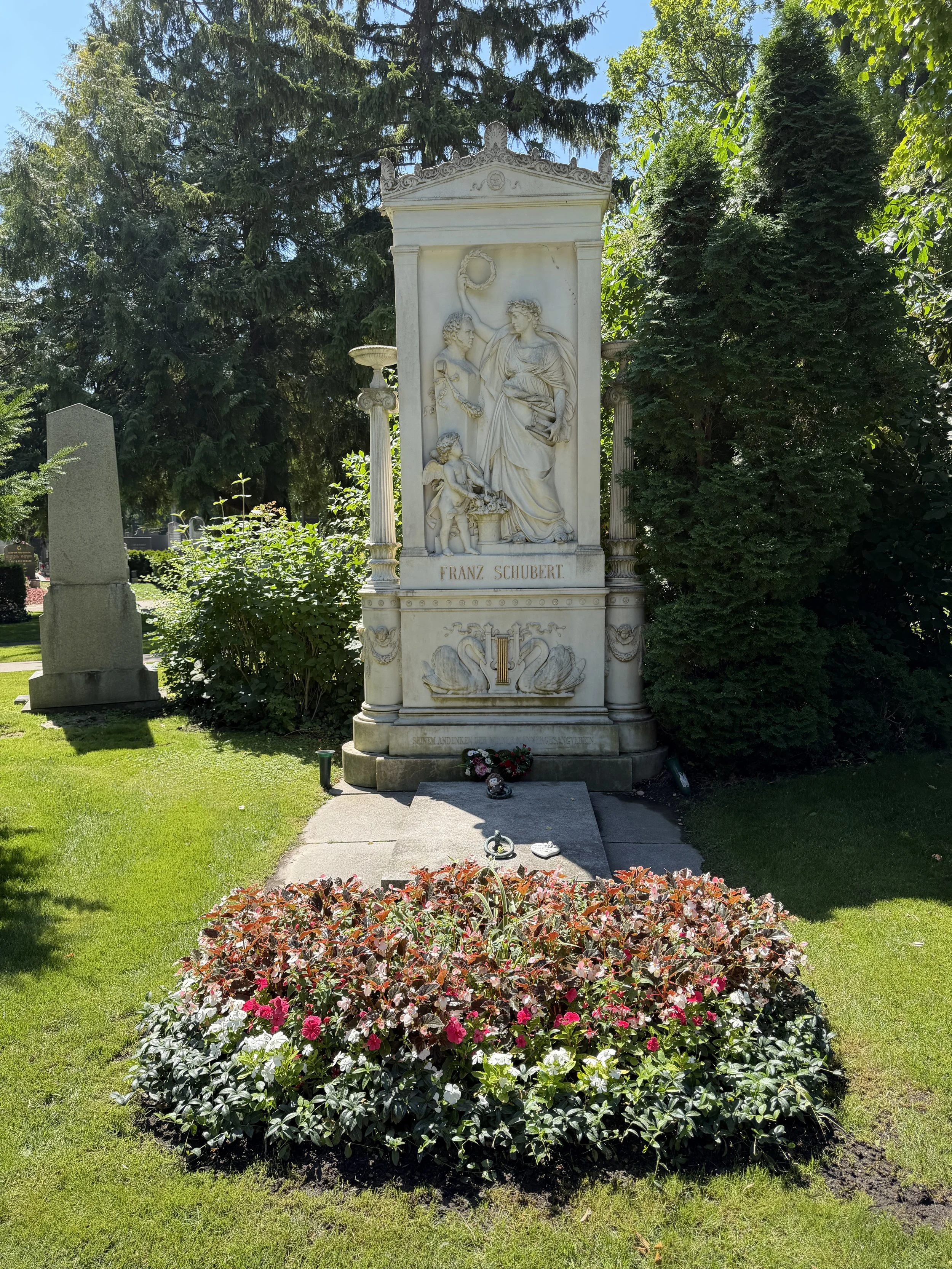
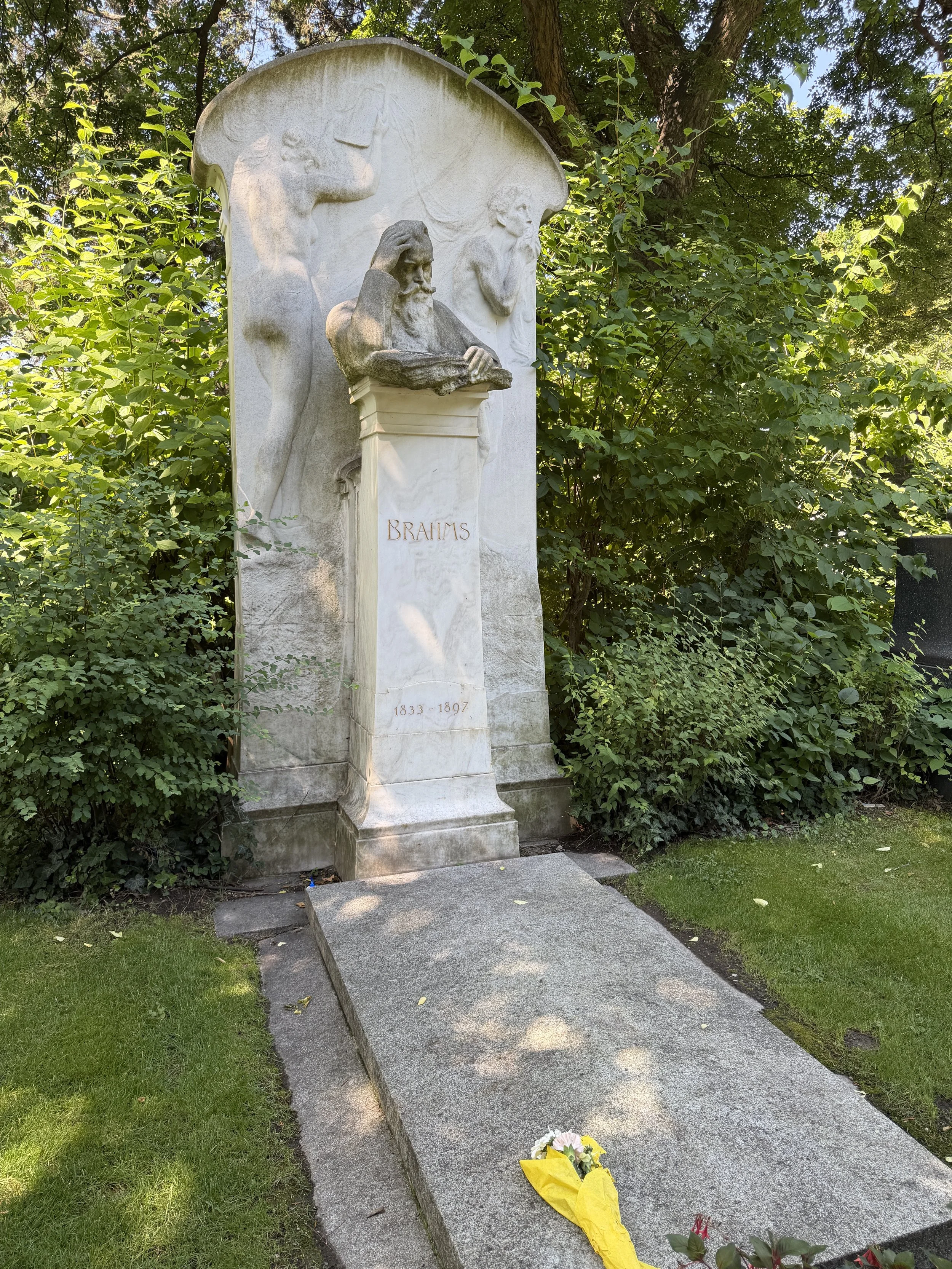
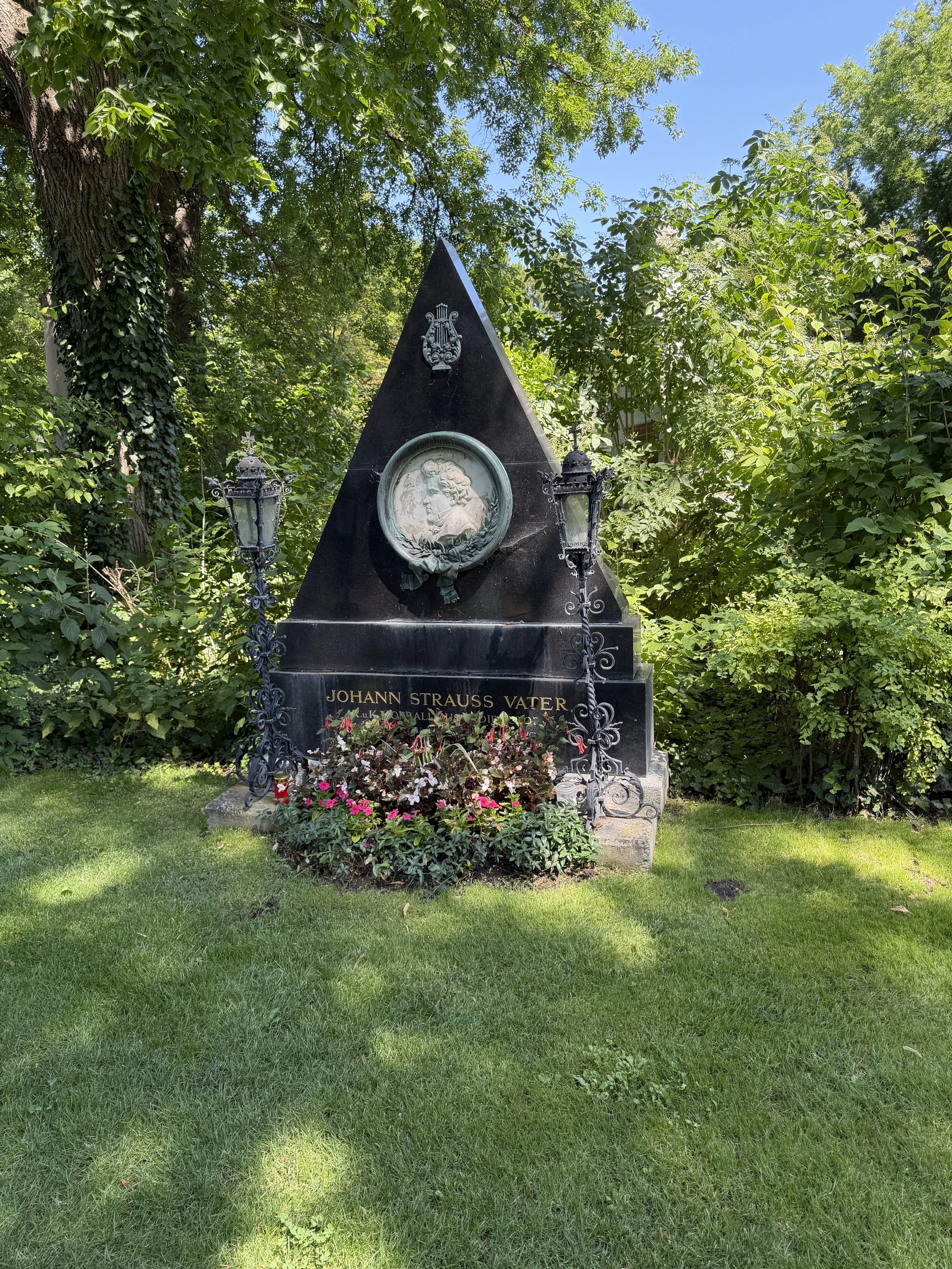
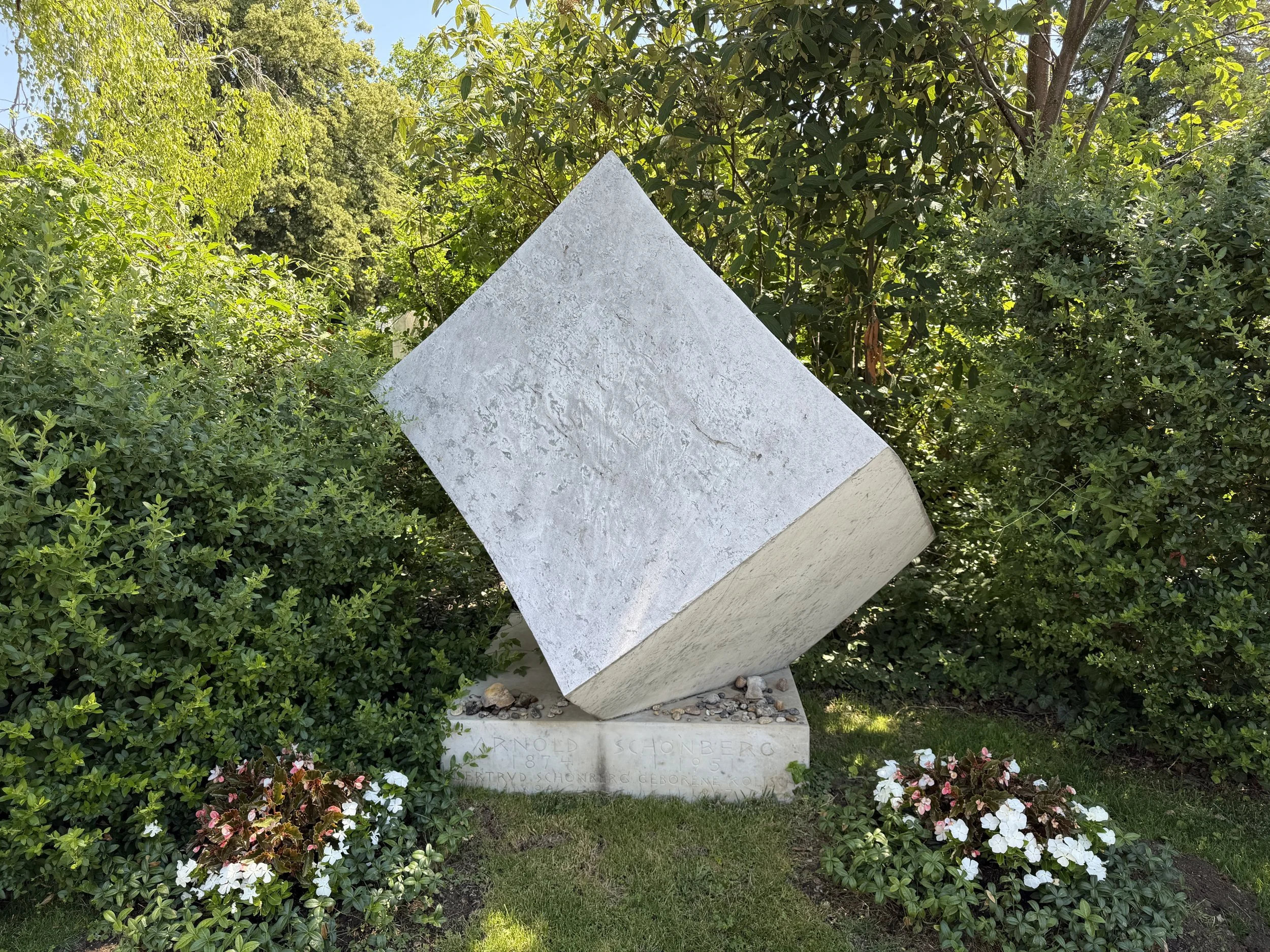
Today was the first of our exploration days in Vienna. We did a group tour of Vienna this morning mostly by bus. We stopped at the Central Cemetery on the outskirts of Vienna, where we got to see the current burial sites for Ludwig van Beethoven, Franz Schubert, Johannes Brahms, and several more famous composers including Arnold Schoenberg. Some of them were originally buried elsewhere and later moved to the Central Cemetery, others were originally buried there.
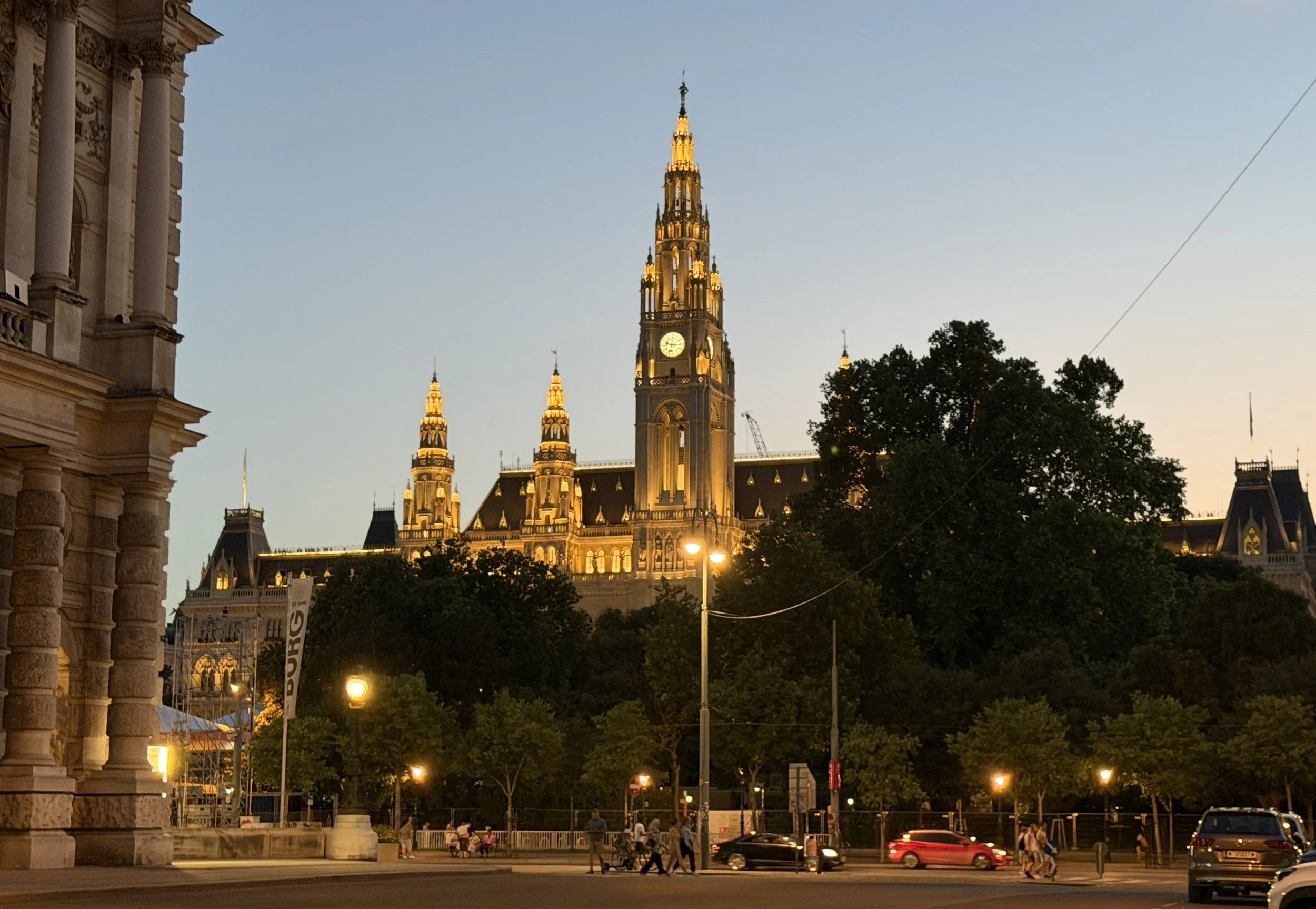
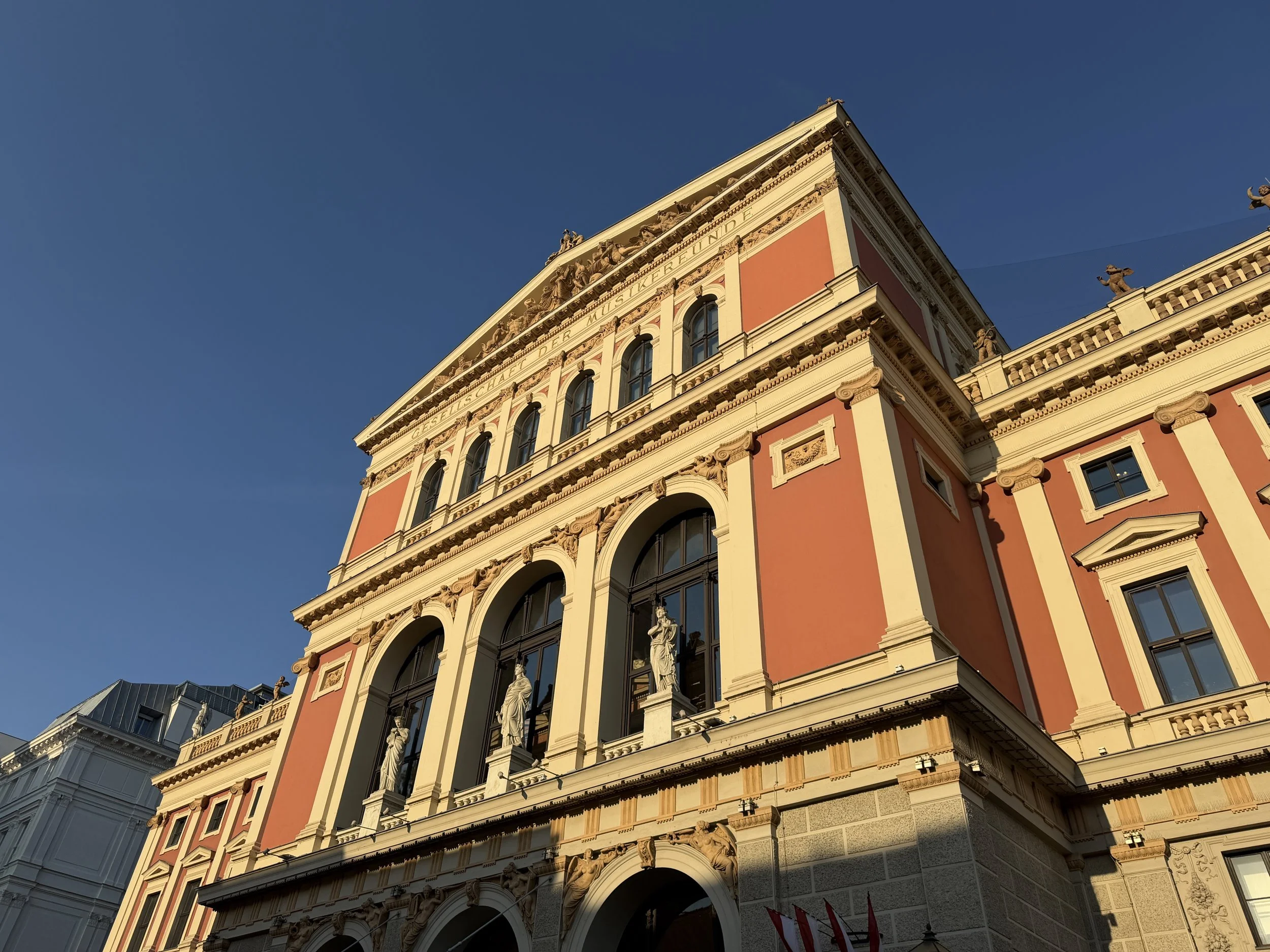
Then we headed back to the city center, did the ring road tour around the old town part of the city, and ended at the edge of the pedestrian-only large square. Sights from the bus tour included the Musikverein where the Vienna Philharmonic resides (we’ll be seeing a concert there on Sunday with another orchestra), the Vienna Opera House, a very ornate city hall, and statues to Johann Strauss the Elder and Mozart in some parks among other sights.
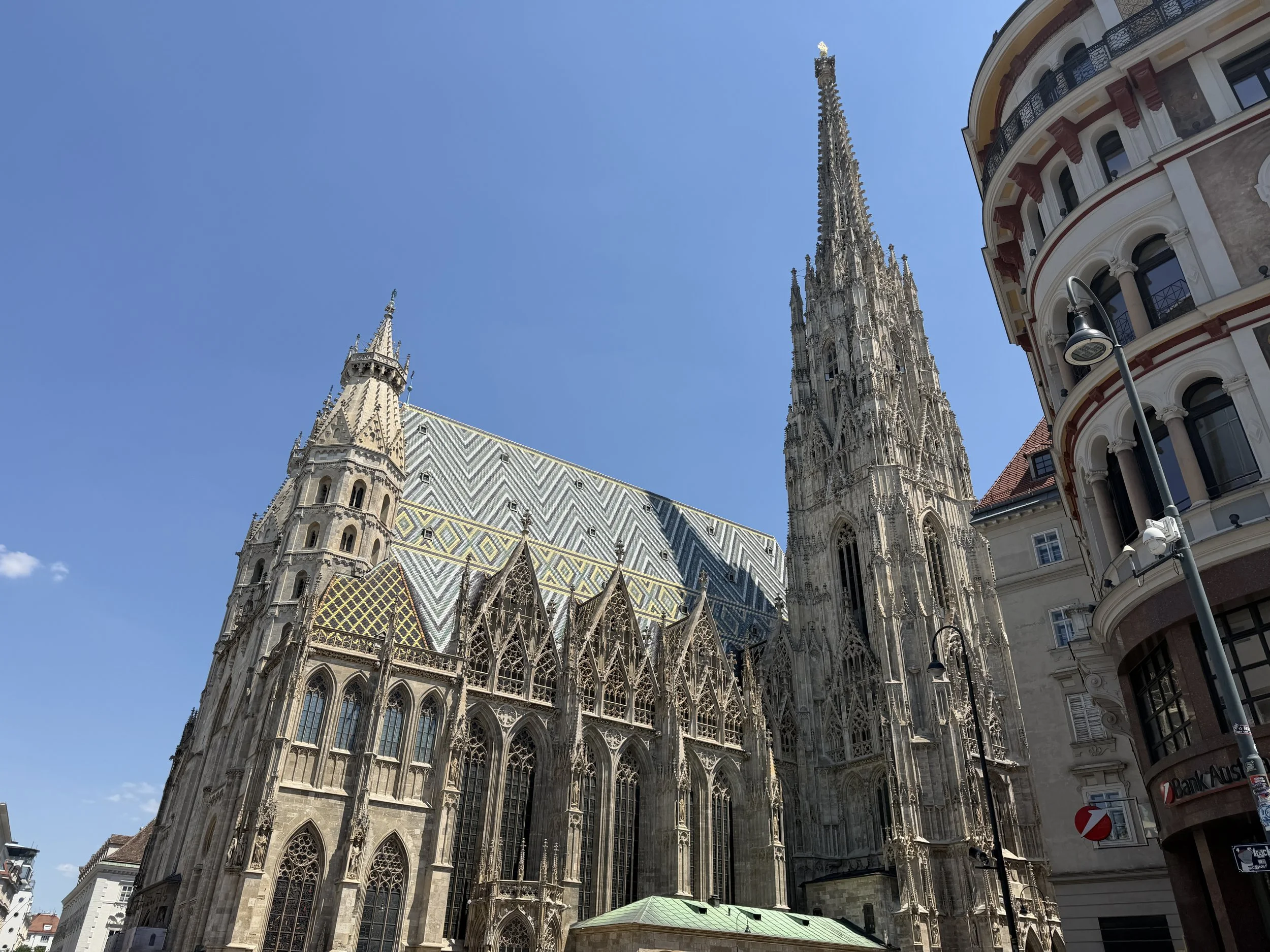
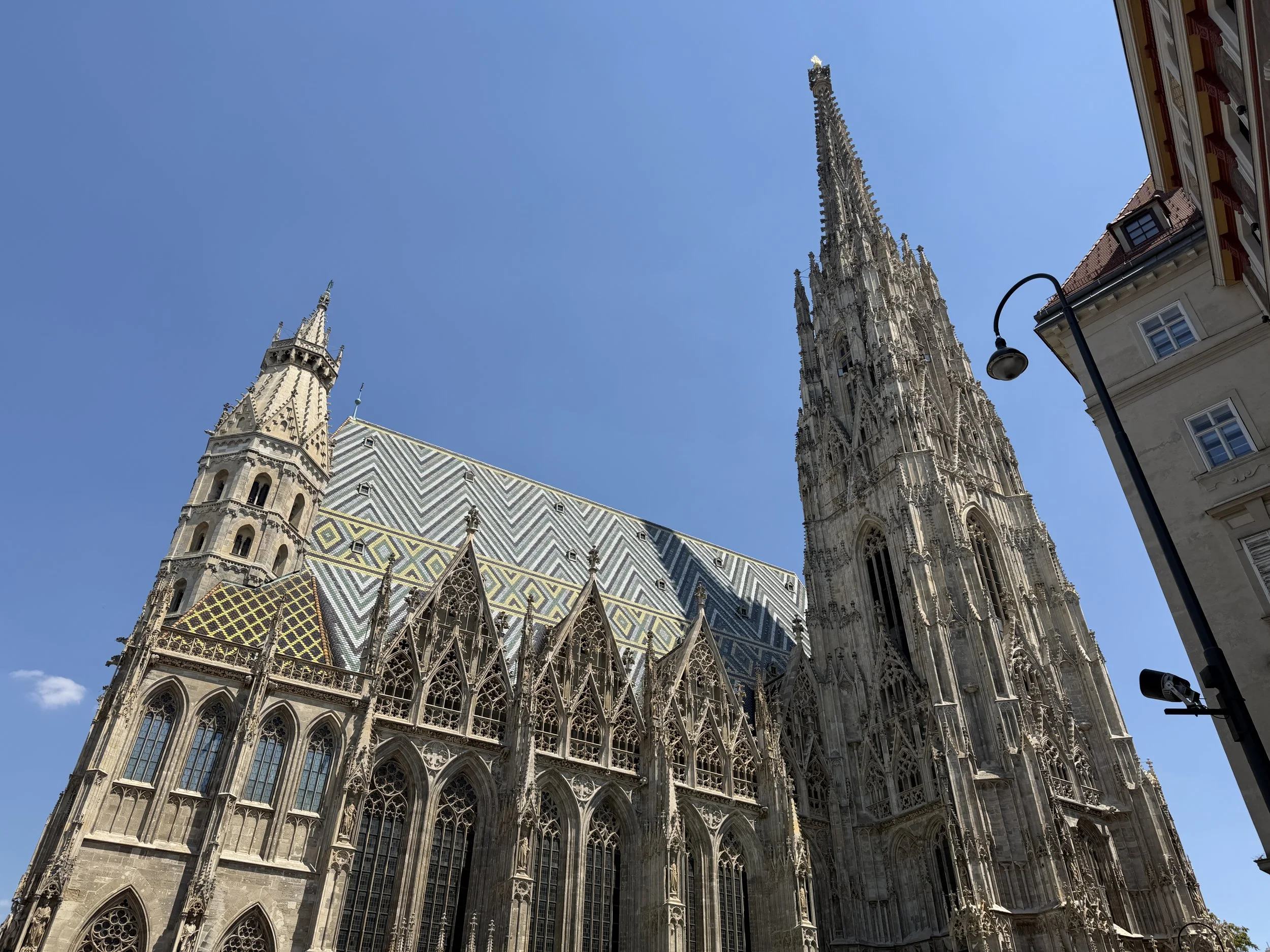
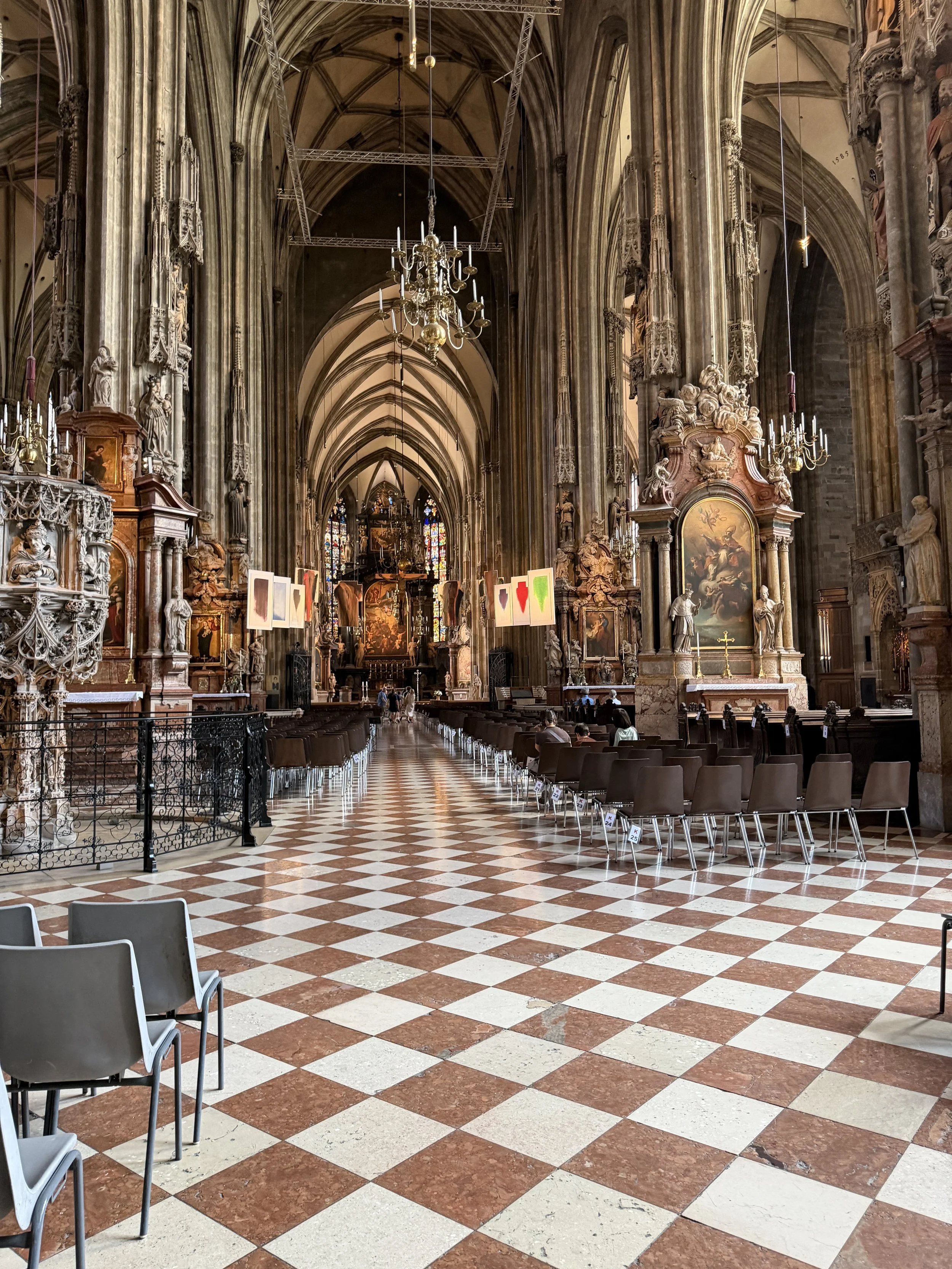
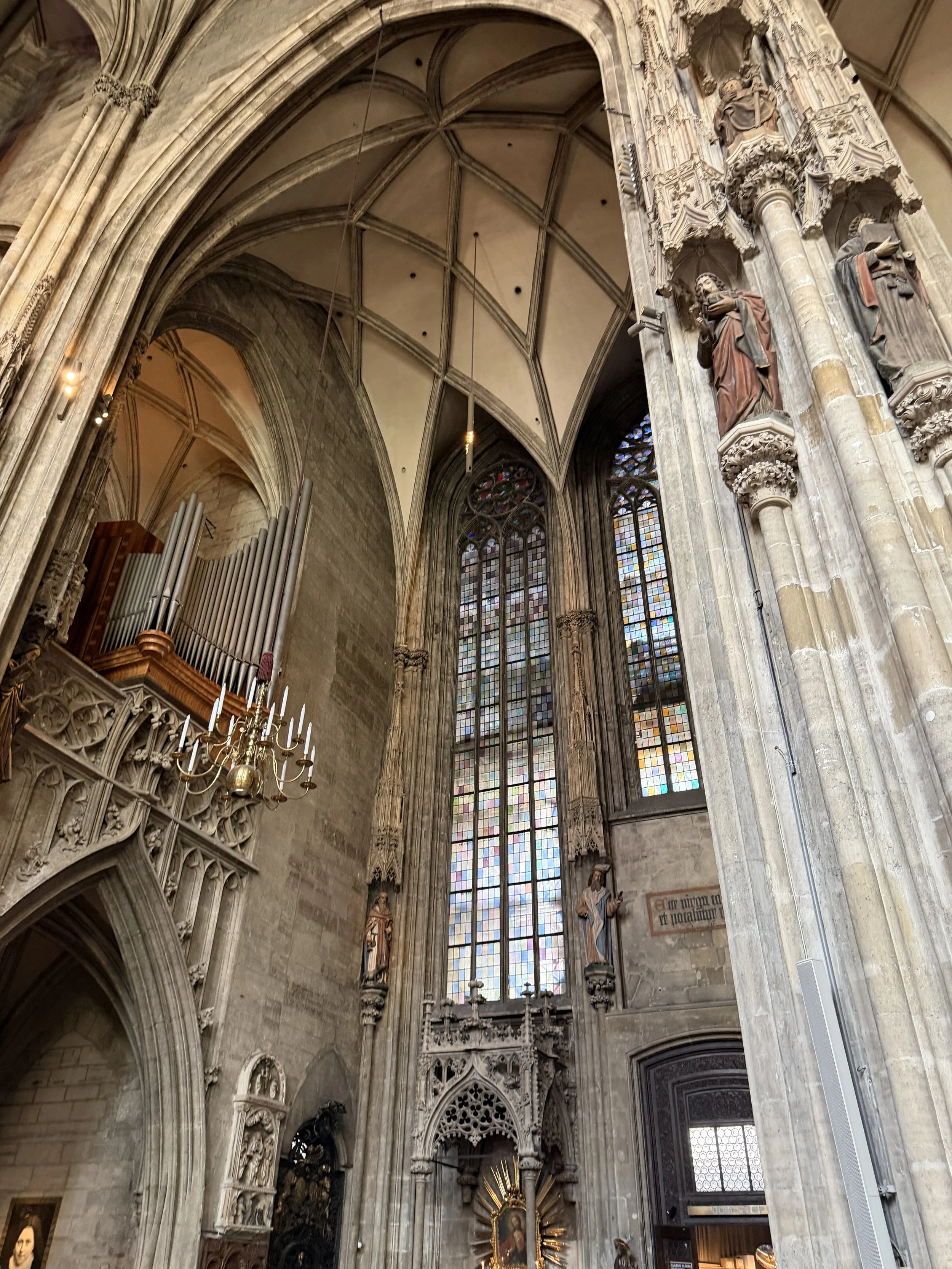
The walking tour afterwards was short, but mostly looked at the Hapsburg Imperial Palace complex, ending at the St. Stephens Cathedral in the middle of the city.
We broke for lunch and an afternoon of exploration (or relaxation). Our group decided to do lunch at a cafe near the cathedral while we waited for the next tour of the St. Stephens Cathedral Crypt. Lunch for me was a good toasted mozzarella sandwich, relatively light in the heat.
The crypt was great, cool from the heat and interesting to visit. We were not allowed to take photos or videos in there, but they showed us the “old” part of the crypt dating from around the 14th century, and the “new” part of the crypt, dating from the 18th century. Interestingly, the “new” part looked and felt older than the old part did. [Of course, to this American something from the 18th century isn’t “new”, even if it’s newer than something from the 14th century!] They showed us some of the coffins in the old part, and the ossuaries where they would inter the remains of people (basically bones) when they needed more space for new bodies in the larger chambers.
We decided to head back to the hotel for the rest of the afternoon before our first group dinner, which was at Melker Stiftkiller restaurant. We were supposed to be having beef goulash, but they surprised us tonight with a menu-based three course meal. I started with the ceaser salad, then had grilled chicken and gnocchi for the main course followed by apple strudel for dessert. Once again, all excellent - I haven’t had a bad meal yet on this trip!
Tomorrow we have a free morning to sleep in a bit (if desired), and explore more of the area on our own. We’re heading out to Eisenstadt and the Esterhazy Palace (the starting point for Joseph Haydn’s career for 30 years among other things) for our group adventure tomorrow, and then more free time in the evening.
GCC Music Prague / Vienna Day 4: Vienna Historical Musical Instruments and Esterhazy Palace
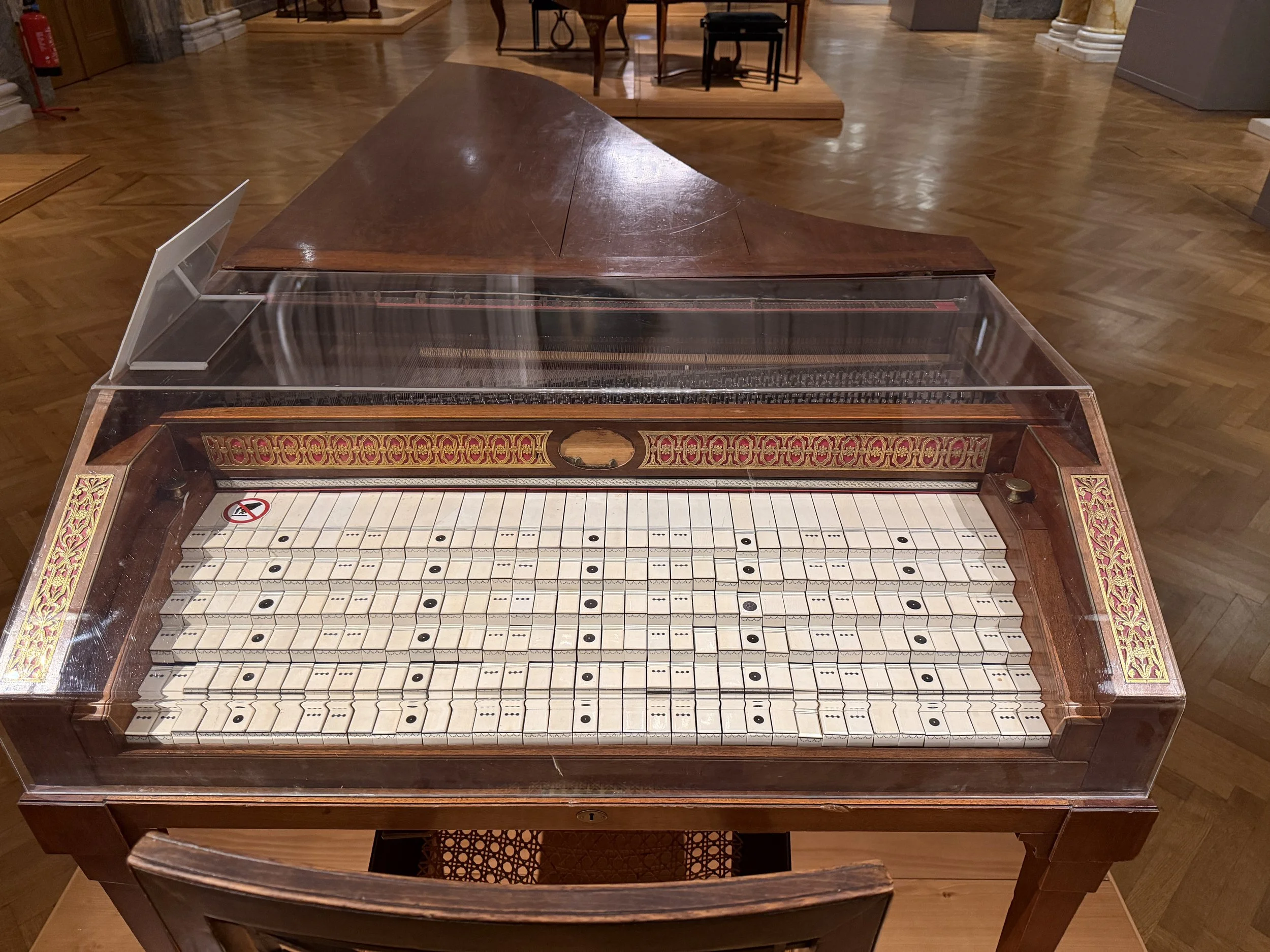
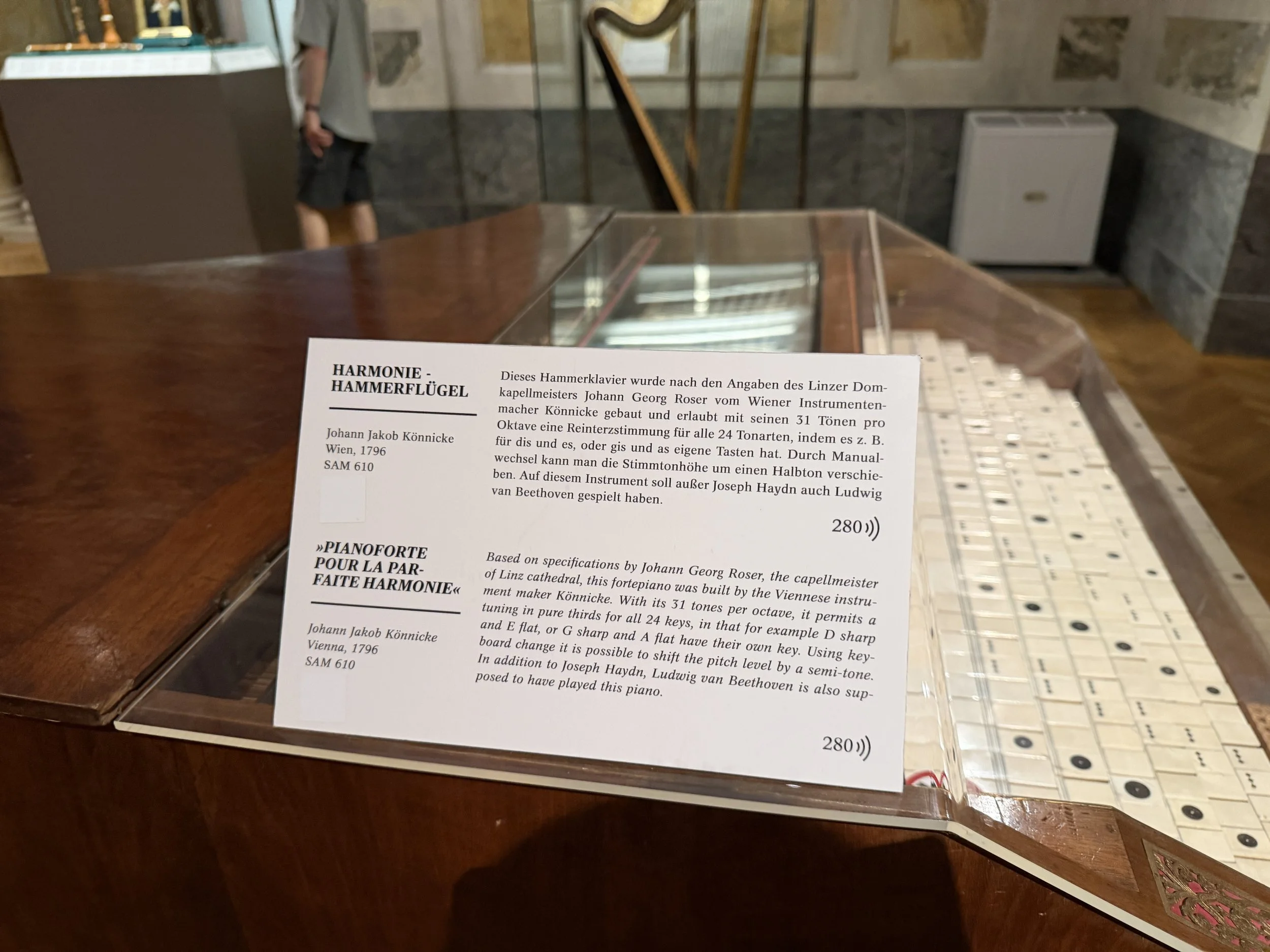
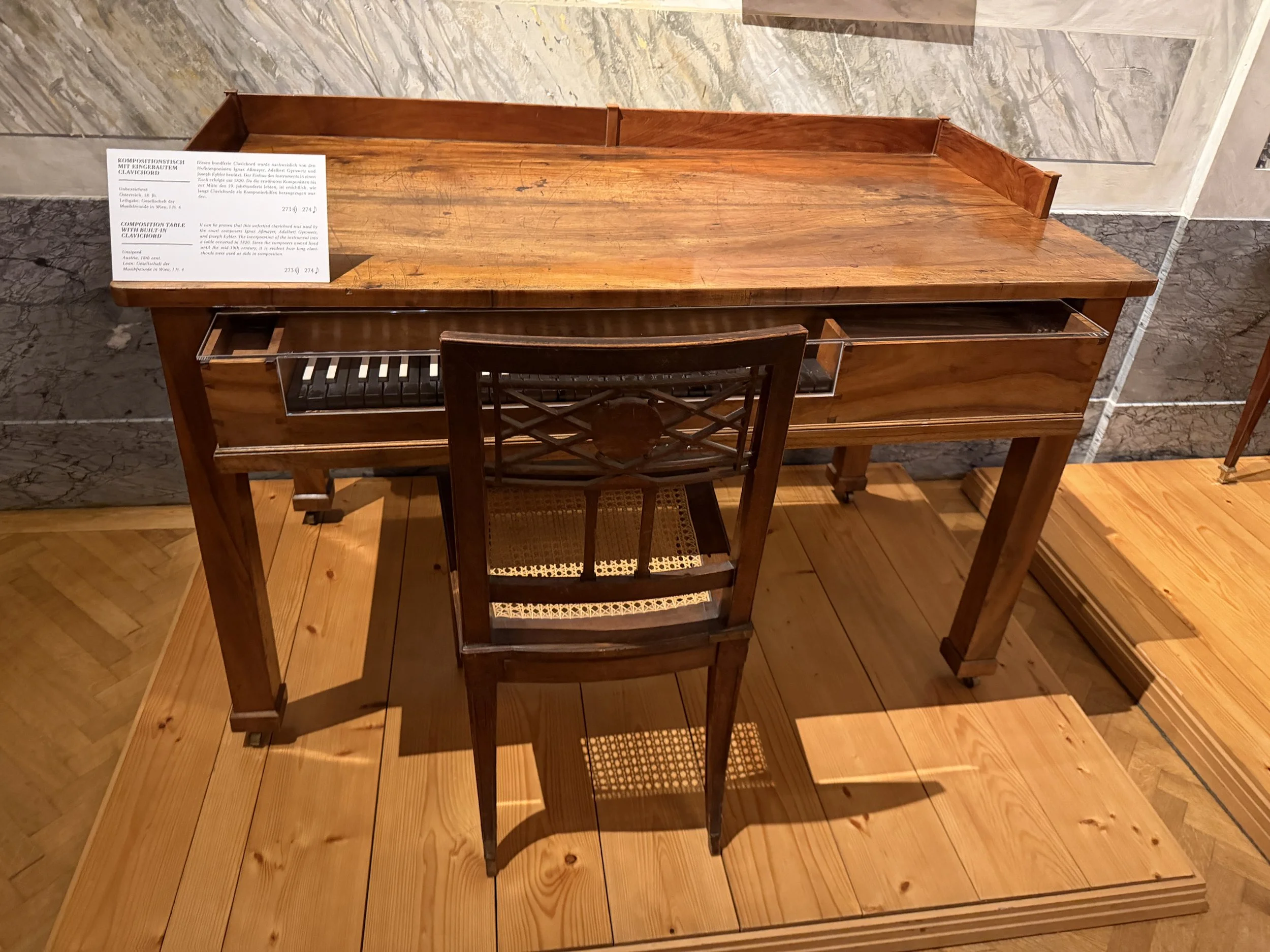
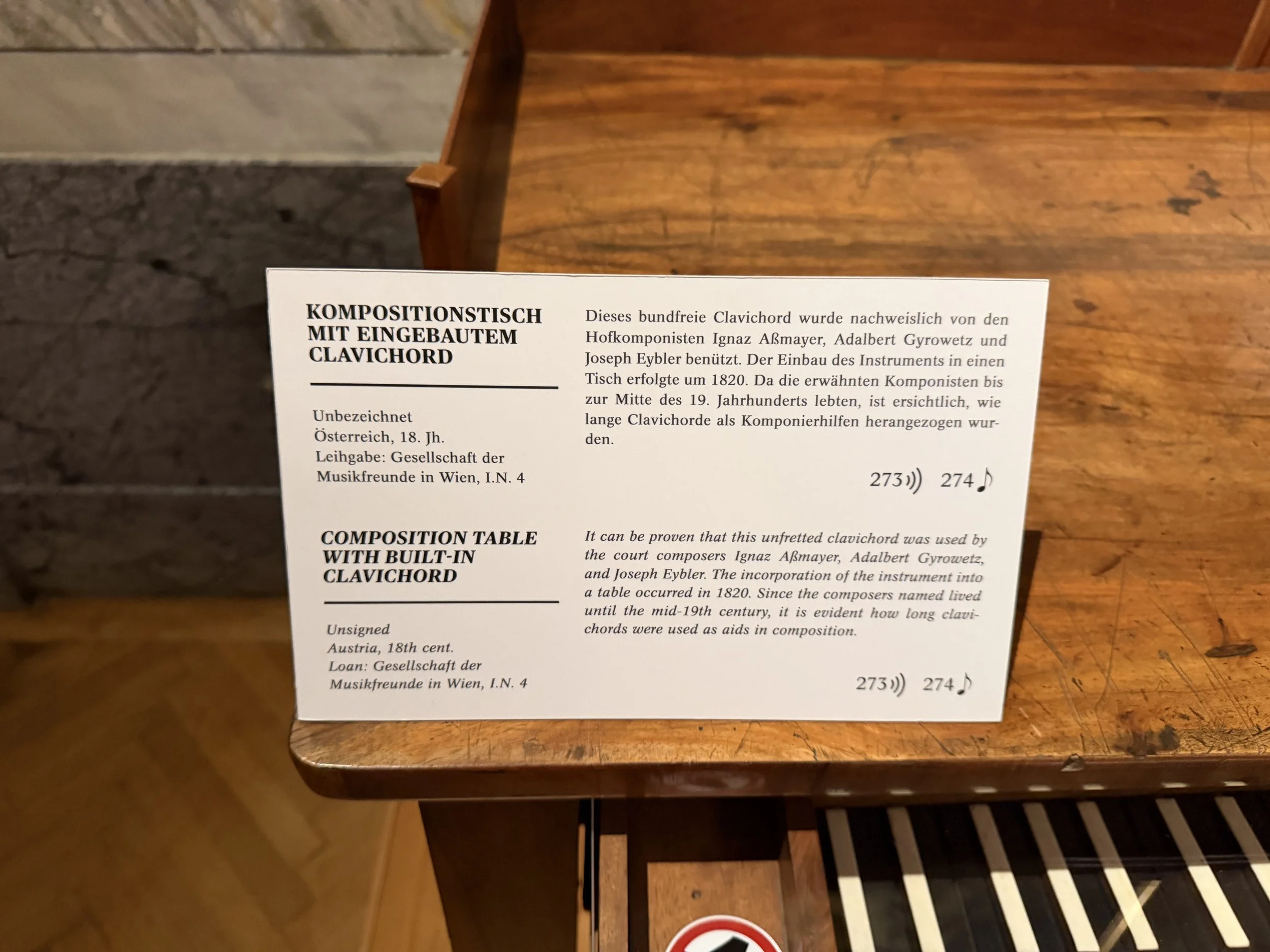
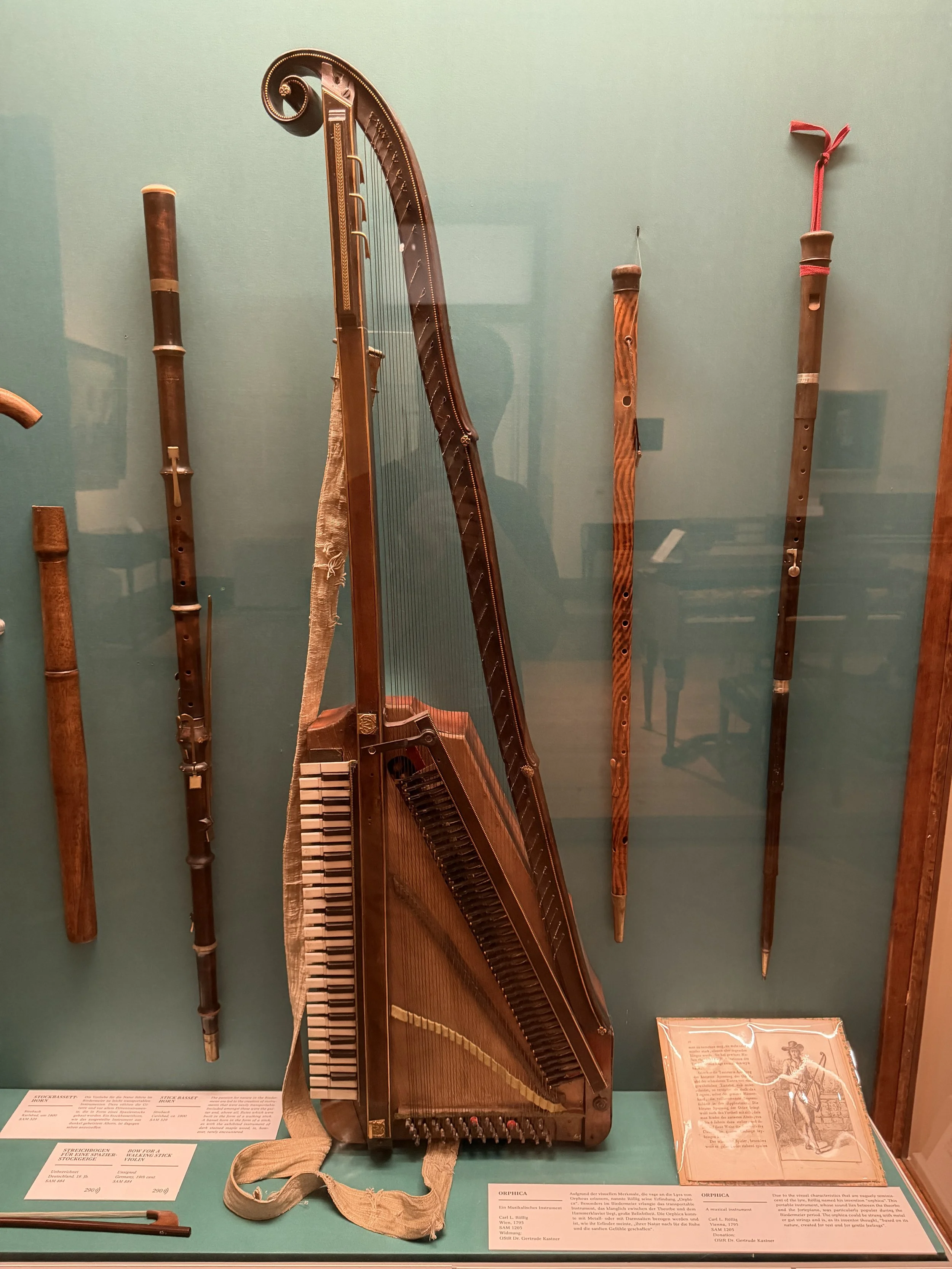
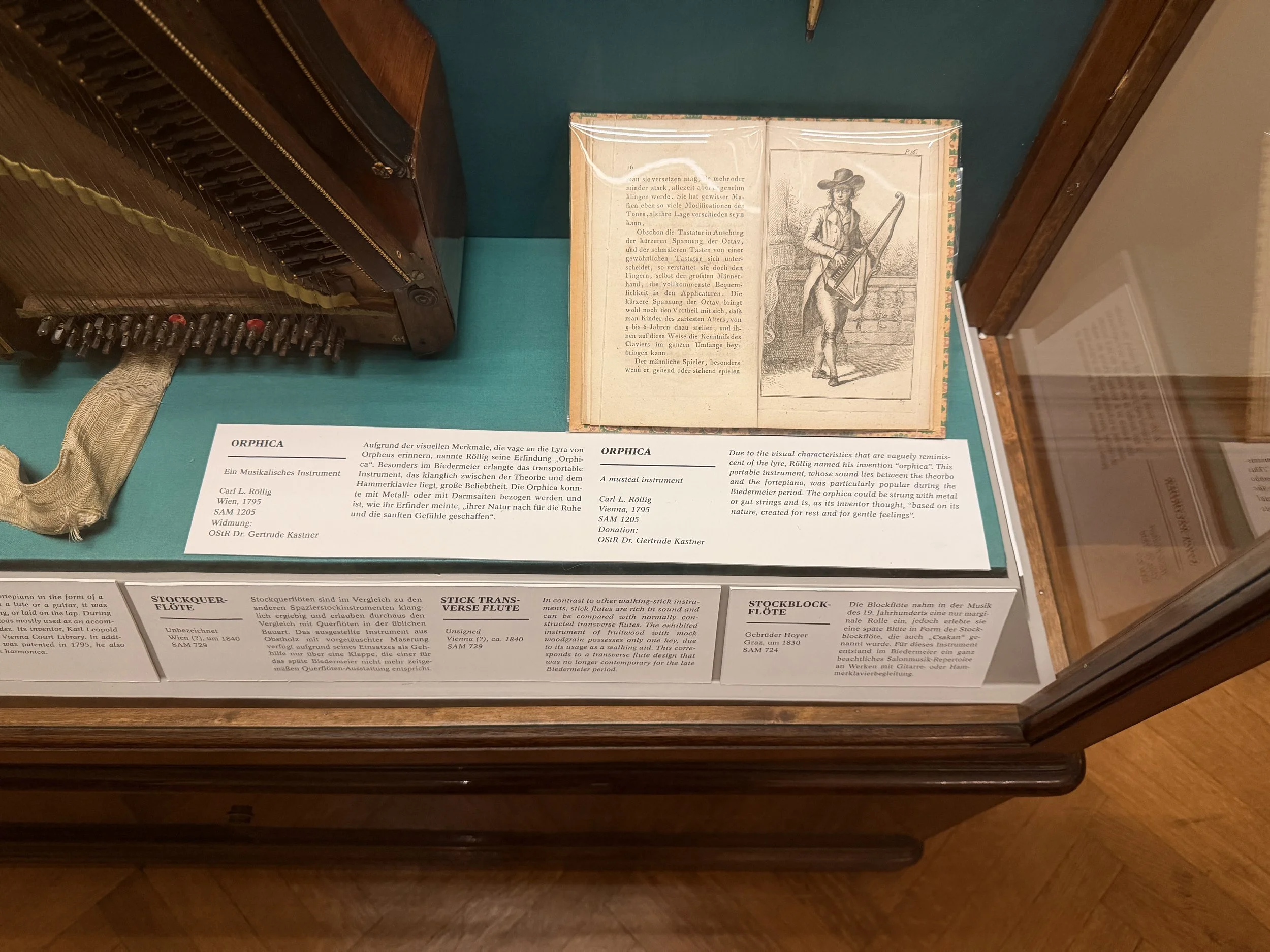
Today we had a lot of free time. We only had one scheduled activity today, which was the trip to the Esterhazy Palace in Eisenstadt. That was in the afternoon. In the morning I joined a group going to the historical instrument exhibit at the art history museum in Vienna (the Kunst Historisches Museum) [Update: It’s confusing, but we were actually at the Welt Museum, which is related to but separate from the Kunst Historisches Museum. The book for the exhibit is labeled with Kunst Historisches Museum though.]. We spent most of two hours there and I could probably have spent a couple more and still not really have seen everything properly!
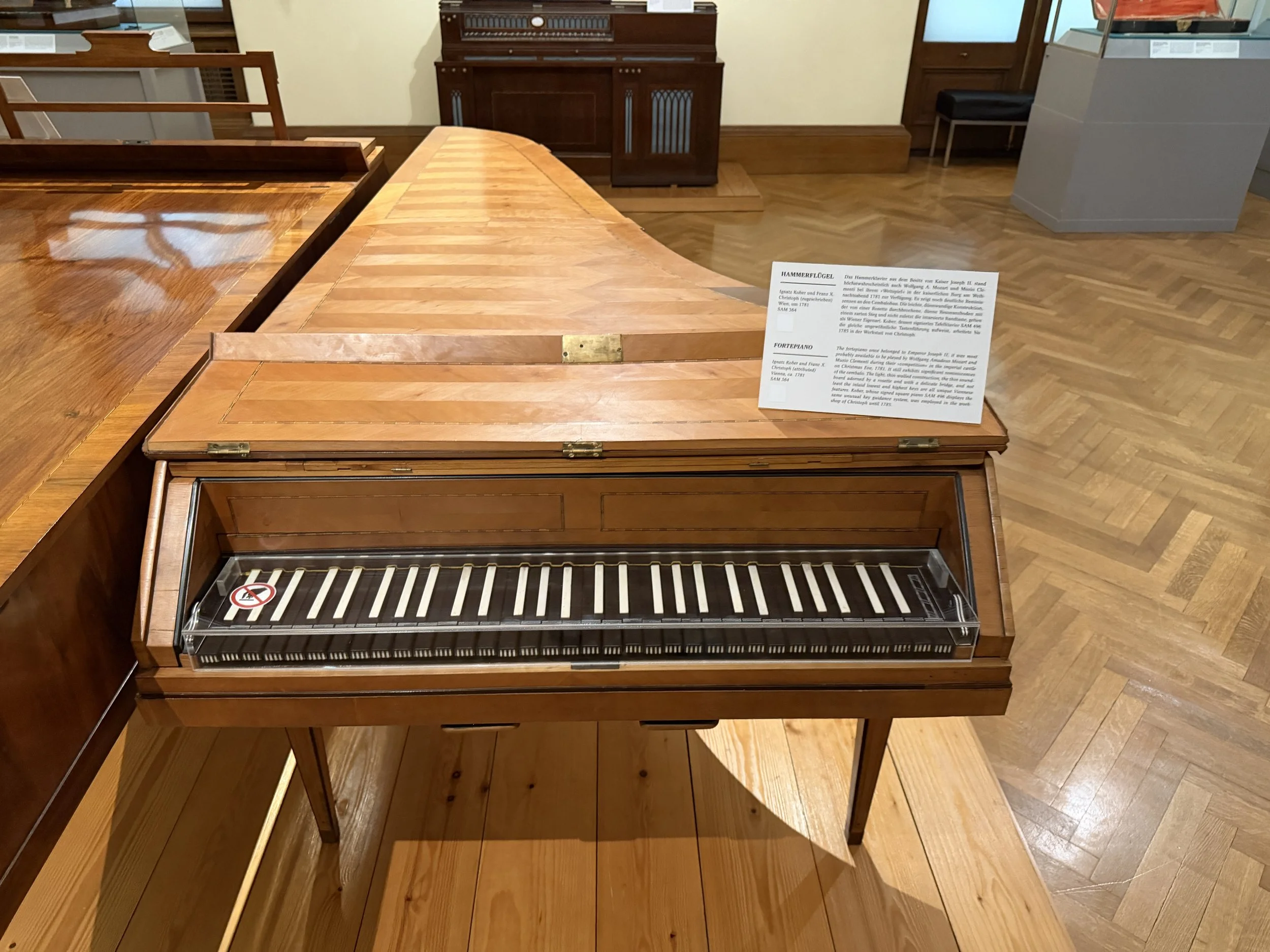
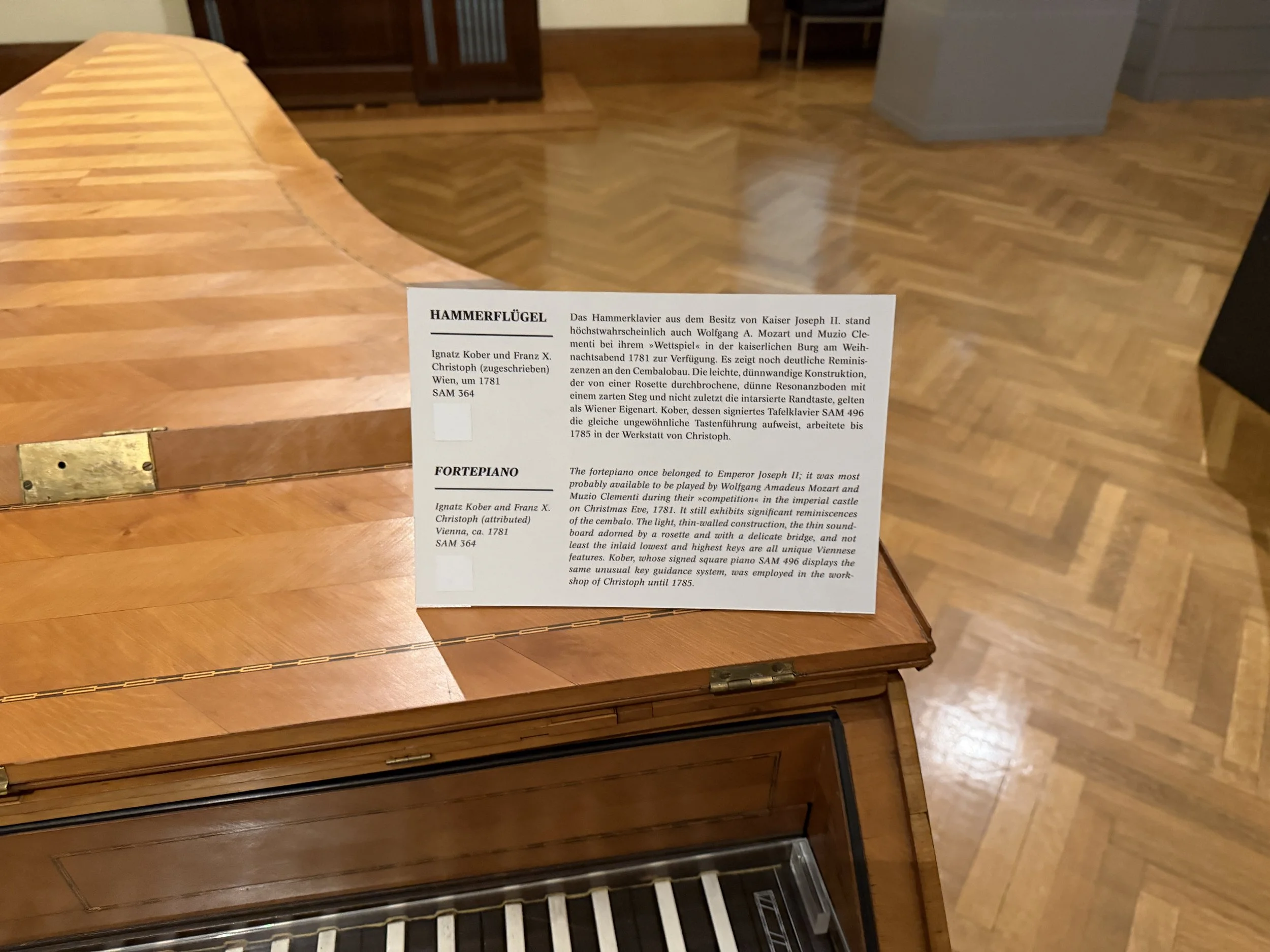
One of my personal goals for this trip was to see a historical instrument museum, ideally with historical keyboard instruments. Vienna was an important city in the development of the modern piano over the course of the 18th and 19th centuries. Haydn, Mozart and Beethoven all made Vienna their home for much or all of their careers, and collectively developed the sound of the High Classical period (often just thought of as the “classical” period, though as my CSUN graduate musicology class took pains to point out, this was hardly all that was going on in that period). A decent chunk of the core of the modern classical solo piano literature comes from the three of them, and they were mostly written for the Viennese style fortepiano, which was somewhat different from the modern grand and upright pianos we use to play the pieces today.
I was hoping I might have a chance to try playing one while I was here, though I know that’s a long-shot. My piano software (Modartt Pianoteq) features many historical keyboard sounds, but it still feels like I’m playing it from a modern digital piano (because I am!). I’ve been on a quest to find real-life acoustic examples of those instruments to try to see what they feel like and how they differ from modern instruments and digital systems. I didn't get to play a historical fortepiano, but I did get to try an acoustic clavichord which they had set up in the museum. I have posted two short videos of me playing it below - a portion of the first prelude of Bach’s Well-Tempered Clavier (followed by a bit of improv), and an improvised piece in F major. Just a quick warning - it was quite out of tune, and a couple of the notes were almost a half-step off, so it doesn’t sound good in that sense, but I hope you enjoy it otherwise! Thanks to Phil and Jen for the videos!
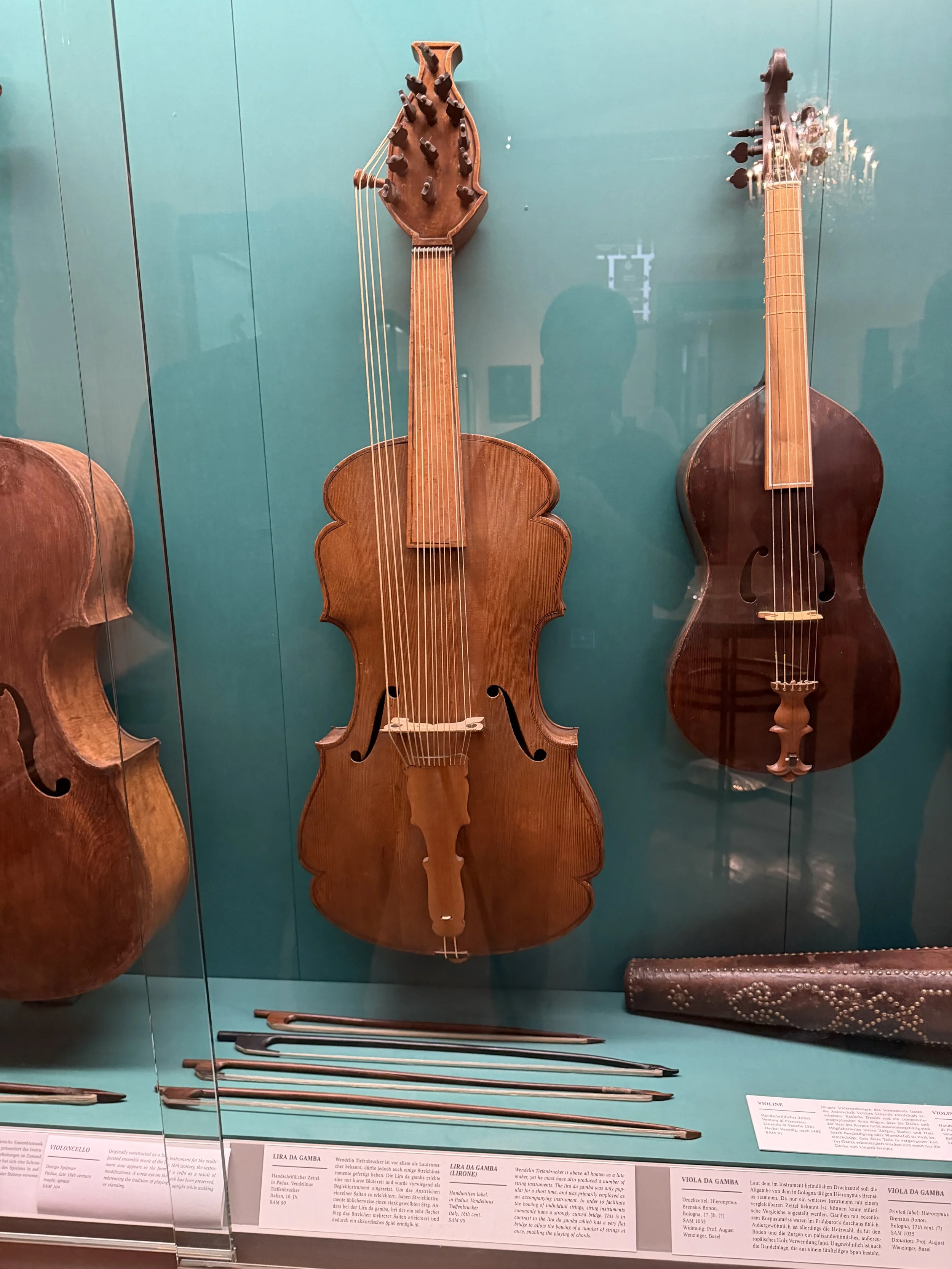
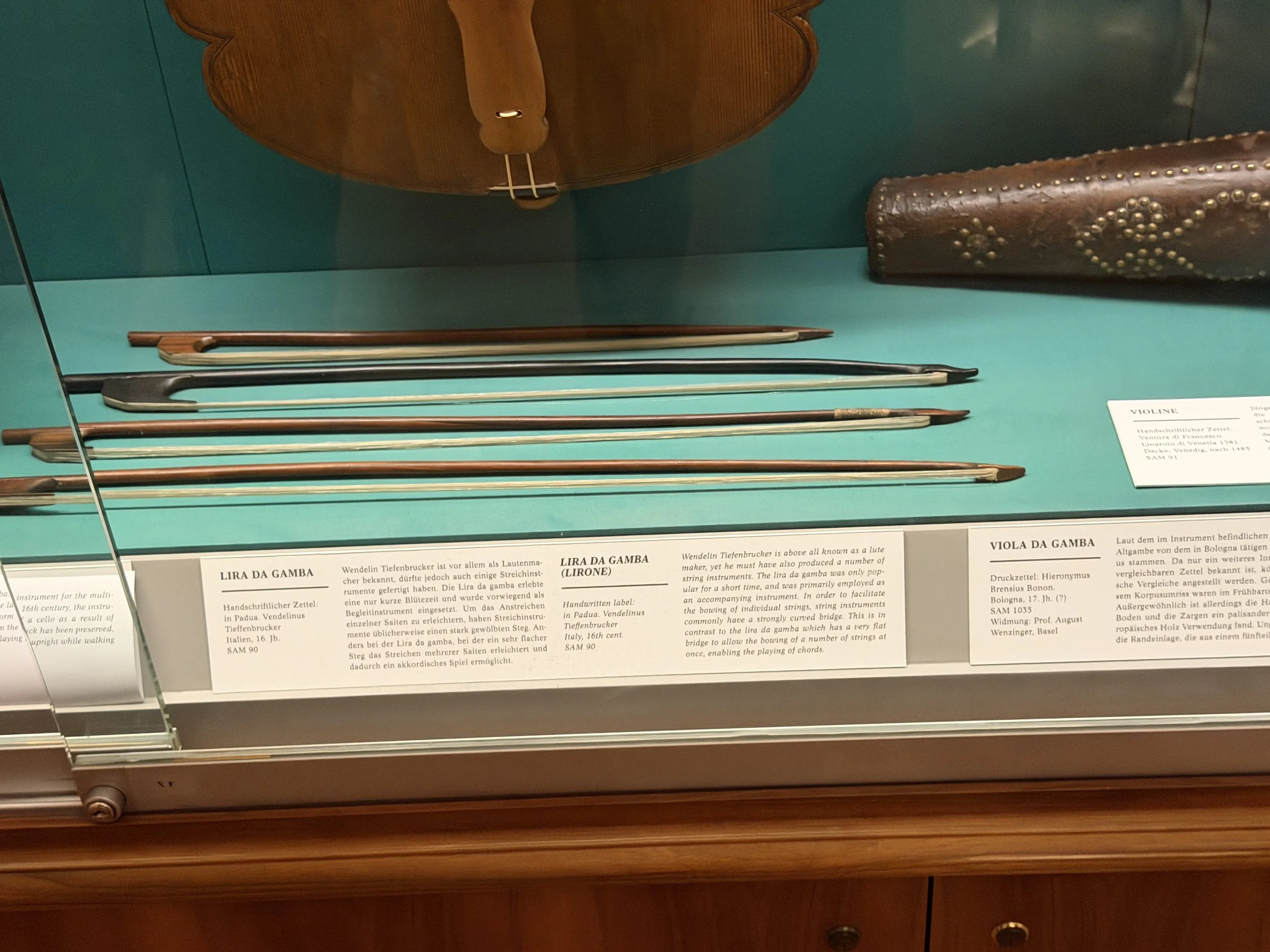
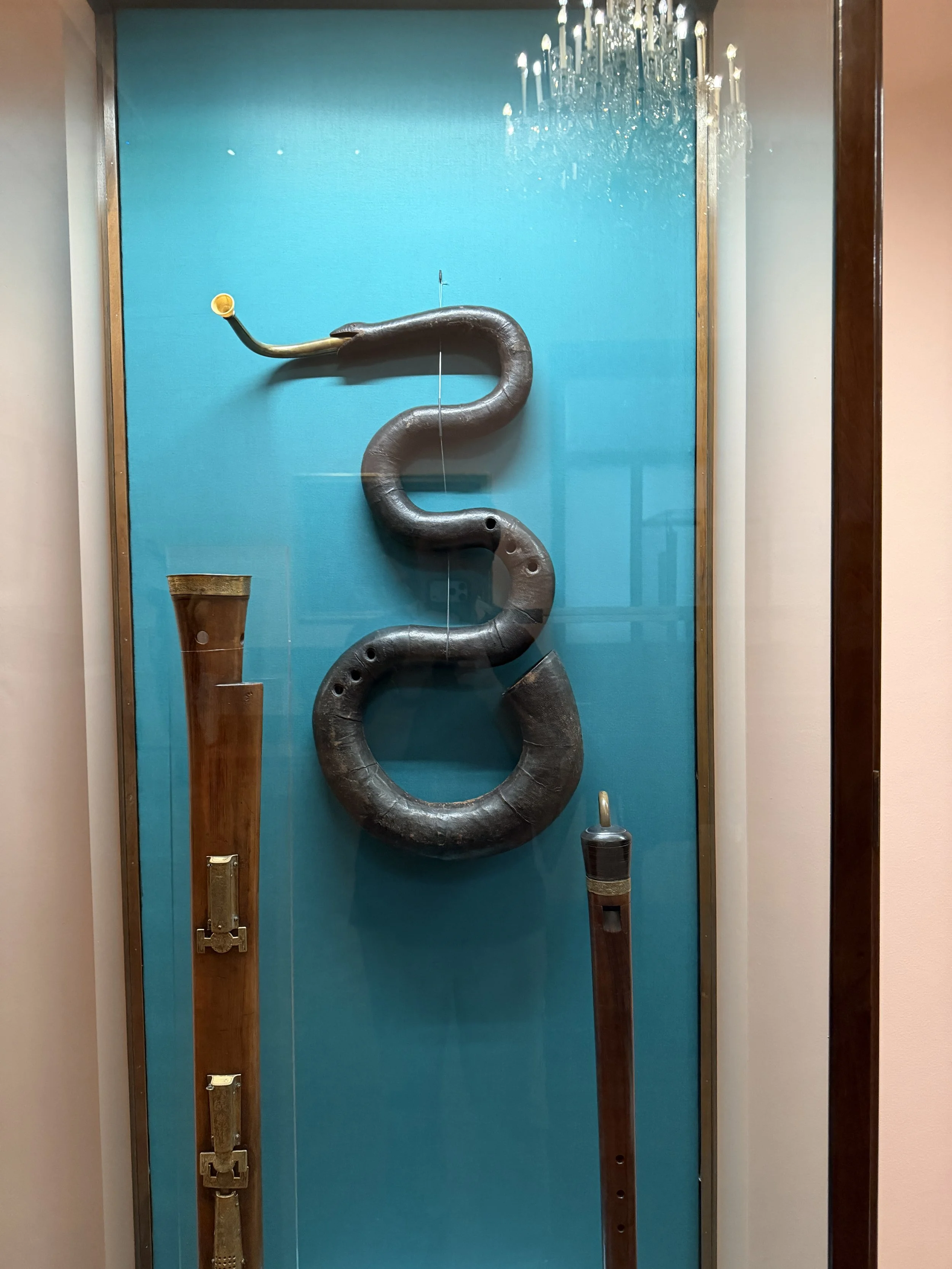
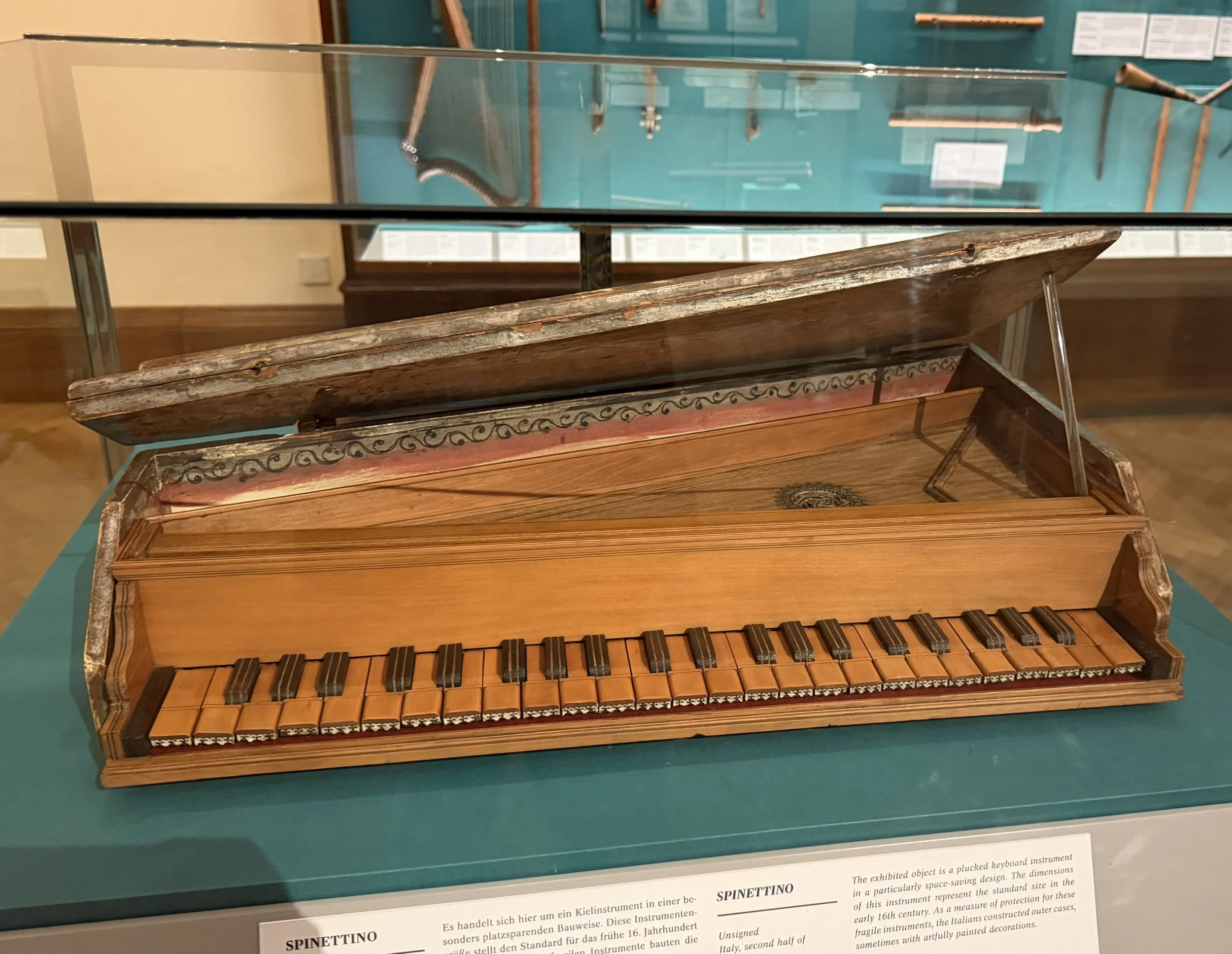
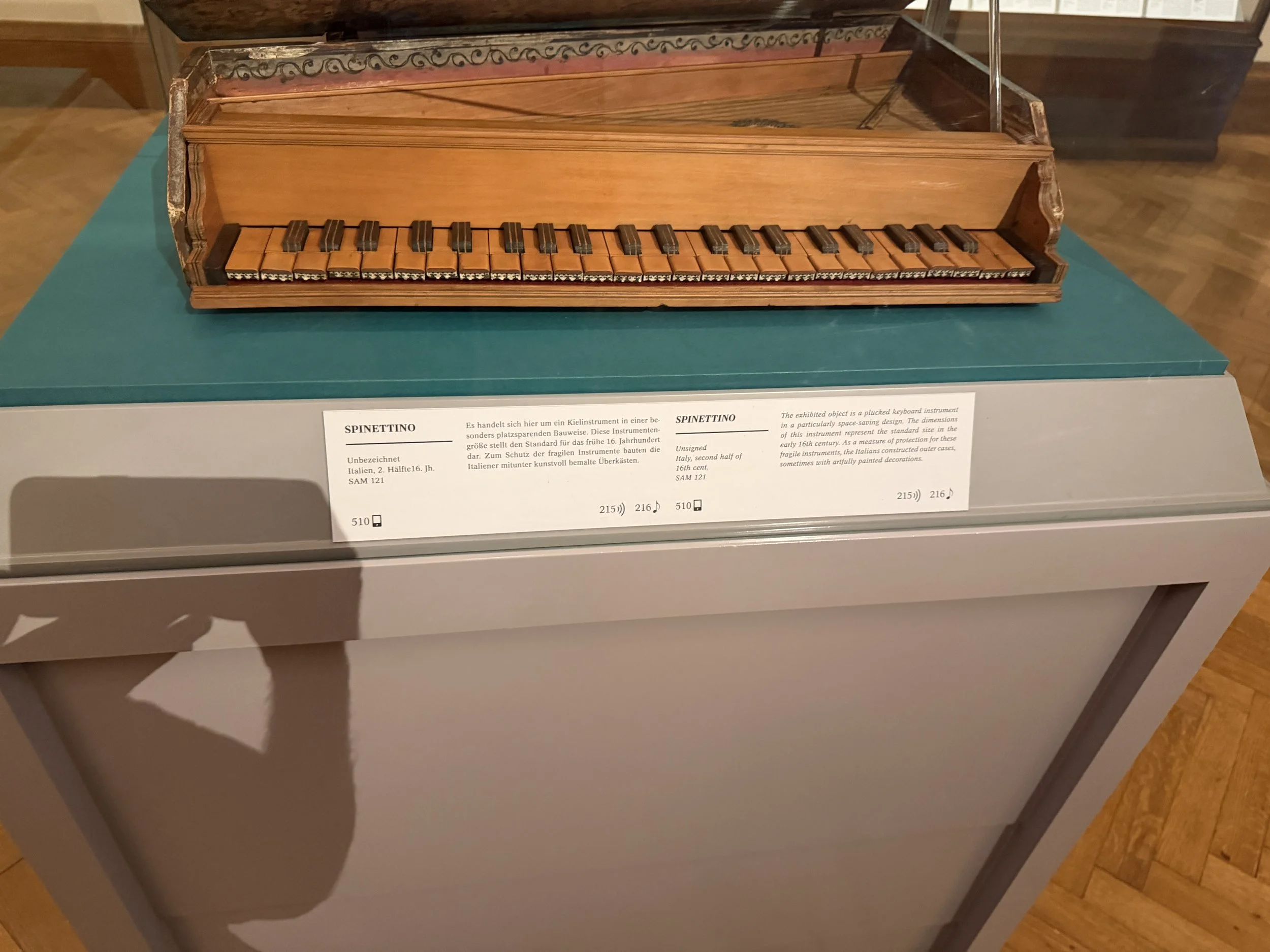
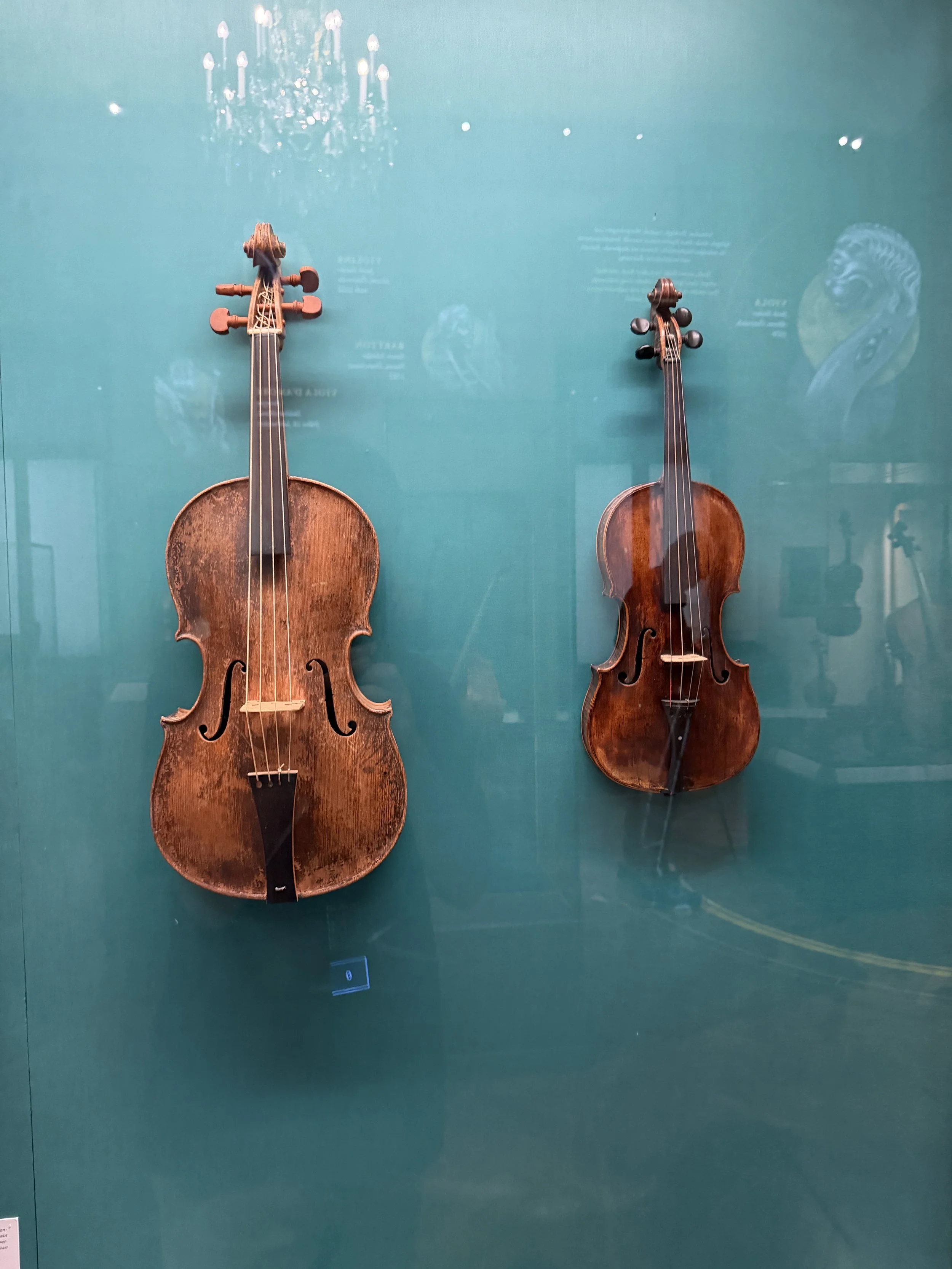
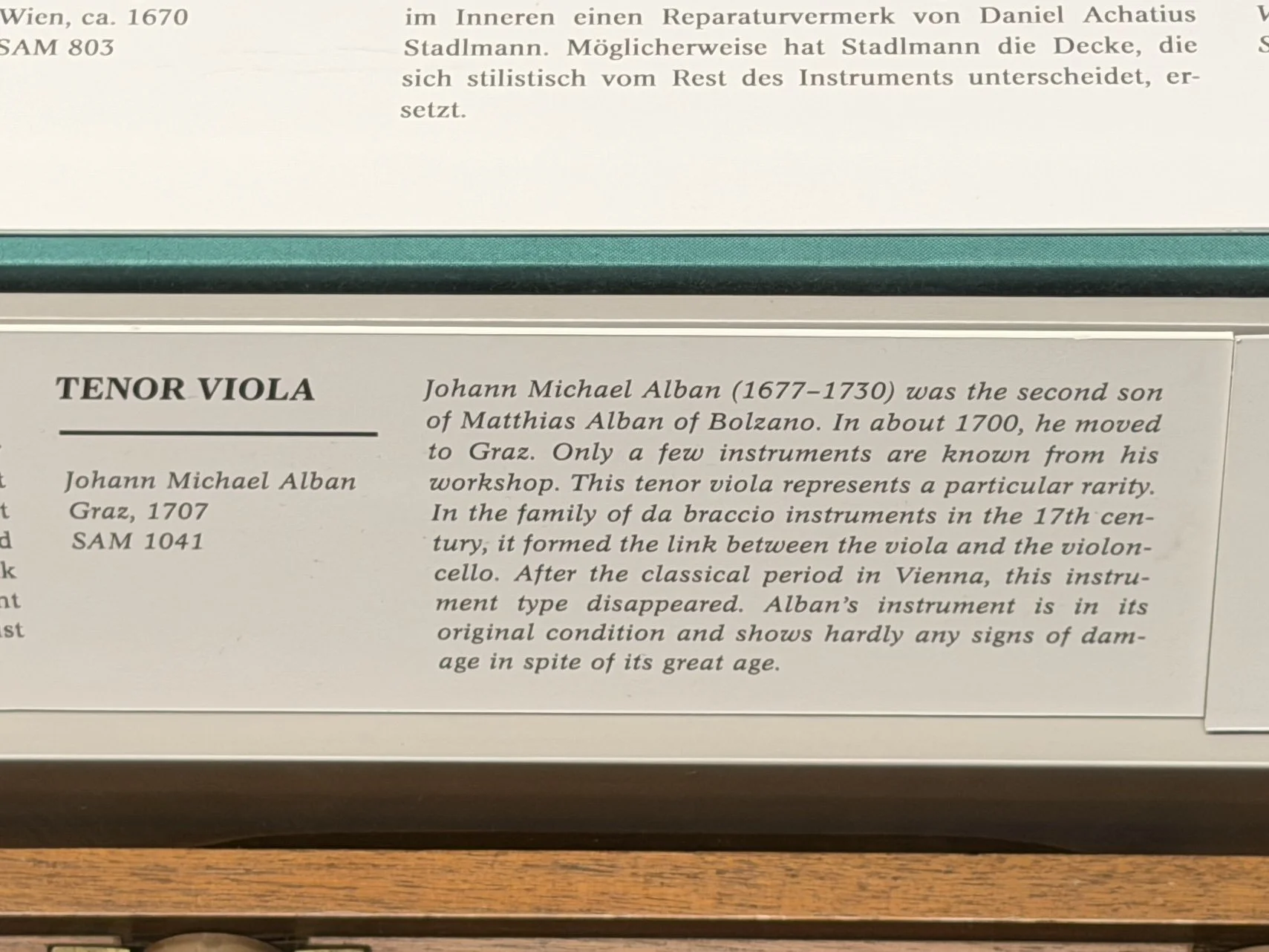
They also had plenty of other instruments, some of which I’ve shown below. Viols, violins, violas (and tenor violas!), wind instruments like orchestral winds (flutes, oboes, clarinets, bassoons), natural brass instruments, a serpent (look it up!), and several table and cabinet organs and spinnets among many other instruments!
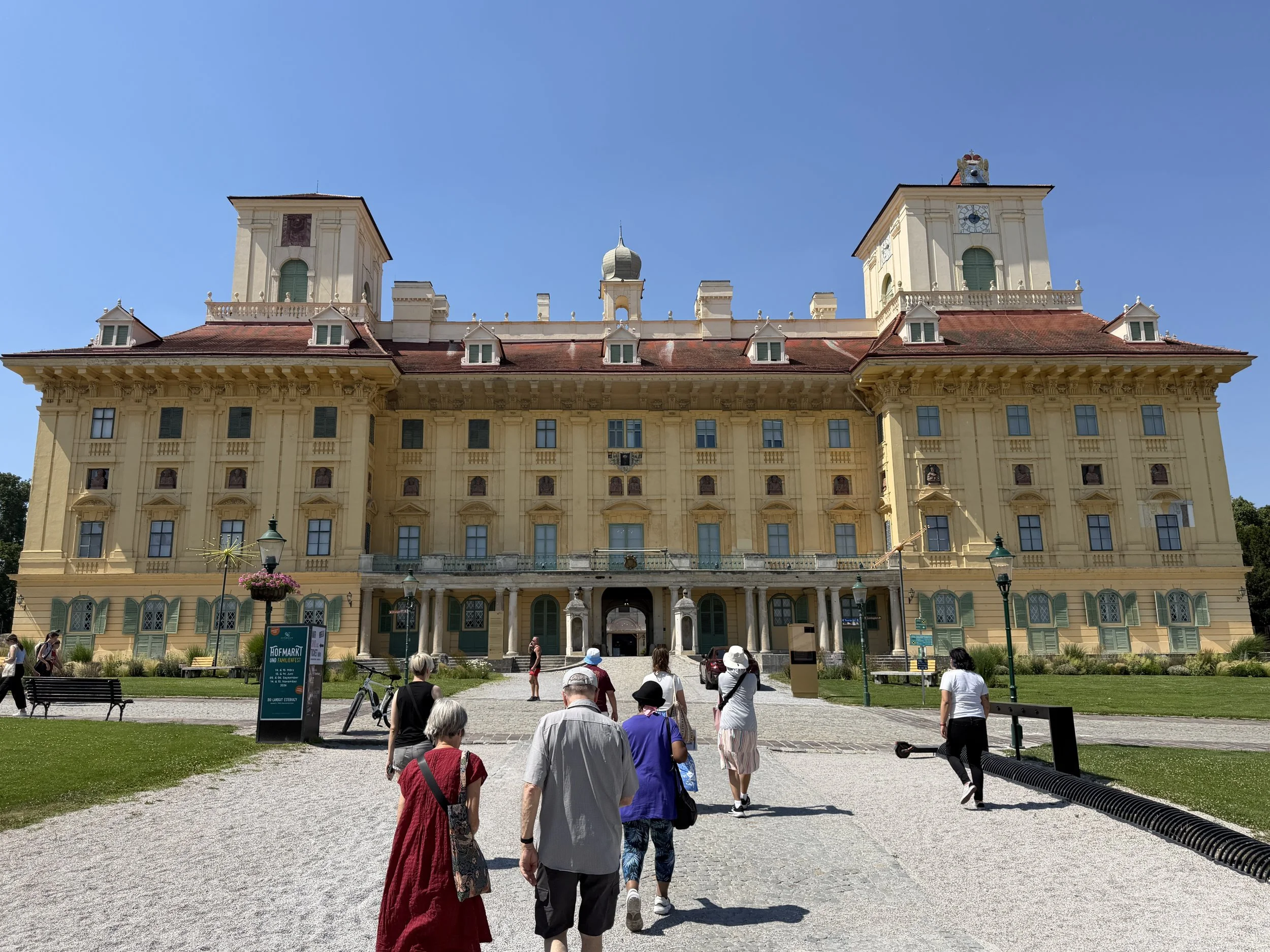
Once we came back from that visit it was about time to head out to Eisenstadt. I thought we were going to be in Hungary on this part, as the Esterhazy family was Hungarian, but it turns out that for the past century or so that area has been in Austria. We were not far from the border, and during Haydn’s lifetime that palace was in Hungary. It’s about an hour away from Vienna by bus today.
The palace itself was very ornate, as palaces tend to be. I didn’t get that many photos there, but we got to see the Haydnsaal, the concert hall on the estate where Haydn premiered many of his pieces, including the one we are playing on our tour here, the Te Deum from 1800 (C Major). It’s neat that we got to sit in the seats in the same hall where it had its premiere! We also saw the chapel on the grounds where some of Haydn’s pieces were performed, along with the organ that he used for his pieces. Otherwise, there was a lot of jewelry, fine dishes, lots of paintings, and the usual things you’d see at such an estate. The tour guide told us that the museum has only existed as a museum for about 15 years, one of the youngest museums in the area.
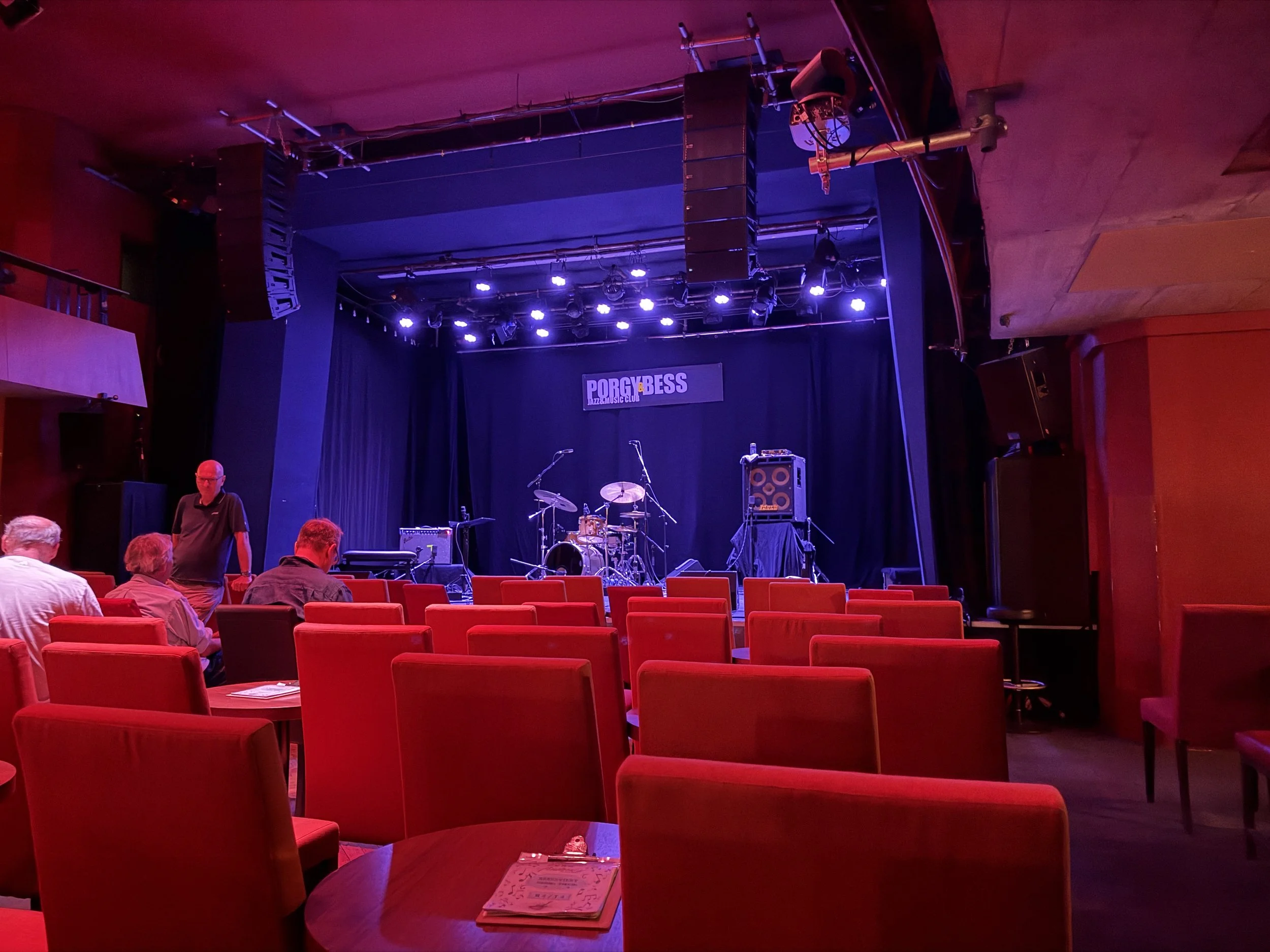
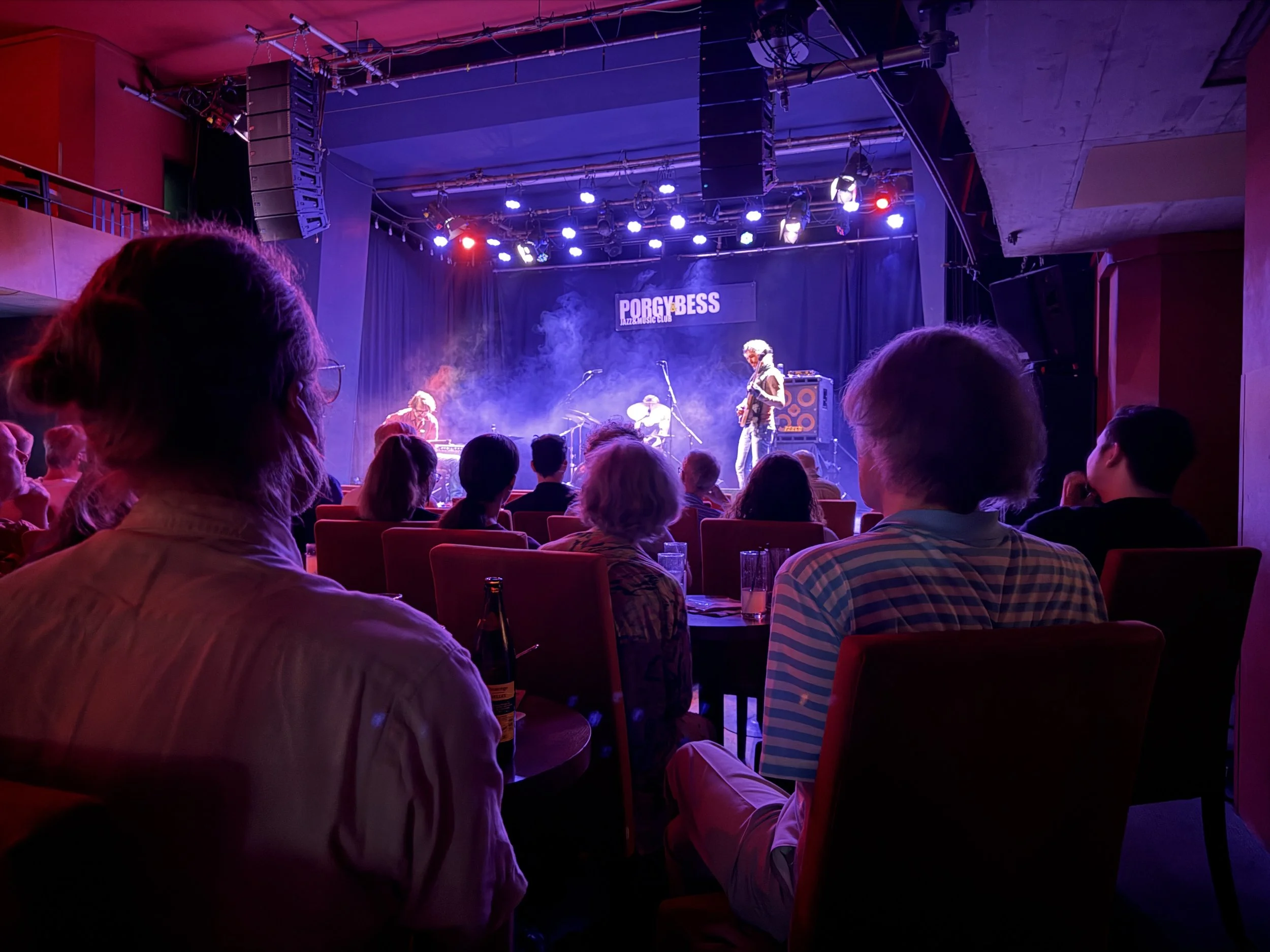
My group went and had a quick bite after that at a pizza place near the edge of the estate, with just enough time to do that and get back on the bus to the hotel. Then our group went to a jazz club for the evening, at a club called Porgy and Bess. Not quite what I pictured myself doing in Vienna on a symphony orchestra tour! I wasn’t quite sure what to expect as I haven’t been to a jazz club in a while, but it was actually really cool! It was an Austrian jazz fusion trio with guitar, bass guitar and drums, and they were all really good. The group was called the Fabulous Austrian Trio. I watched the drummer most of the time. He played sticks, mallets and brushes throughout the evening, and had an epic solo for their last official song before the encore. I described the ending of his solo as being like the grand finale at a fireworks show! They had big amps and a loud drum set, so I’m glad we weren’t sitting up front (the host had offered to put us there). Even from our row near the back, I could still feel the sound in my body in a visceral way, a good reminder that sound is physical and not just audible since I do so much listening on earbuds these days. I do play live a lot, and sometimes get the visceral effect in our orchestra music, but it’s always fun to hear music live!
Tomorrow’s events are a trip to the sound museum (Haus der Musik) in the city core in the morning, and then free time in the afternoon. I’m not quite sure what I’m doing yet as the place I wanted to go is closed on Sunday. I’ll go there on Monday, and find something else to do tomorrow. It is supposed to be the hottest day on the trip, which is saying something (last forecast I saw was 105 degrees…) Wish us luck!
Richard Bruner on Museum Clavichord. Portion of Bach Prelude in C Major, Well-Tempered Clavier Book 1, followed by improv to finish it off. Sorry for the tuning!
Richard Bruner on Museum Clavichord. Short improv in F Major
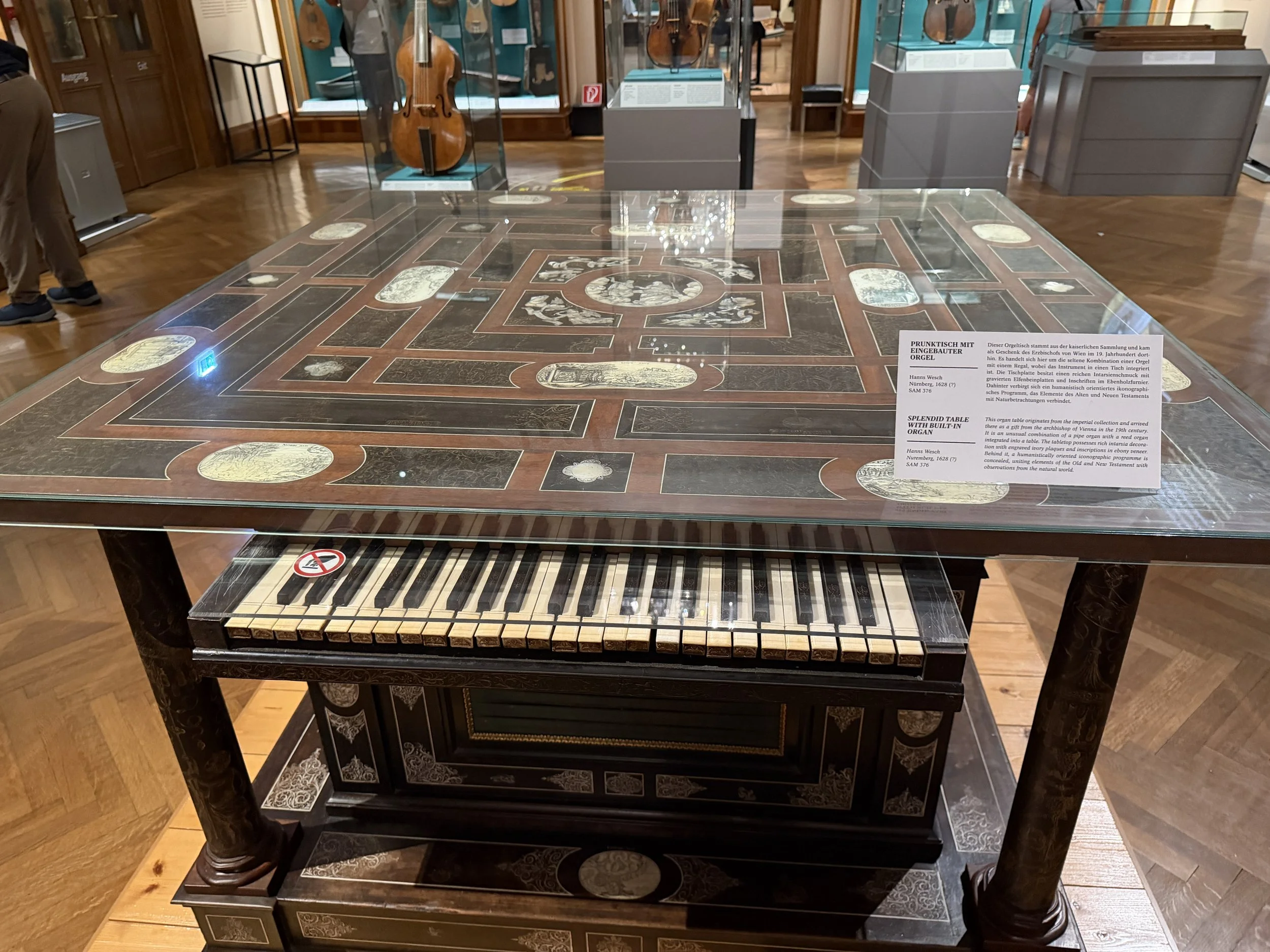
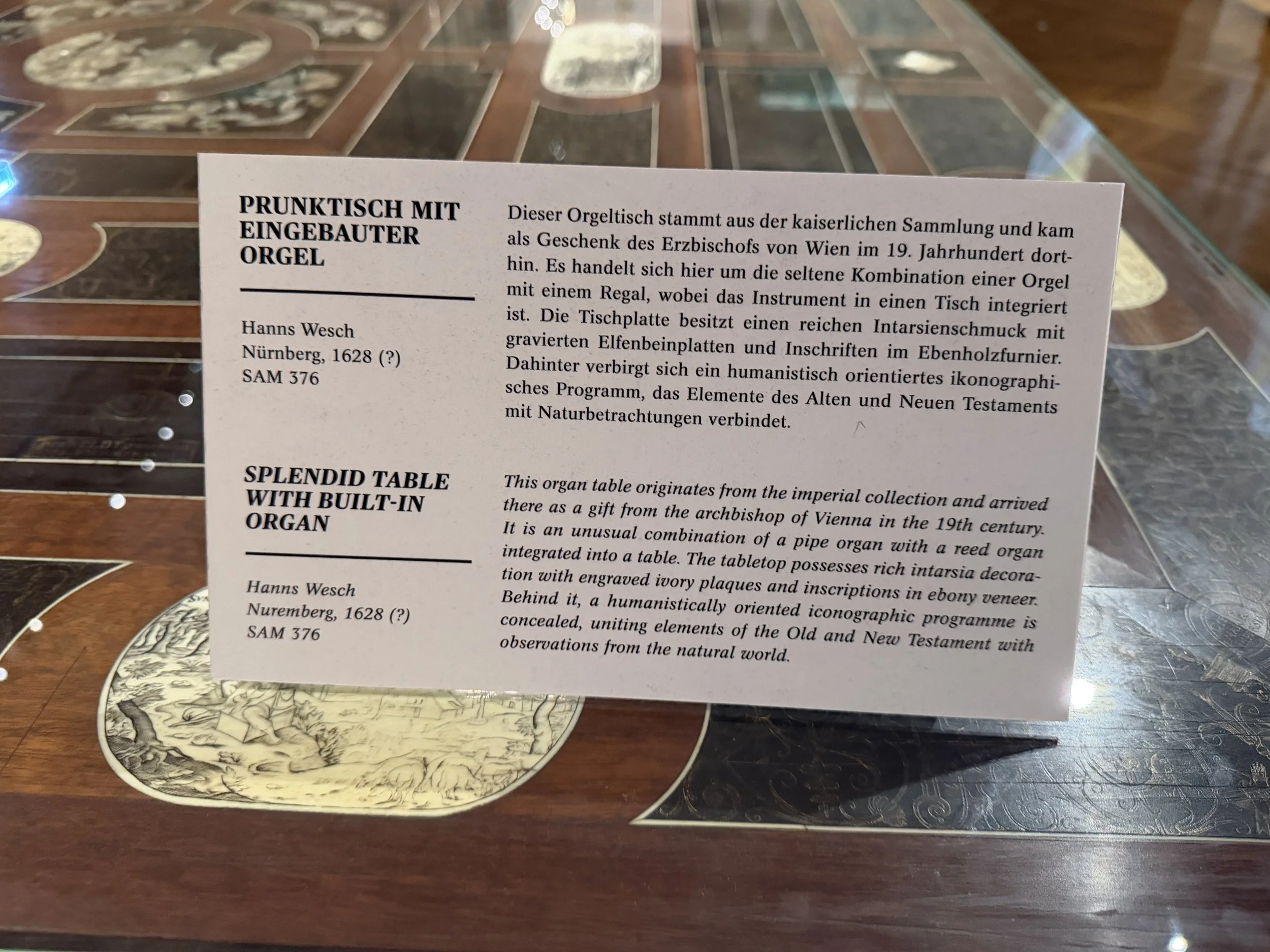
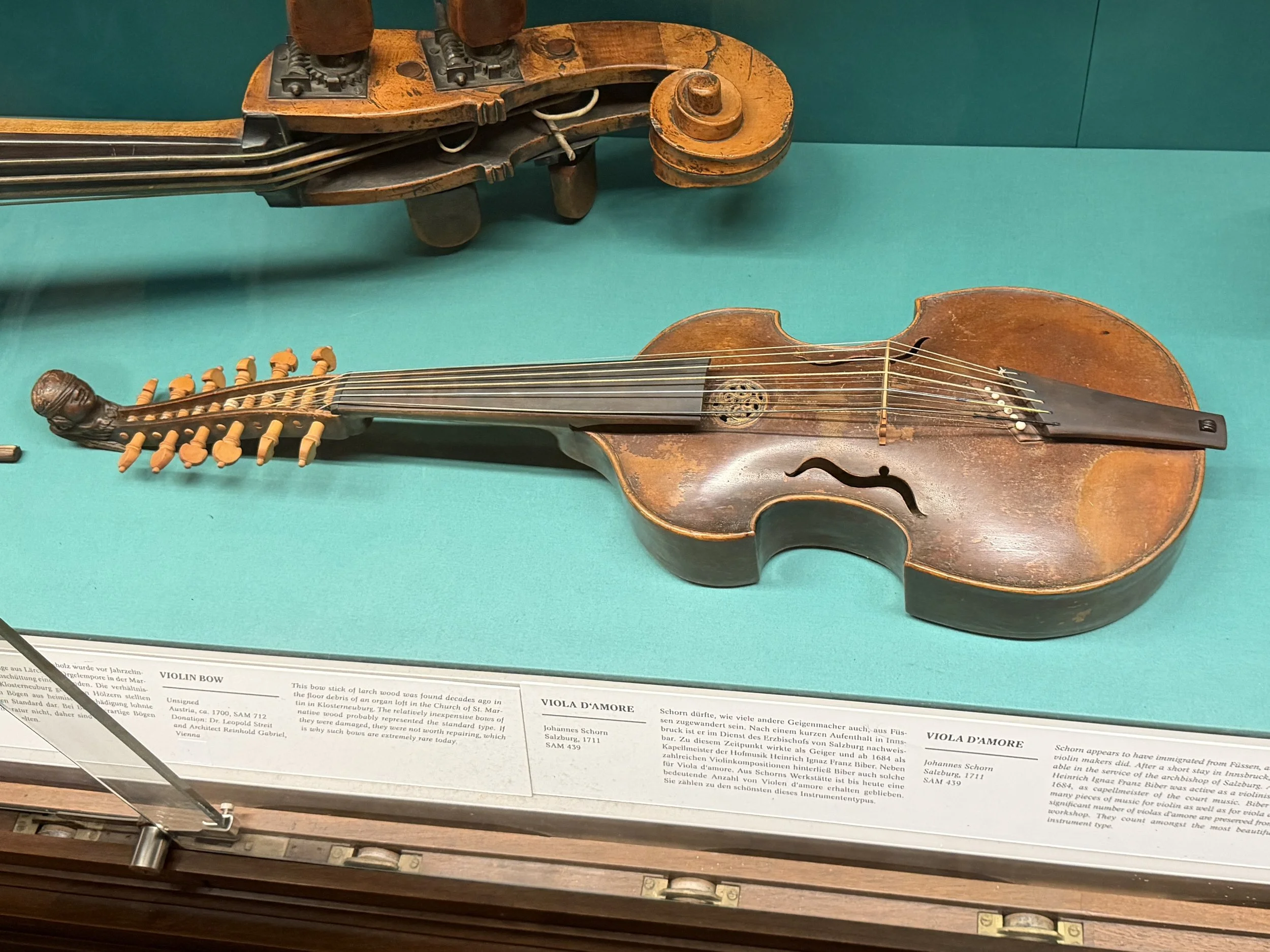
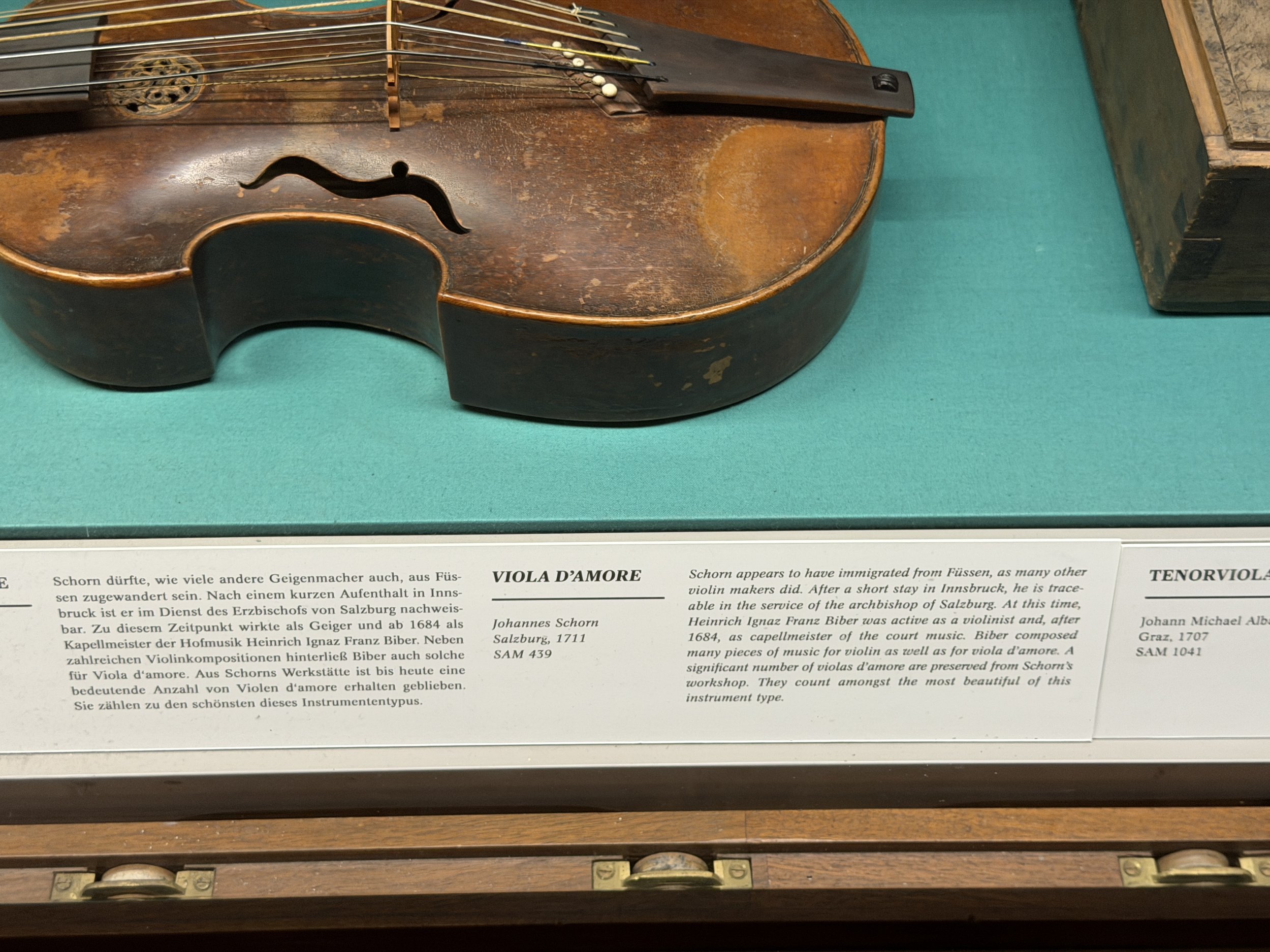
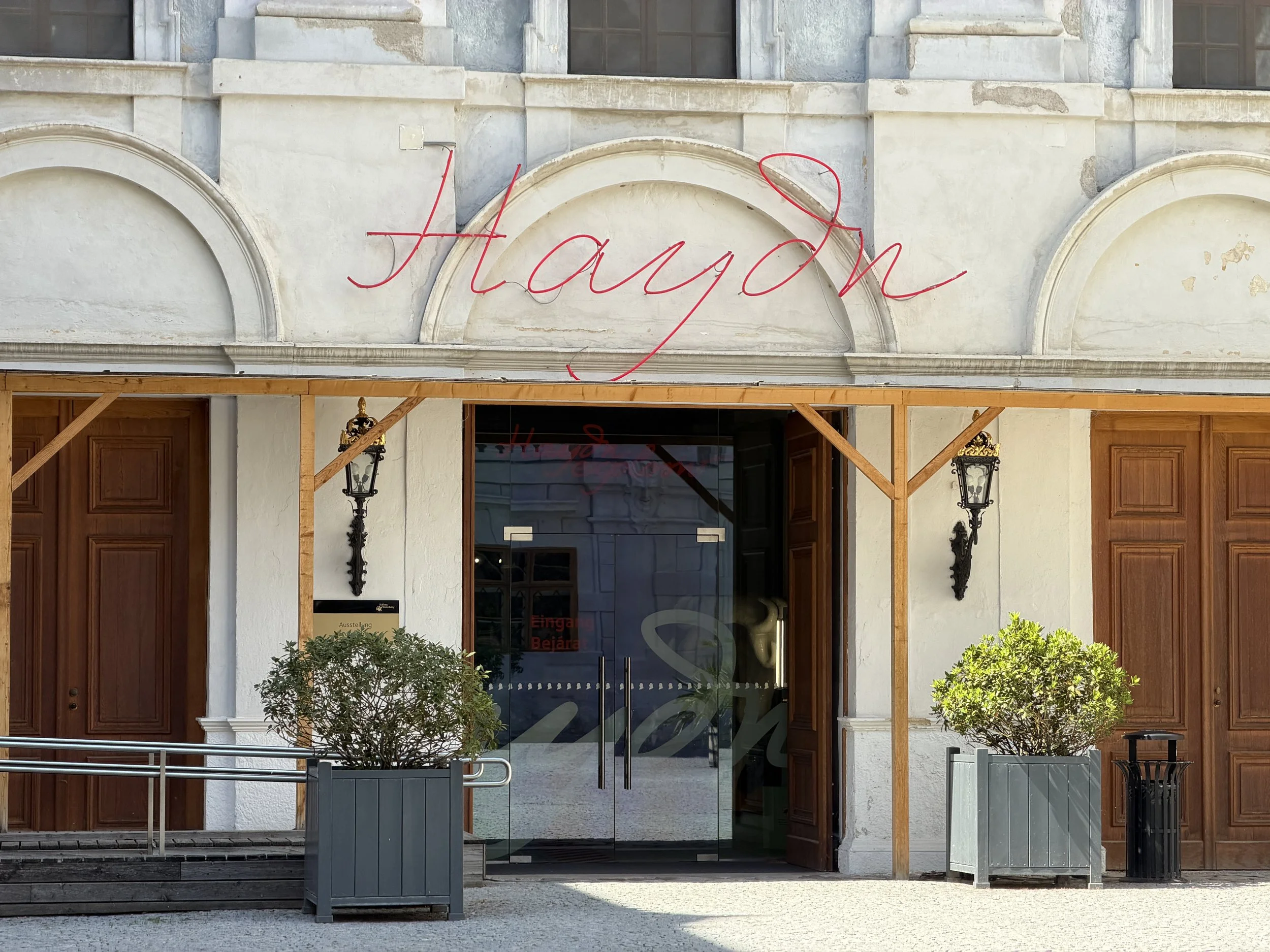
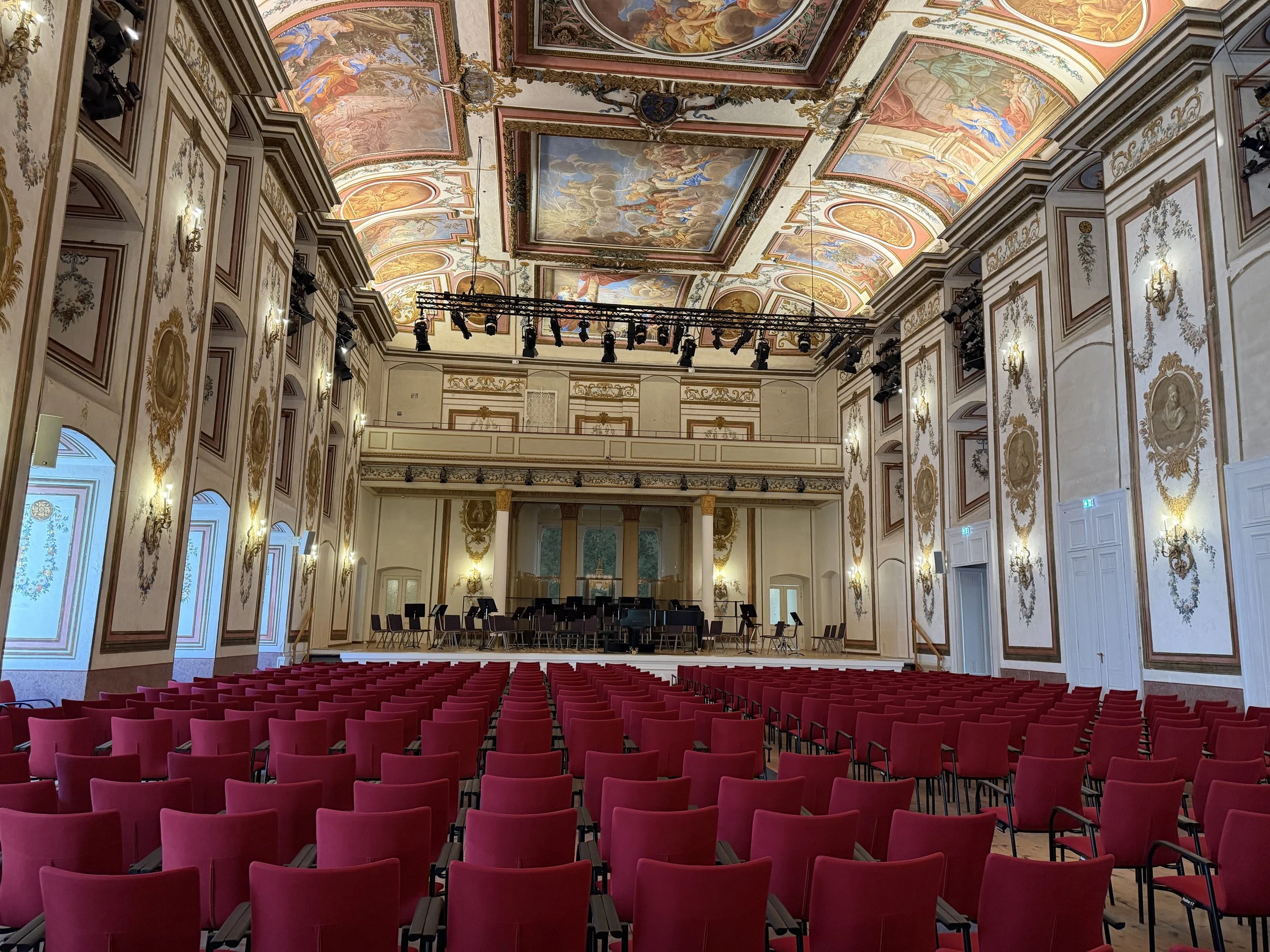
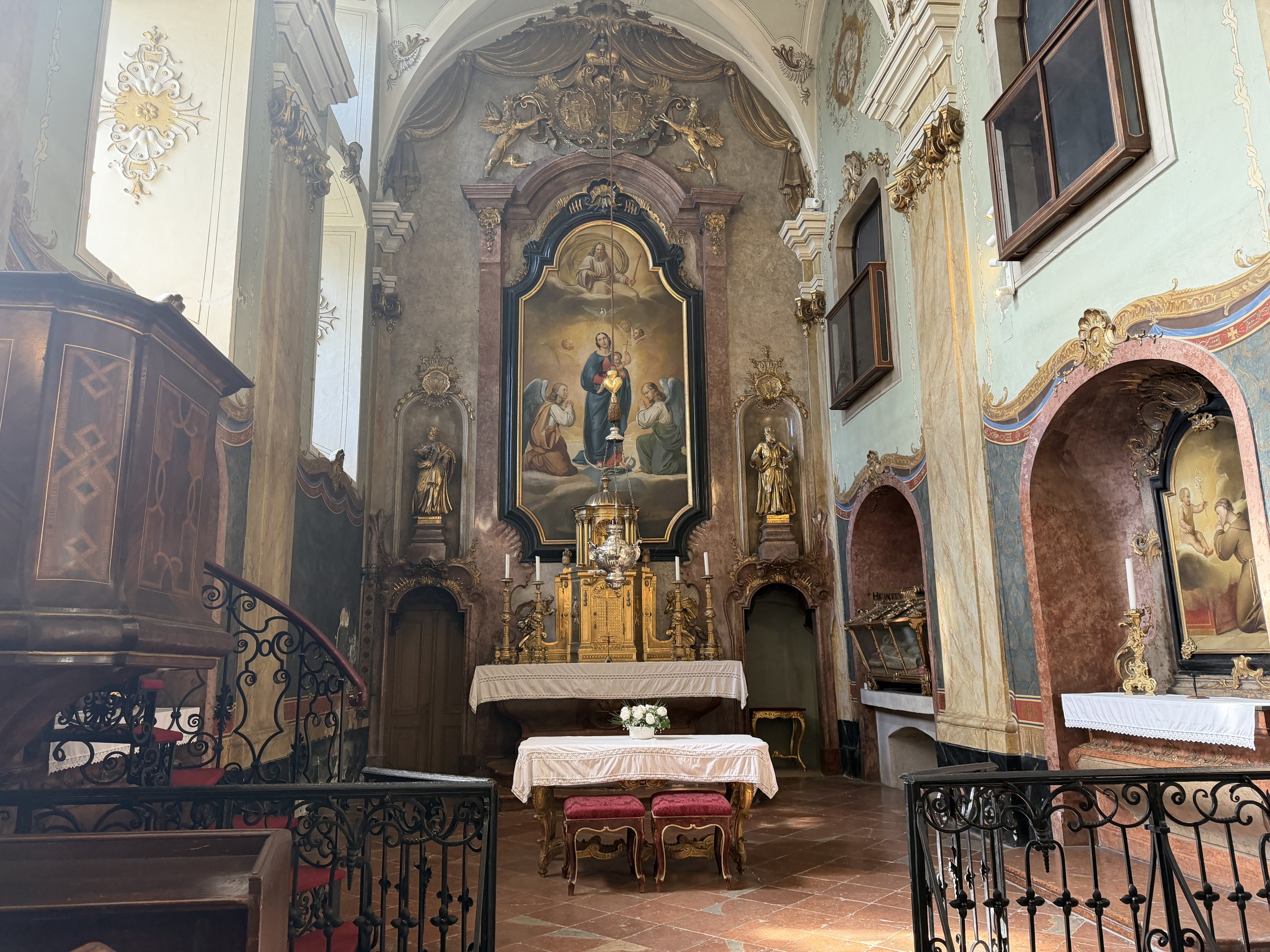
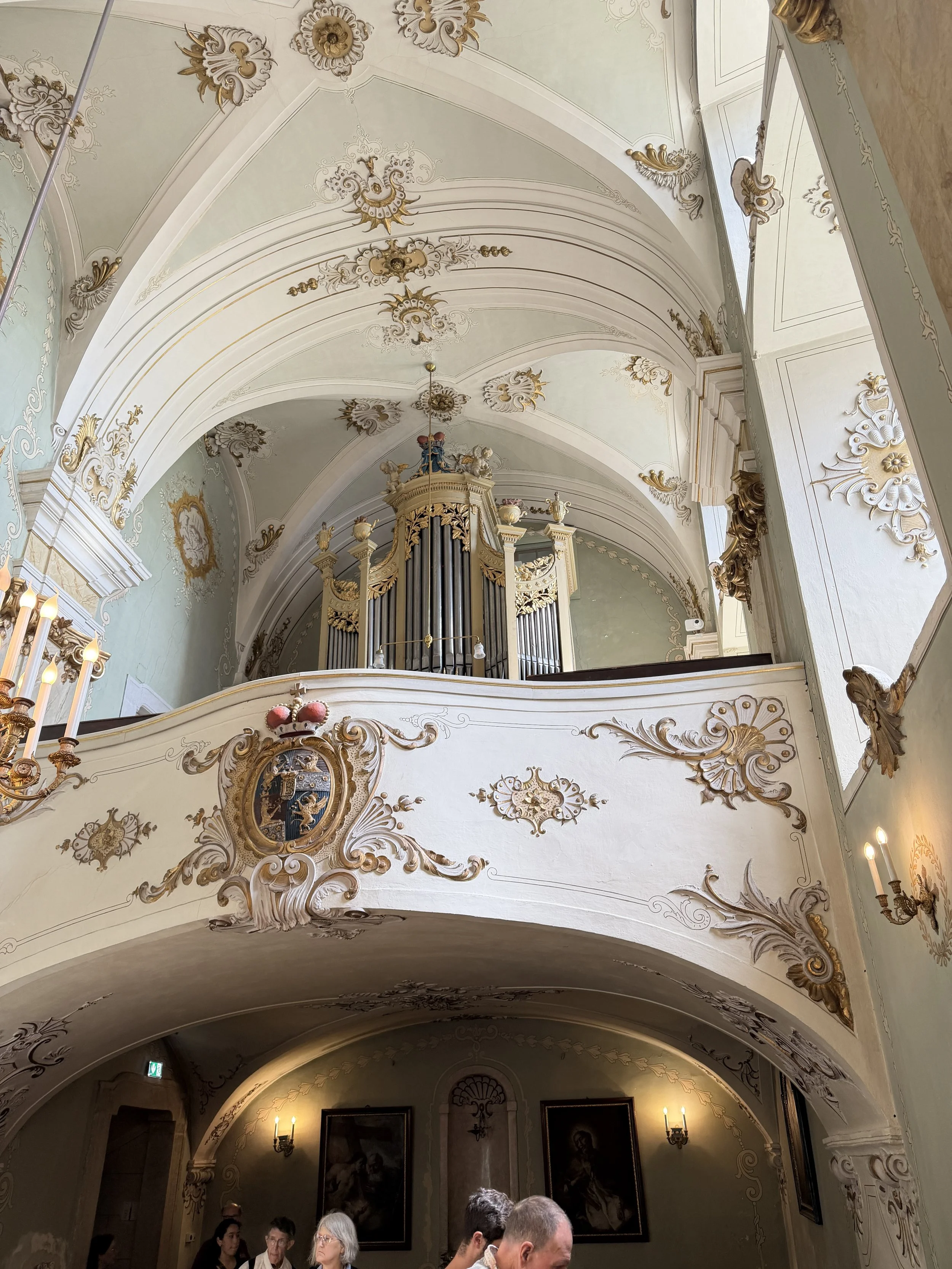
GCC Music Prague / Vienna Day 5: Haus der Musik and Musikverein Concert
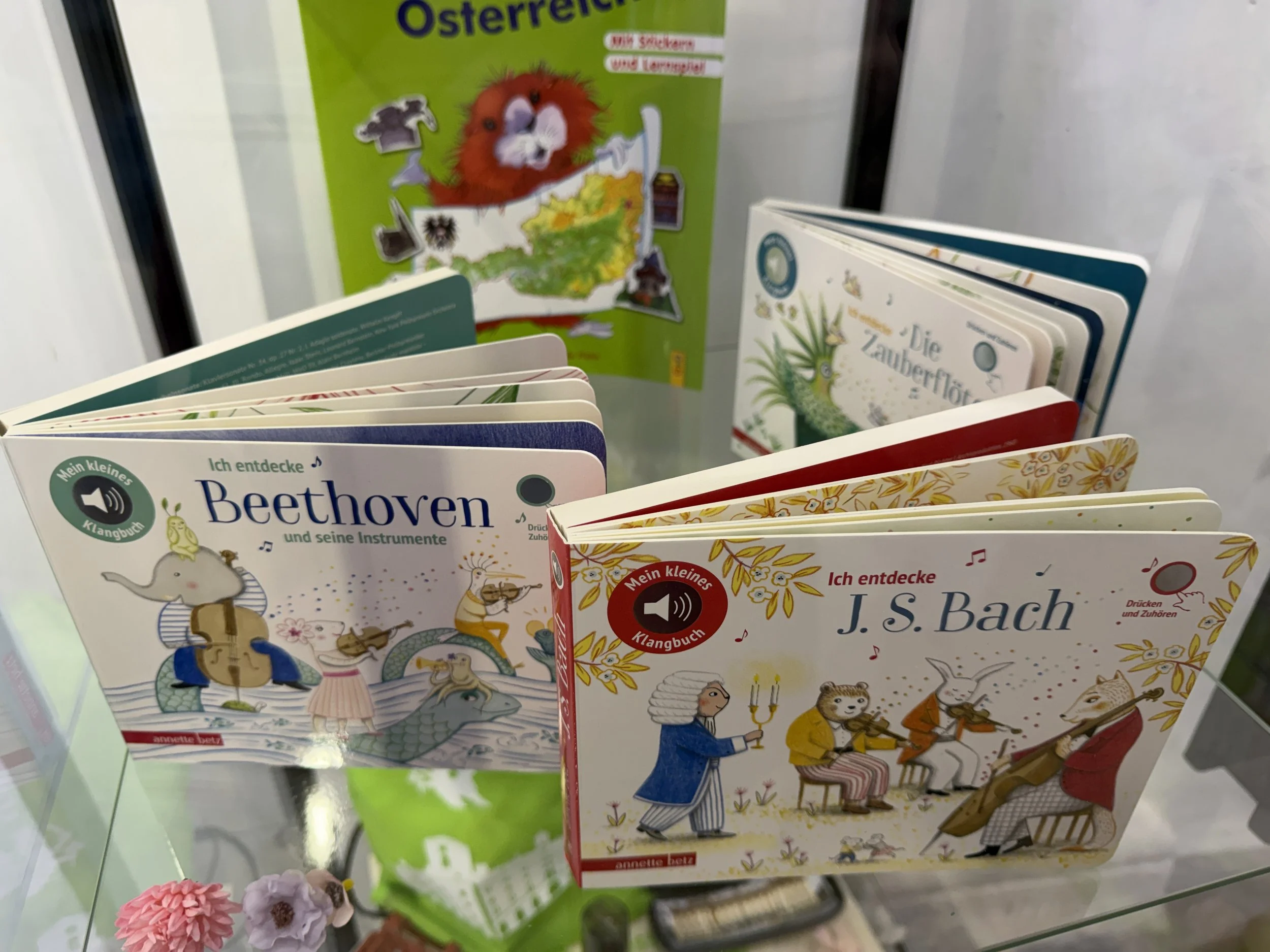
Today we started at the Haus der Musik, an interactive sound museum in the inner core of Vienna. We started touring the composers hall, with rooms on Haydn, Mozart, Beethoven, and then some of the later Viennese composers, the Strausses and Mahler. There was one station that I had to put down early - an interactive demonstration of Beethoven’s deafness progression, where you read about his reaction to his hearing loss by year, and as you clicked forward on each set of years the audio playing started cutting out more and more frequencies to simulate what the piece (Fur Elise) might have sounded like to him. By the end it was completely inaudible…
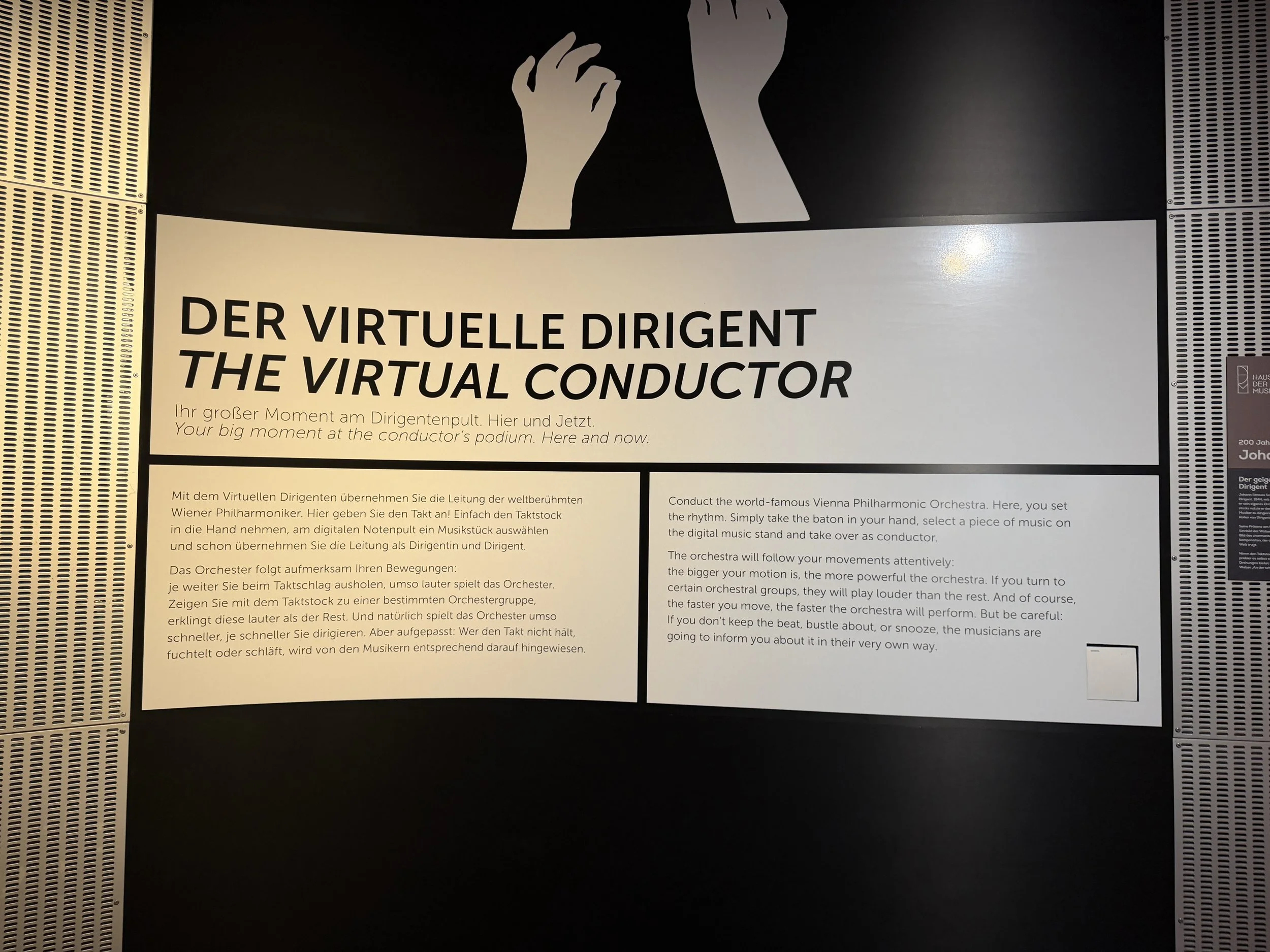
We got to “conduct” the Vienna Philharmonic in an interactive exhibit with a selection of pieces that were pre-recorded and then the audio and video tried to more or less follow your tempo and dynamic cues with the baton. It didn’t do a great job of following my beat, leading me to joke that it was an accurate simulation of players not watching the conductor! If you got off by too much for too long from something like a reasonable tempo, the system kicked you out with less than kind comments from the players, but if you made it to the end then you could claim a certificate for a fee from the gift shop. I made it to the end but didn’t bother picking up the certificate. It’s also a good reminder of how much the music changes tempo over time, even in pieces that could be played straight. I tried Brahms’ Hungarian Dance No. 5, and forgot that there are several dramatic tempo changes as you go through the piece. I was better at catching those on the repeats!
We then went through the physics of sound exhibit with demonstrations of how different instruments work, including a gigantic and very loose bass drum and an overly large zither with something like 15 foot long strings that were very deep.
The final part we did was the history of the Vienna Philharmonic exhibit, where we got to read about some of the famous concerts over the years.
Then we went out to lunch with one of our trip leaders, Sebastian. We walked the Naschmarkt and stopped at a deli for cold drinks and cold food - I got a yogurt / granola breakfast dish which was very good. After hanging out there for about an hour trying to stay out of the 100 degree temperature, we took the subway back to the hotel.
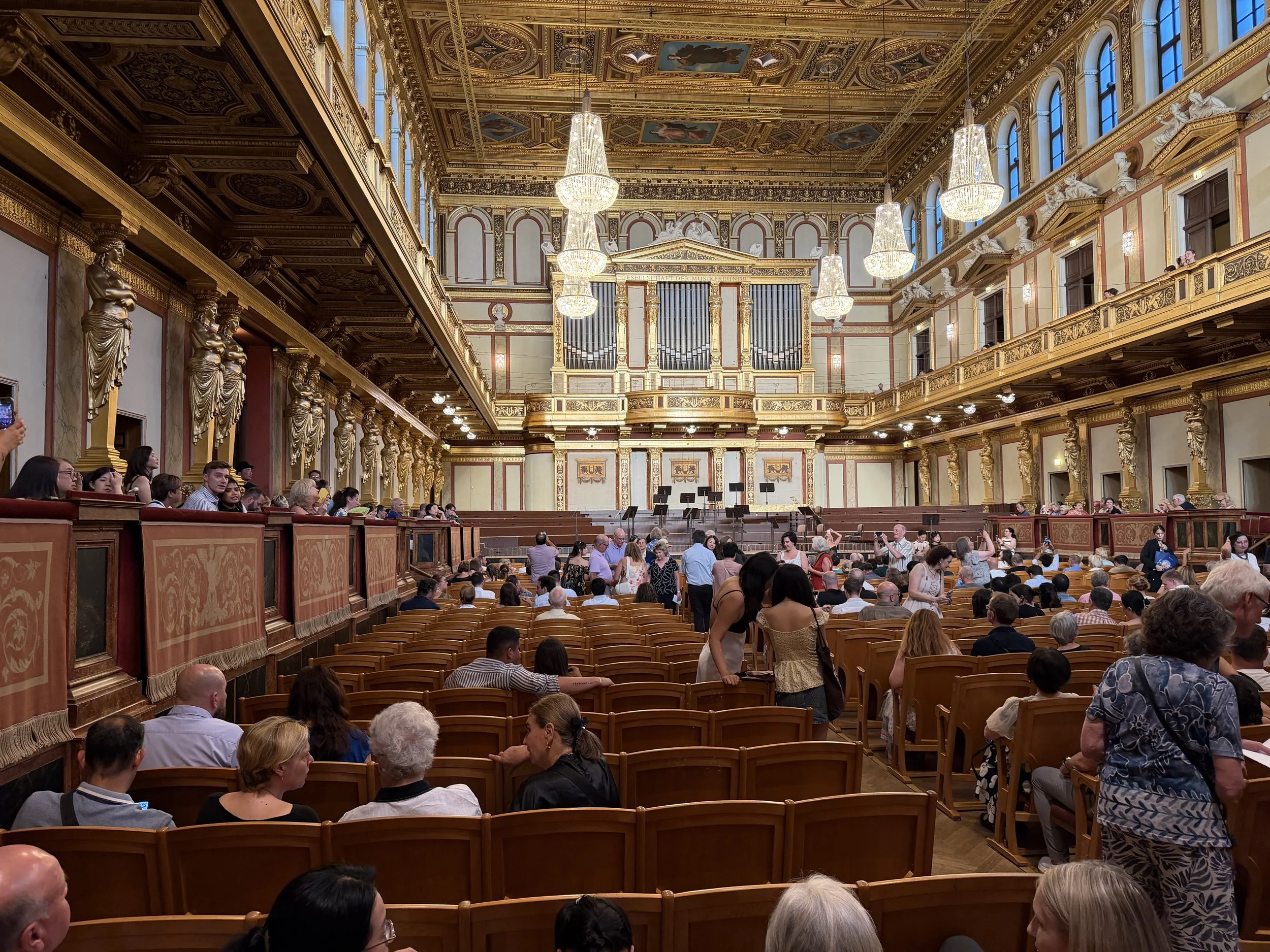
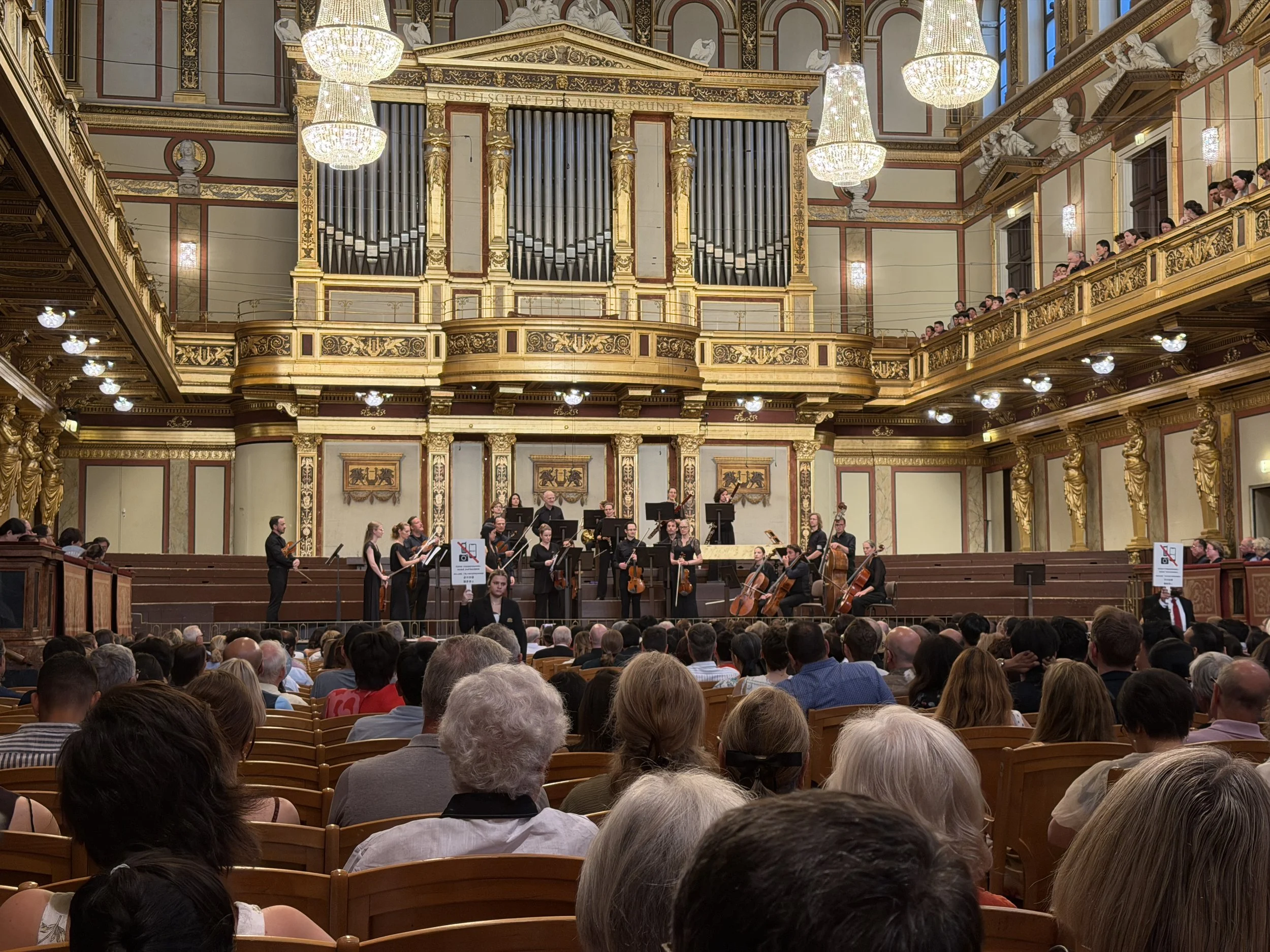
Our evening activity today was a concert at the Musikverein, the concert hall of the Vienna Philharmonic. We didn’t see them today, instead we saw Die SchlossCapelle, a chamber orchestra. I counted 5 first violins, 4 seconds, 3 violas, 3 cellos and 1 bass, with appropriate winds (though apparently the flute player had to leave the stage partway through) and a harpsichord. The program was Haydn Symphony No. 89, Mozart Symphony No. 40, and the full set of The Four Seasons by Vivaldi [apparently everyone was playing the Four Seasons - I heard about at least four concerts around town that featured some or all of the Four Seasons during the time we were there, and I’m not sure I heard about any that didn’t other than the opera, which I believe was doing Mozart’s The Magic Flute]. The concertmaster conducted from his violin, and those who could played standing up (even the bassoons - really just the cellos and harpsichord were sitting). They were using modern instruments tuned to at least approximately 440 (maybe actually 440, just not 415 or something).
All of it was performed very well. The orchestra was tight, and clearly knew the music. They took the tempo of the Mozart a little faster than I like it, and a lot faster than we played it when I played it at Crown City Symphony a couple of months ago (that tempo was a little slower than I like it!). But other than the tempo, it sounded really good to me.
The Four Seasons was fun. Spring was good, but as they got into the set it got more interesting. My favorite movement is the stormy 3rd movement of summer, which was great here. The second movement of Spring has the violas being the “annoying dog bark” that keeps the protagonist from sleeping properly, which was nice and aggressive in this performance. Actually my favorite part of this performance was getting into the second movement of Autumn. The soloist added little improvisatory ornaments throughout the set, but the second movement of Autumn is a harpsichord feature, and so that player performed a little connecting prelude to modulate from F major to D minor, and then the strings slid in so subtly that I missed when they came in at first. It was really well done! As they played through the rest of Autumn and then directly into Winter they started playing with tempos in ways that I’m not quite sure I liked as much - at least they aren’t ways I’ve generally heard the pieces played. But that’s a matter of opinion, and the whole concert was excellent. There was one part in the 3rd movement of Autumn where the strings often these days play “snap pizzicato”, making a very percussive sound. It was so striking tonight that a little girl a few rows in front of me started looking around in bewilderment trying to figure out what was happening!
After the concert we came back to the hotel for the night. (By the way, as I write this it is still 84 degrees at midnight…)
Tomorrow is our last full day in Vienna, with a guided tour of the Musikverein in the morning followed by our 2nd and final concert for the trip, in a church here in Vienna. We have one final group dinner, and then head out bright and early (or more likely really late) at 3 AM on Tuesday for the airport to begin the journey home. I’ll post again tomorrow and then write up some final thoughts on this experience on the plane for when I get home. It has been a great trip all around, and I’m happy to have met some new friends (who I’ve been playing with for a couple years!), strengthened many existing friendships in this group, and gotten to see some places I’ve studied for a long time and seen my music history classes brought to life. More on that subject later!
GCC Music Prague / Vienna Day 6: Musikverein Tour and Concert No. 2
Today was our last day in Vienna. In a couple of hours (3 AM in Vienna) we are getting on the bus to the airport. Time zones are funny, on the way out here it took nearly two days worth of travel time, but we’re flying Vienna to Amsterdam, and we leave Amsterdam at 12:00 PM local time and get home to LA at 2:00 PM local time on the same day!
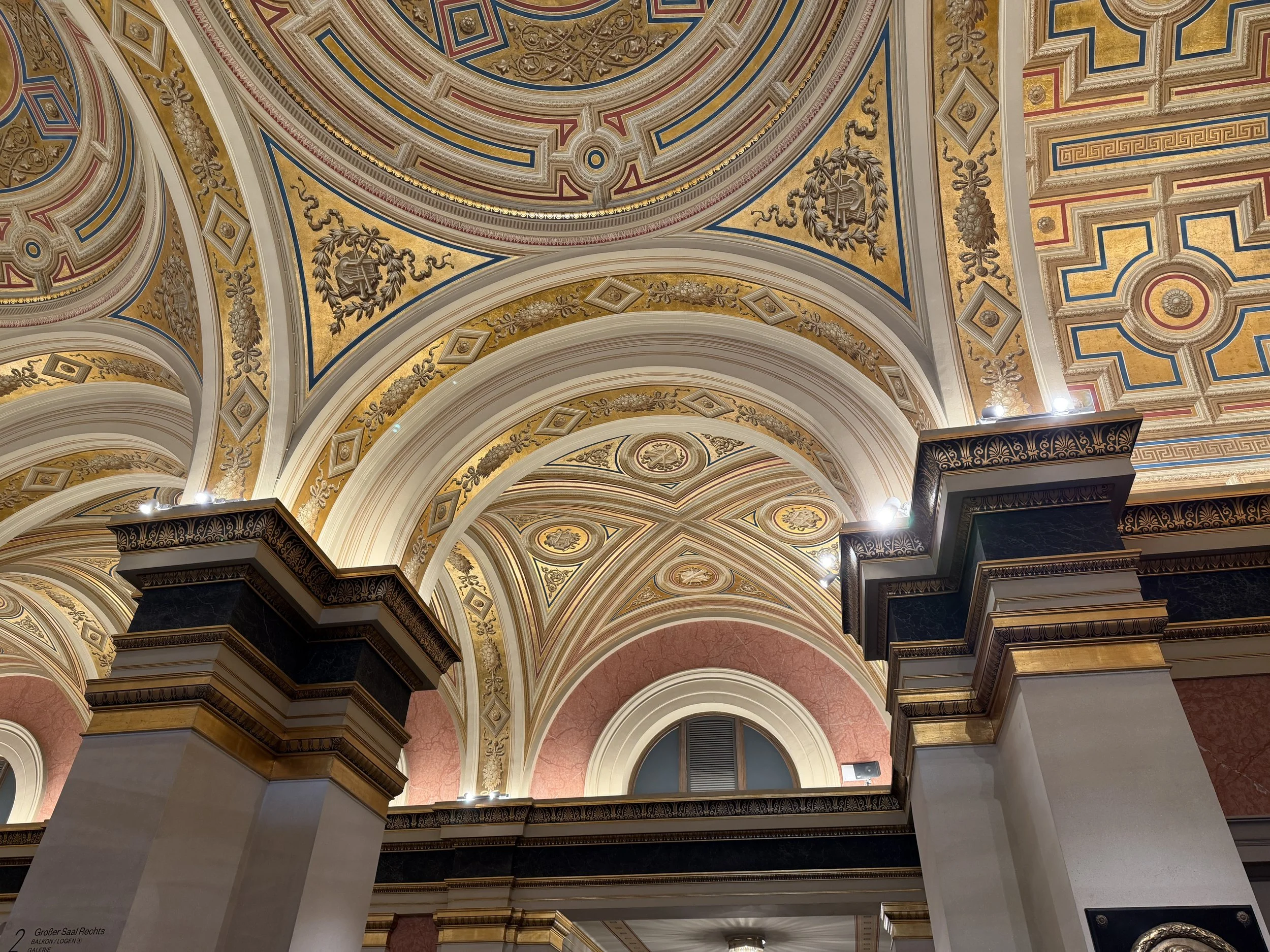
Today was mostly about our second concert. Our morning activity was a tour of the Musikverein, the concert hall of the Vienna Philharmonic. We went there last night for the concert we watched, this morning we went back in the same hall and they talked a bit about the history of the space. We got some more pictures of that hall, but I had already taken photos of the hall last night and we were not permitted to photograph the other space they had there, the Brahmsaal (basically a chamber music recital hall). The thing I thought was interesting was that they can expand and contract the stage in the main hall depending on the size of the ensemble and how many seats they want for the audience. I haven’t heard of that feature in many other concert halls.
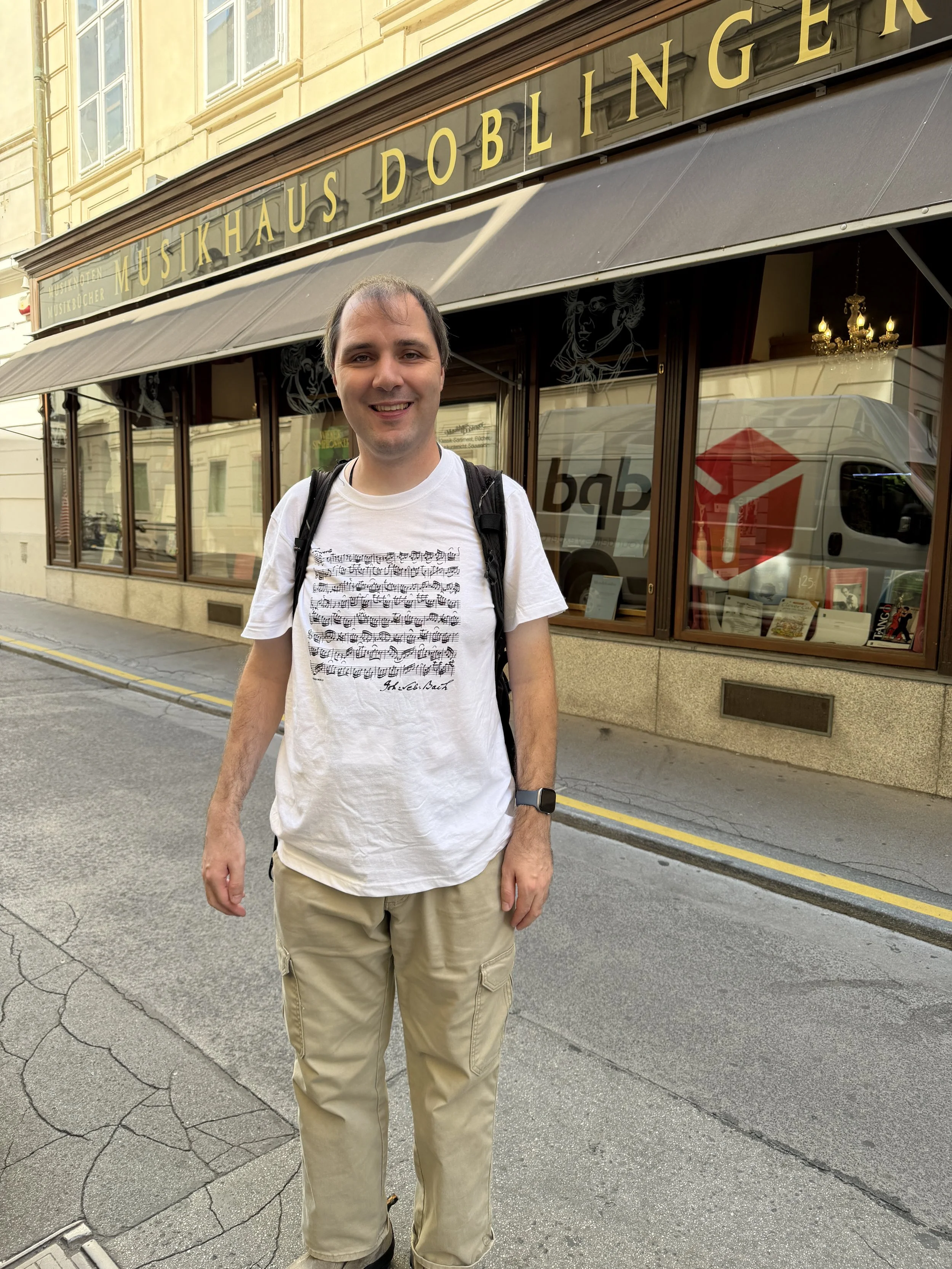
After the tour one of the other orchestra members and I went off to get a couple of things in the city center. She got a set of charms from Pandora, and then came with me to sheet music store Musikhaus-Doblinger, where I picked up a couple of duets for viola and cello since I play with a couple of other cellists in town. I also got a set of viola caprices / etudes to try for myself. Then we came back to the hotel and rested before our concert.
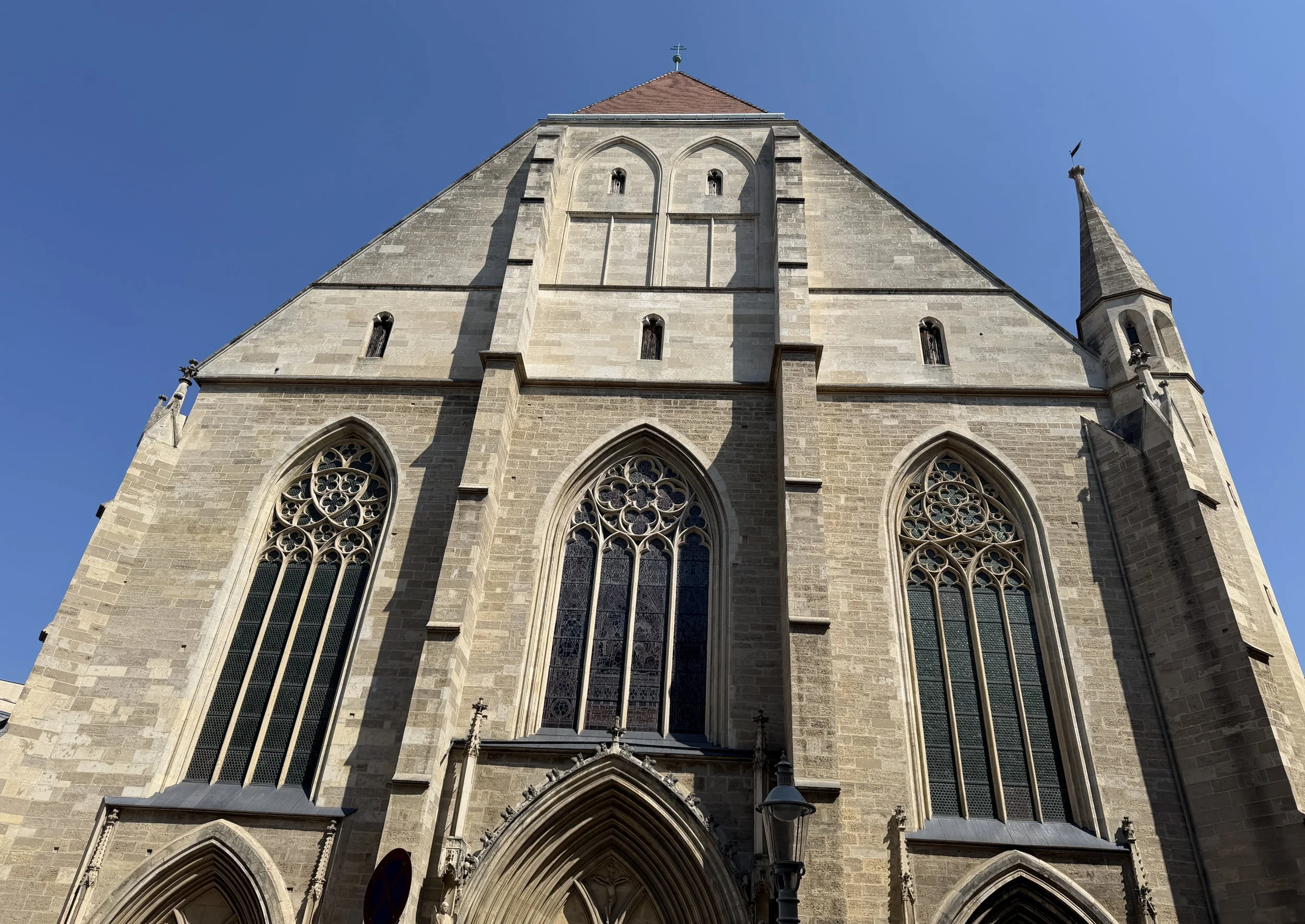
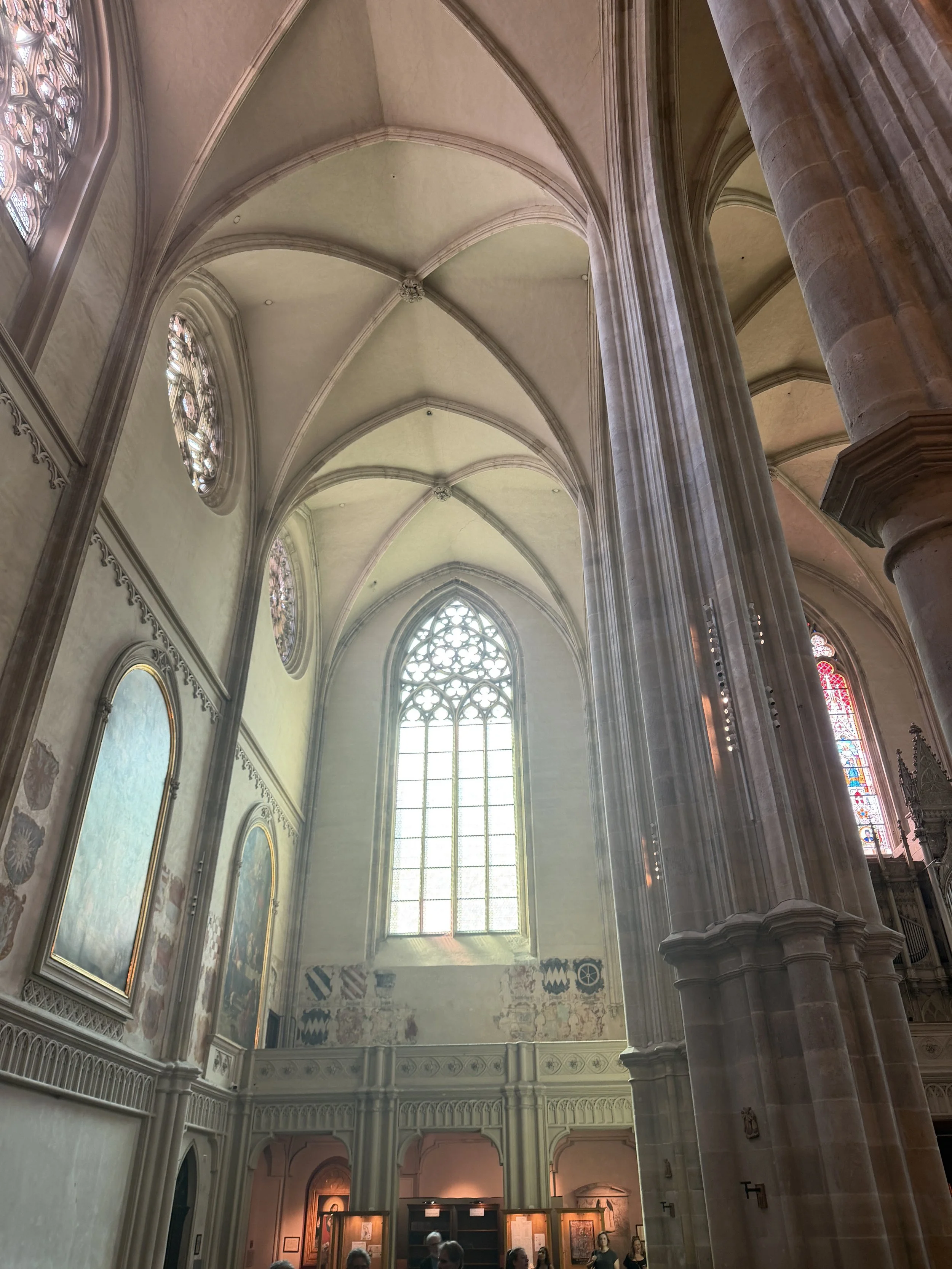
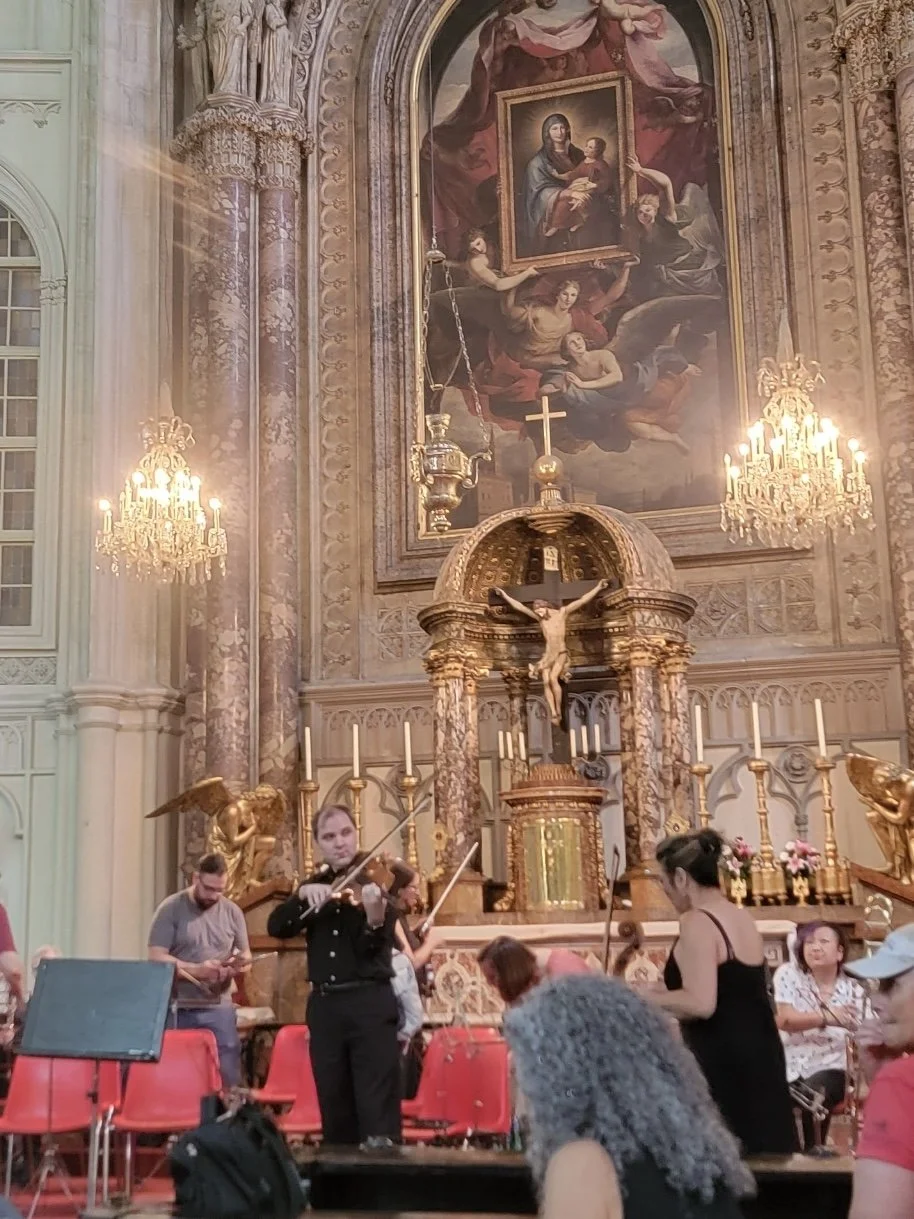
This afternoon we went out to the Minoritenkirche for our rehearsal. It’s a large church, with extremely high ceilings. I’ve played in halls with lots of reverb before, but I’m not sure I’ve played in one where the reverb noticeably went up. When we cut off last notes on pieces the sound rang for several seconds and sounded to me like it was near the ceiling. The room sounded really good in person. I made a recording of the concert with my Zoom H2, and the sound of the reverb tail told me that my recording would either sound fantastic or horrible. I put it next to row 5 so it wasn’t too far back, and listened when I got back to the hotel and it seems to have worked pretty well. If I could dial back the reverb a smidge I’d do it, but it certainly sounds live [see the top of this page for that recording!]
The concert itself was fantastic, at least from my seat! I like all the music we played for this series of concerts, and getting to spend a week with these people has made the final epic finish that much more meaningful. I’ll have more to say in my final reflection post I’m writing on the plane - that might be a few paragraphs or it might be three (or more) pages, we’ll see how much I have to say! But the shortest version is that this whole trip was fantastic and I’m really glad I came 🙂.
I’ll post at least one and maybe two of the recordings of my piece in the near future, once I have the local LA recording in my possession. I don’t know how we’ll distribute the rest of the pieces, but if I can share them in some form I will do that too. My next project is to take this one movement piece of mine that we played on this concert and expand it to three movements for full symphony orchestra, rather than the chamber orchestra we had on the tour. Symphony of the Verdugos (this group) will be performing that version in October. I’ve been working on the other movements and I’m excited to try the full piece and share it with everyone - it’s turning out really well so far!
Now it’s time to relax for a couple hours (I don’t know if “sleep” is the right word) and then hit the airport. I’m looking forward to a good night’s sleep again!
GCC Music Prague / Vienna Day 7: Travel Day and Final Thoughts Reflection
I am currently sitting on a Boeing 787 flying near the Hudson Bay in Canada, on my way from Amsterdam to Los Angeles returning from our Glendale Community College Music Department European Tour. For the past week or so, we’ve been exploring first Prague and then Vienna with members of the Symphony of the Verdugos, which is the GCC symphony orchestra, and the Concert Singers, the advanced choir for the college. We performed in one church in each of the two cities, and otherwise participated in a cultural tour of the region, steeped in classical music history that I have spent many years studying in music school and on my own.
It has been an amazing experience. I went to Ireland about 9 years ago, in June of 2017, participating in a cultural tour around the south of the country, fiddling my way from Dublin to Ennis by way of several other cities. I remember at the time thinking that it would be really cool someday to do a similar cultural tour for my classical music roots, maybe to some place like, say, Vienna. When the idea of this trip was first proposed to us last year, I jumped on the opportunity to fulfill that bucket list item. We only saw a tiny fraction of what there was to see, with only a few days in Vienna and only one in Prague. Some people were returning to one or both of these cities, but this was my first time anywhere in mainland Europe.
As a composer who recently earned his master’s degree in composition and who has been looking for opportunities to get his music performed, I also reached out to our conductor the day after that initial meeting in Spring 2025 to ask if I might be able to compose a piece for the tour. He said he had no objection, and we reconnected over the idea as it started to become more clear who all would be going on the trip. We wound up with a hybrid chamber orchestra, featuring chamber strings of 4 first violins, 5 second violins, 3 violas, 3 cellos, no basses (though there was one at one point), and then 3 flutes, 1 oboe, 1 clarinet (who could also play bassoon), one trombone (up until the week before the trip there were going to be 2 trombones and 1 trumpet), and timpani. It proved to be quite a challenge to compose a piece for this ensemble, as it is missing several important orchestral instruments and sections. I didn’t have bassoons (I chose to use clarinet), horns, bass trombone / tuba, or even string basses. I broke down and wrote a bass part for our local LA concert since we had them there, but even then I had to write in such a way that it wouldn’t be too badly missed on the trip. I think the piece turned out pretty well for the constraints I had, and it was fun to take on the challenge. This is a real composition issue, as you can only ever write for what you have. These days with things generally being standardized, you can get away with writing generically for ensemble types rather than specific groups, but certainly back in the day there were lots of stories of people writing things a certain way because they either had really strong players on a particular part, or because they didn’t (look into the performance history of Handel’s Messiah during his lifetime for a striking version of this). I will be rewriting this movement and adding two additional movements (in progress) for the Fall featuring the full orchestra for a performance in October.
The piece overall is called Musical Meditations, of which the movement we played on this trip will be the first movement, subtitled “Meditations on the Great ‘A’ of Life / Crosspicker’s Delight”. The other two movements are codenamed “Song of Peace” (started shortly after the war with Iran broke out) and “Dance”, though that one is probably going to be renamed. At least it’ll be “Dance of [something]”. I have recordings of this first movement from both concerts on the tour that I made with my Zoom H2 recorder, and I’ll be getting the recording from the GCC concert shortly after I get back. I’ll post at least one of them for your listening pleasure once I decide which one (or maybe two) I like the best, with more details then.
I am very excited to have had a piece of mine performed in Europe in any form, and I would like to sincerely thank Dr. Paul Sherman, our conductor, for allowing me this opportunity, and the orchestra for performing it with me! It means a lot coming from this group in particular, which is the group I’ve performed with the longest in my life (going on 14 years), and the group that has premiered the most pieces for me, with this being my third orchestral premiere with the Symphony of the Verdugos or its named predecessor, the Glendale College Community Orchestra.
One thing that was nice about this tour was a chance to get to know some people I’ve been playing with for multiple years but hadn’t really talked to much before, as well as some (especially in the choir) that I’d never really met at all. I’ve noticed that we rarely venture too far from our sections during rehearsals, a phenomenon I first really became aware of all the way back in my Berklee days, and which has remained true to this day. I know my section the best, the sections around me, and then a few people from other sections, mostly when I meet them in other contexts (other classes in college, or if they join me in another orchestra, or in my case when I write pieces people often start talking to me). Parties outside of rehearsal are another way to meet people, but we haven’t done one of those in a long time. I think I spent some quality time with everyone who came from the orchestra on this trip, and I even had a chance to meet some of the choir members who we’ve collaborated with several times but rarely socialized with.
My core group on this trip wound up being Joanna, one of the cello players who has sat next to me for several years (it turns out we’re both from suburban Chicago and around the same age, so we’ve become pretty good friends over the years), and Christine, a trombone player who I hadn’t previously talked to. The three of us did most of the activities together, and we were frequently joined by Ralph, our timpanist. Anyone who knows me today can attest that I love nerding out over a lot of topics, especially anything related to music, and this trip provided many opportunities to do that with the four of us (and some of the others). I can talk shop for as long as you’ll let me, at least for hours, so it was fun to have a chance to do that with new and old friends! I think my favorite was when we were sitting in a jazz club waiting for the show to start and talking about linguistics! I also had several chances to talk notation software and music theory, two of my other favorite topics 🙂
Pretty much all of the activities chosen for the trip by our tour company KI Concerts and our guides Chiara and Sebastian were excellent for a first-timer to the cities. It was a bit rough coming during what turned out to be a historic heat wave in Europe. Highs in the 90s and even up to about 102 at the peak didn’t help us explore, but we found places that were cool enough and we did have AC on our tour bus and in our hotels at least. My group chose to do a catacombs tour in Vienna to try to cool off (and because those are just interesting places to visit). We survived the heat and still managed to make something of our trip. The main thing that got crimped was random exploring during our free time, which was harder when it was 100 degrees outside. I brought my water bottle everywhere! Our first day in Prague was a bit much, with jet lag, a long walking tour (I logged 18,000 steps with my phone) followed by our first concert that night. It went pretty well for all that, but it would have gone better if we didn’t try to do all of that in one day, especially on the first full day. One thing that helped us was that we got there in the evening on Tuesday and did have a night of sleep before we did all of that.
Both of the cities we visited have famous rivers that run through them that have been the subject of pieces of music, the Vltava river (or Die Moldau in German) and the Danube in Vienna. I’ve played pieces about both of them in the past (Smetana’s “Vltava” from his suite Ma Vlast (My Homeland), or in German “Die Moldau” from Mein Faderland, and of course “Waltz on the Beautiful Blue Danube” by Johann Strauss II), and it was fun to get to see them in real life!
Other ways in which my classical music heritage came to life included visiting the central cemetery in Vienna (which is actually on the outskirts of the modern city, or fairly far from the historic city core), where we saw the current burial sites for Ludwig van Beethoven, Franz Schubert, Johannes Brahms, several Strausses, and even Arnold Schoenberg. We only got to see a fraction of the cemetery, as it’s huge and we didn’t have that much time. Our tour guide did tell us we were the first group she’s guided who knew who Arnold Schoenberg was 🙂
I also took an opportunity during my free time to go check out a historic musical instrument exhibit that Christine recommended to us. Several of us went there on Saturday. I wrote about it in some detail on that journal post, so I won’t rehash it all here, but that was one of my official goals I had for myself and I even had a chance to try playing an acoustic clavichord!
The food was also really good on this trip. I can be a picky eater (I was very picky as a kid, better today but still not great about that), so I’m often concerned about that in contexts like this where I don’t always have control over the food. But I didn’t have a single bad meal on this trip, either from food I knew about in advance or food I had never tried (or even heard of) before.
I could keep writing for a while yet, but since I did fairly detailed daily journal posts, I think I’ll finish this post with some words about the pieces we played for our concerts. We played my piece as the overture, and then the other orchestra-only piece was just the first movement from Mozart’s Symphony No. 38 in D Major, the “Prague” symphony (for obvious reasons). We then performed Haydn’s “Te Deum” with the choir. One fun fact about that piece is that we got to sit in the “Haydnsaal” at the Esterhazy estate in Eisenstadt, which is the hall where that piece was premiered in 1800. It would have been fun to play it there! The choir apparently did sing one of their songs in the hall (we were in separate tour groups for that event). Then the choir did three songs of their own, and we finished out with modern American composer Elaine Hagenberg’s “Illuminare” for choir and orchestra. I really like that piece. My favorite movement is probably the middle one, “Nox”, which feels to me like a mashup of Carmina Burana and “Duel of the Fates” from Star Wars Ep. 1 (Phantom Menace - the final lightsaber duel with Darth Maul). But all five movements are a lot of fun, and when we play it with proper sensitivity there’s a particularly beautiful moment in the fourth movement where there’s an alto solo in the choir that the orchestra accompanies very delicately. The violas match the alto at pitch on the melody, so we have to be especially careful as that’s low in the range of the singer and could very easily be covered. But it felt really good in the Vienna hall in particular last night, and I think we nailed that part. I haven’t listened to that part of the recording yet, but people in the audience have told me it worked.
That hall was incredible, the Minoritenkirche near the city core. It has extremely high ceilings and near cathedral levels of reverb. It was a great place to play our final concert and have our final event of the trip (much better than if we’d played there first and then played in the Prague venue - that one was fine, but not nearly as epic as in Vienna). We got a standing ovation in our concert last night, and at least from my seat as principal viola it basically felt excellent. I did listen to part of the recording last night to see how it turned out with the crazy reverb, and if I could dial it back slightly I would but I think it’s pretty good for the way I made the recording. My preference would be for some sort of multi-mic stereo array near the orchestra (and a separate array in front of the choir) and a couple of room mics farther back (and maybe even some spot mics if we’re really getting extravagant), but seeing as how I only had a little H2 and a chair to put it on, I think it worked!
We got back last night and had a party in the hotel lounge for several hours after our concert, before getting (or not) a tiny bit of sleep and then heading for the airport at 3 AM. I didn’t sleep at the hotel, but I have had a couple of hours of sleep on the plane before writing this entry. I’m looking forward to sleeping in my bed tonight! It’s been an incredible trip all around, but I am ready to be home again!
I would like to publicly thank Dr. Sherman and Dr. Peter Green (the choir director) for organizing this trip, Chiara and Sebastian for being our group guides throughout our stay, and all the people who came on the trip for making this such a memorable experience as a composer, as a musician, and just as a person!
I will post recordings sometime in the next couple of weeks, and maybe one more photo post if I can get a few photos that others took that they haven’t posted or sent me yet, but otherwise, I’m going to sign off here from an amazing experience, and here’s to many more years with all my friends, both old and new!
–Richard Bruner, June 2026
GCC Music Department European Tour Summer 2026 Commemoration Video by Mark Kaiklian, a member of the Concert Singers Choir. Features my original piece, Musical Meditations Mvt. 1 as the background track, performed by Symphony of the Verdugos in the Minoritenkirche in Vienna on Monday, June 29, 2026